
 Metal roofing
 Architectural shingles
 Tile roofing
 GAF
GAF Owens Corning
 Flat & low-slope
Free roof inspection with deck photos before we talk money - GAF and Owens Corning certified installation
CertainTeed Ridge Vent Installation: The Orange County Owner’s Guide
CertainTeed ridge vent installation in Orange County typically runs $14 – $22 per linear foot installed, with most homes falling between $550 and $1,400 total depending on ridge length and roof pitch. We stock CertainTeed-compatible ridge vent material on our trucks and can usually complete the swap the same day we show up. Most homeowners discover they need this work after noticing shingle granules collecting in gutters near the ridge, or worse, water staining on ceiling drywall below the roofline.
Here’s the thing about ridge vents: they don’t fail loudly. No pop, no spark. They degrade slowly under Southern California sun until the plastic gets brittle, the baffles warp, and the vent stops moving air. By the time you see a problem inside the house, the vent has been failing for a season or two. Travis Oakley has pulled CertainTeed ridge vents off Orange County roofs that crumbled in his hands, the UV exposure having turned the plastic the consistency of a potato chip.
Key Takeaways:
- Typical Orange County install: $550 – $1,400, written price before work starts
- CertainTeed ridge vents have a shorter service life in CA sun than most homeowners expect
- We carry CertainTeed-compatible vent on the truck, no special order needed on standard profiles
- Every install is covered by our 365-Day Done Right Promise in writing
- You’ll get a live person when you call (559) 258-5703, any hour, no voicemail
Which CertainTeed Models This Applies To
The two CertainTeed ridge vent profiles you’ll find on most Orange County roofs are the ShingleVent II and the PeakShield. ShingleVent II is the workhorse, a 4-foot stick of molded polypropylene with an external baffle design. PeakShield is the lower-profile option CertainTeed pushes for architectural shingles. Both install across the same 2-inch ridge slot, but they are not interchangeable in appearance, and mixing profiles mid-ridge is a mistake we see on homes where a previous roofer used whatever was on the truck.
Identifying which one you have takes about 30 seconds. Walk to the street side of your house and look at the ridge line. If the vent sits visibly raised above the shingles, it’s almost certainly ShingleVent II. If it sits nearly flush, it’s PeakShield. If you can’t tell from the ground, we’ll confirm it from the roof before we quote anything.
The OEM-versus-aftermarket decision doesn’t have to be complicated. For CertainTeed specifically, we install either the genuine profile or a code-compliant equivalent that matches your existing vent’s airflow rating, which matters more than the name on the box. The airflow spec is the number to know: ShingleVent II moves 18 square inches of net free area per linear foot. Undersizing that number is how attics turn into ovens in a Rancho Santa Margarita August.
One compatibility gotcha worth knowing: CertainTeed’s warranty language on the roof system technically wants their ridge vent paired with their shingles. In practice, the vent works fine with any class-A shingle system, and we’ve installed it over GAF, Owens Corning, and IKO roofs for years without a single callback. But if you’re mid-warranty on a full CertainTeed roof, matching the vent to the shingles keeps your paperwork clean.
Brennan Roofing Co Orange County is an independent roofing contractor, not affiliated with CertainTeed Corporation. We install CertainTeed products because they’re good products, not because we’re paid to say so.
Styles & brands we work with
Signs Your CertainTeed Ridge Vent Installation Is Failing
- Brittle vent material that cracks when you touch it. UV radiation in Orange County is relentless. After 10 – 12 years, the polypropylene gets rigid and hairline cracks form along the nail line. We see this constantly in Fountain Valley and Huntington Beach, where the coastal sun with no shade cover accelerates the breakdown.
- Water staining on ceiling drywall near interior walls below the ridge. Not all ridge-adjacent leaks are the vent itself, but when the vent’s end caps pop off or the baffles deform, wind-driven rain gets a clear path into the attic.
- Vent sections lifting or bowing at the nail line. Ridge vents expand and contract with temperature swings. When installers overdrive nails on a cold morning, the vent can’t move, and it buckles by afternoon. If you can see a wave in the ridge from the street, the vent is compromised.
- Attic temperatures climbing higher than they used to in summer. A working ridge vent plus adequate soffit intake keeps an Orange County attic around 20 – 25 degrees above outside air temperature. When the vent fails, attics in inland cities like Orange and Santa Ana hit 150+ degrees, and your AC starts running constantly to fight it.
- Granule loss concentrated along the ridge line. This sounds like an asphalt shingle issue, but it’s connected. When the ridge vent fails, heat and moisture get trapped, and the ridge cap shingles bake from underneath. Granules shed, and then the cap shingles crack, compounding the problem.
See the difference
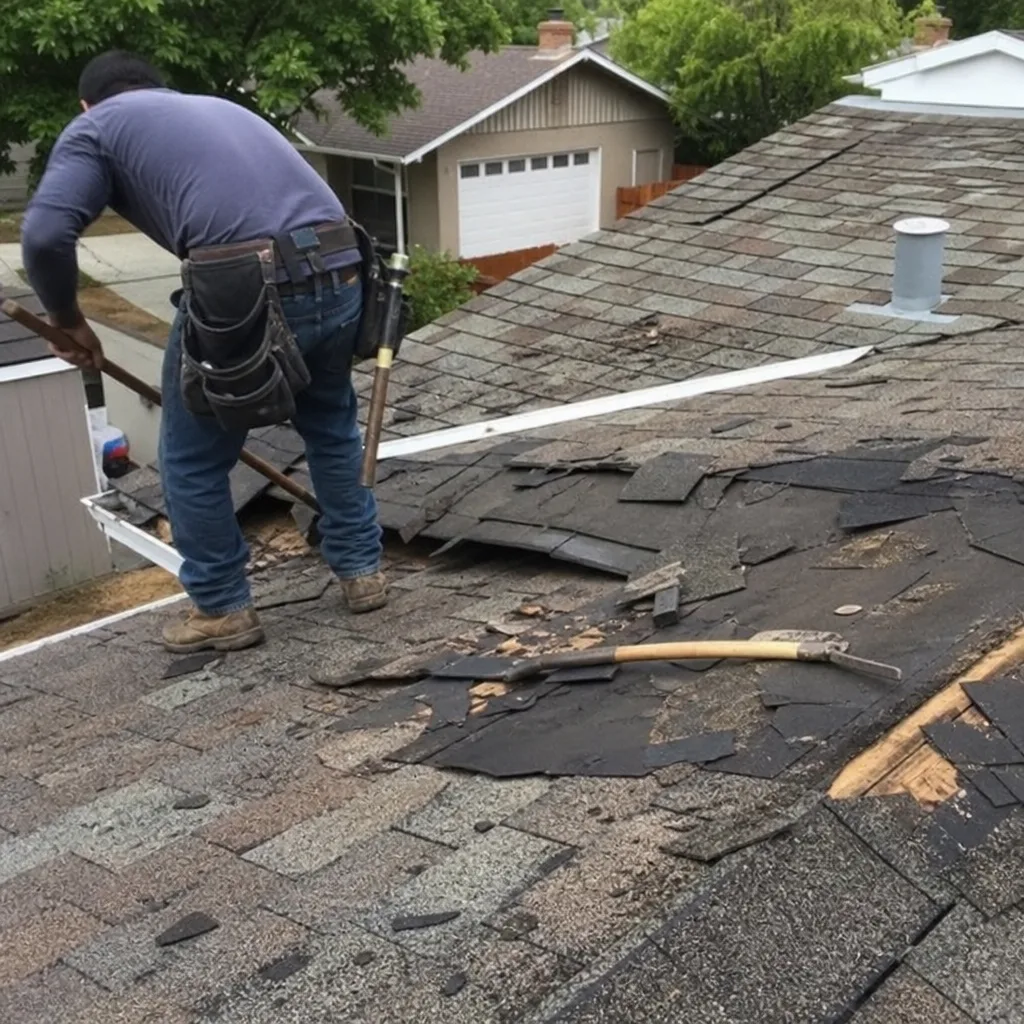 Before
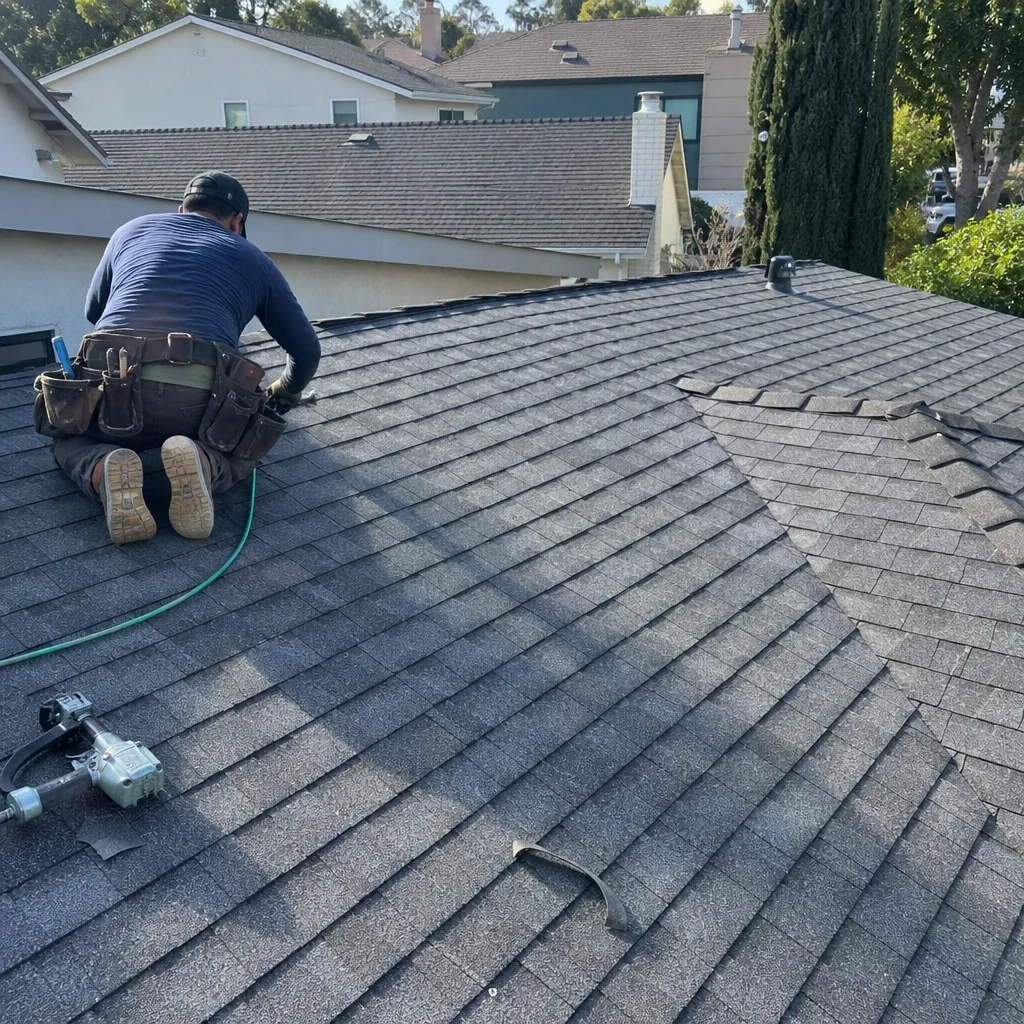 After
After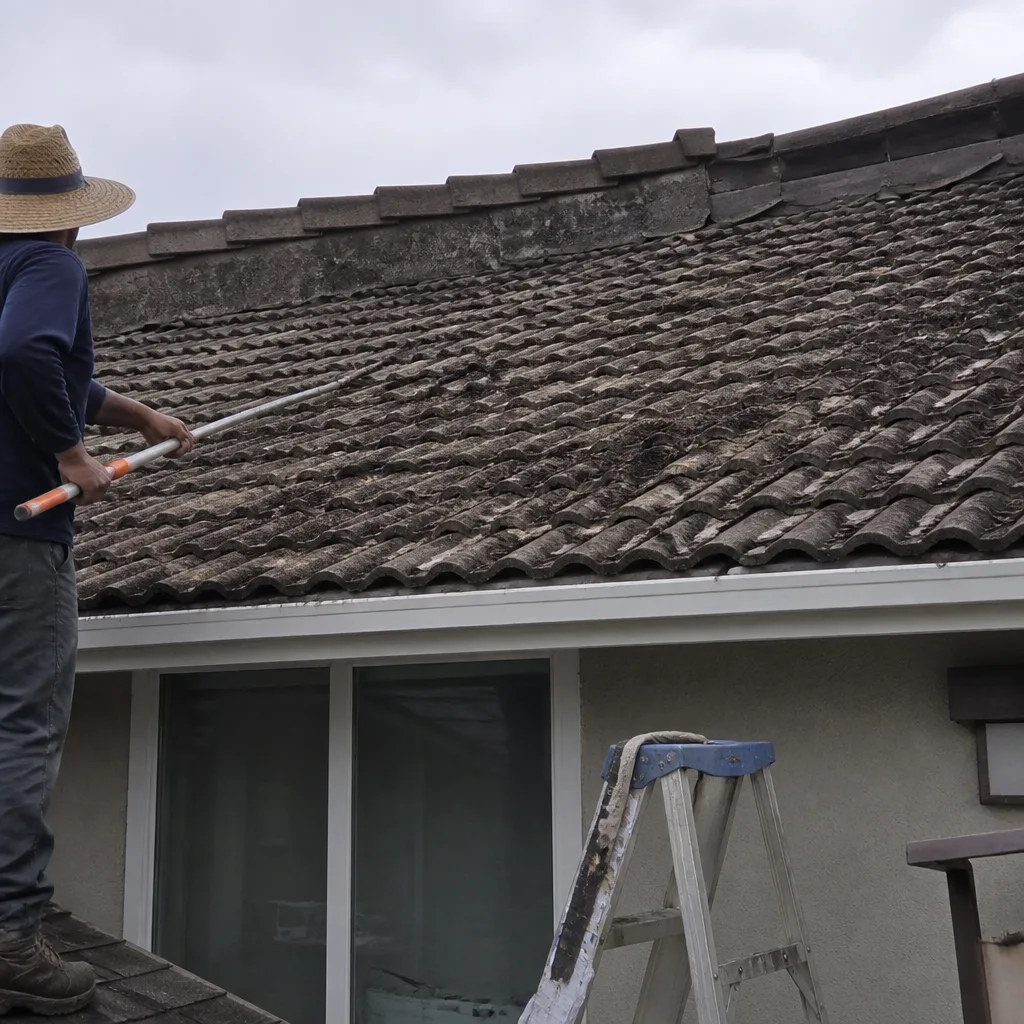 Before
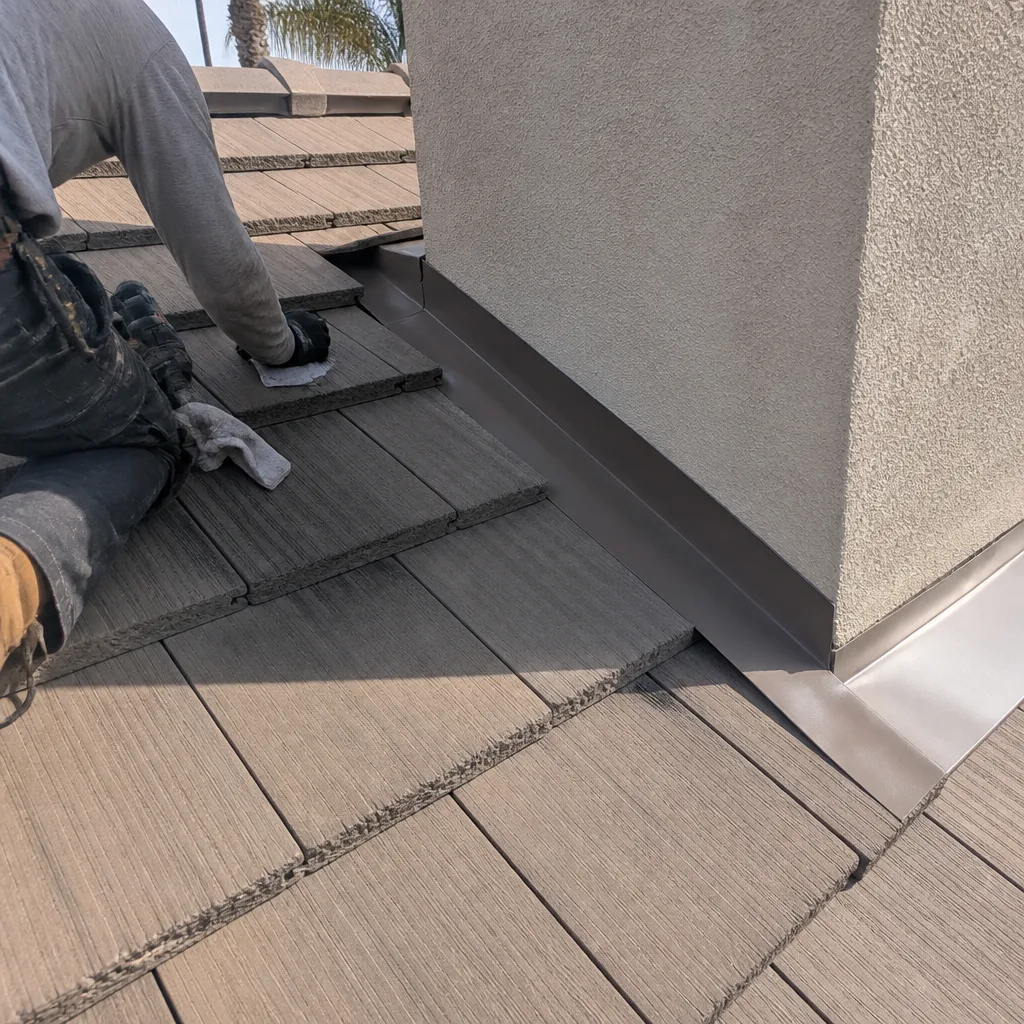 After
After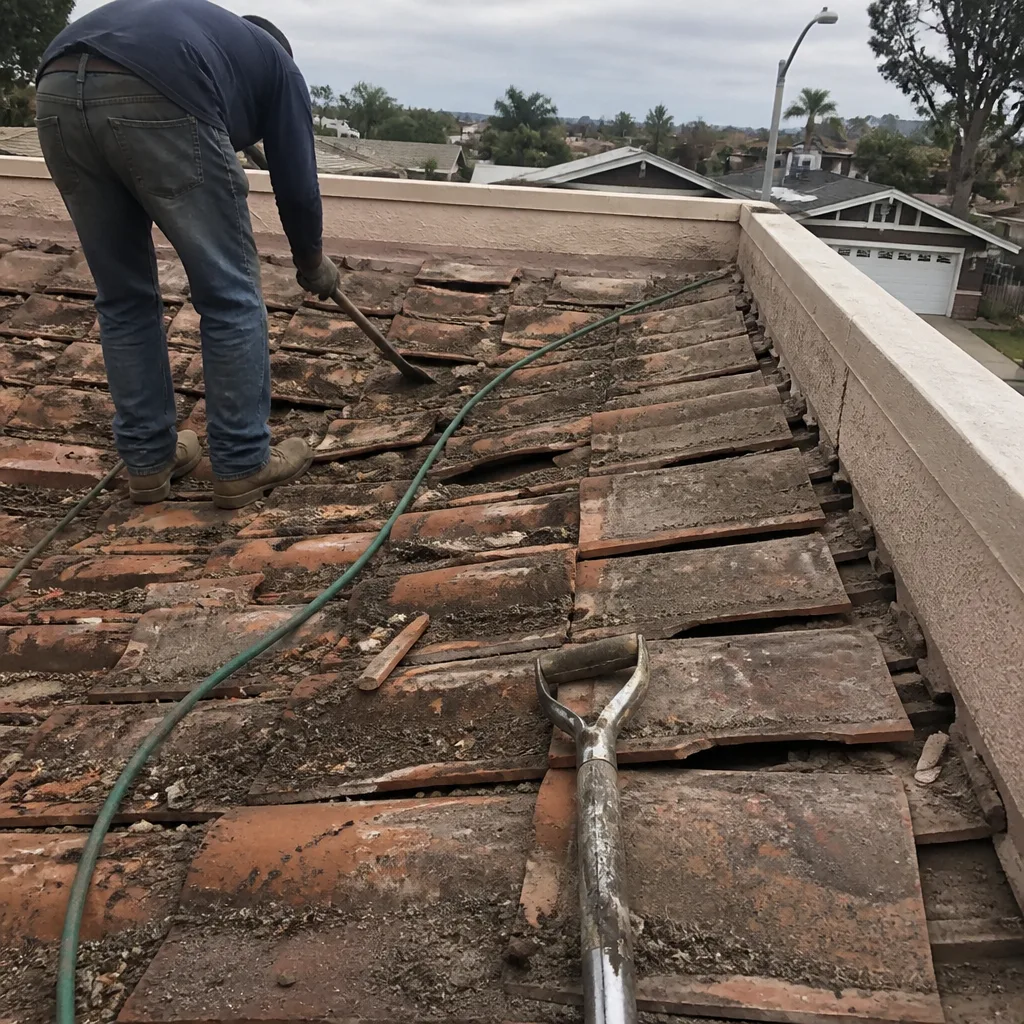 Before
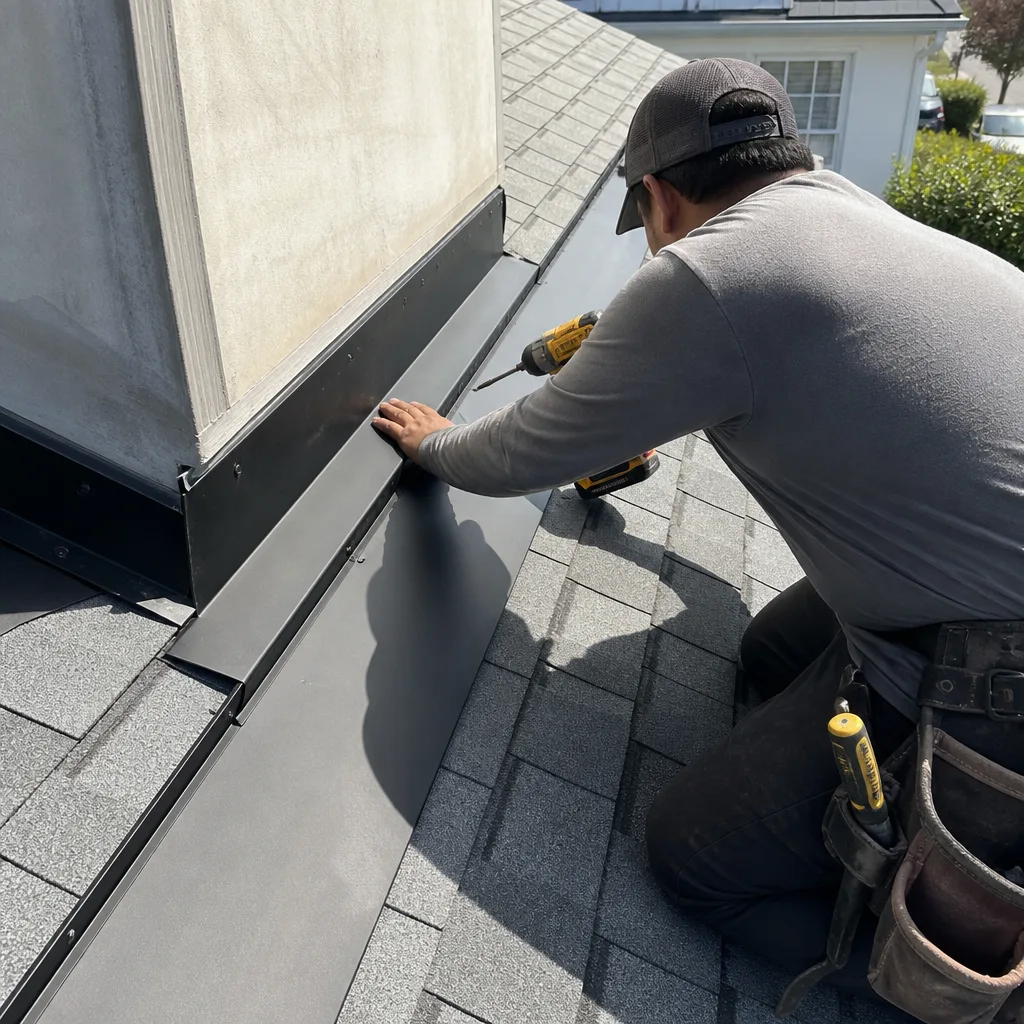 After
AfterReplacement Cost & What’s Included
Installed ridge vent replacement in Orange County is running between $14 and $22 per linear foot right now. A typical 40-foot ridge line lands around $560 to $880. Longer ridges, steep pitches, two-story access, or rotted decking at the ridge that needs replacement push the number toward the top of the range or slightly beyond.
Here’s what that number includes when we do it:
- Removal and disposal of the failing vent and end caps
- New CertainTeed-compatible ridge vent, matched to your existing airflow spec
- New end caps and connector joints, not reusing the old ones
- Ridge cap shingles reinstalled correctly over the new vent
- Decking inspection at the ridge slot, and repair if the wood’s compromised
- Full clean-up, including a magnet sweep for stray nails
The price goes on paper before any work starts, and it does not move at the door. No change orders, no “we found more damage” surcharges unless it’s real, documented, and shown to you before we proceed. Every ridge vent installation carries our 365-Day Done Right Promise in writing. If the vent fails or the install leaks within the first year, we return at no charge to fix it.
DIY or Call Us?
Let’s be honest about this one. Ridge vent replacement is one of the more approachable roofing tasks for a capable homeowner, but it happens on the highest point of your roof, which is also the most dangerous place to work. A 30-foot fall onto a Orange County backyard doesn’t care how good your YouTube tutorial was.
What you can safely check from the ground: visual inspection of the ridge line for bowing or lifted sections, checking your attic temperature on a hot afternoon, and looking for water stains on ceilings below the ridge. What we don’t recommend doing yourself: working on a pitched roof without proper fall protection, prying up ridge cap shingles that are cemented down, or replacing vent sections without confirming the underlying decking integrity.
If you’re comfortable on a ladder and the roof is walkable, you can inspect the vent up close and send us photos. We’ll give you an honest read on what you’re looking at. But the installation itself, especially on two-story Orange County homes where the ridge is 25 feet up, is where a crew that does this weekly earns the price. We bring the right material, the right fasteners, and the right safety setup. You get to keep your weekends.
A roof shouldn’t be something you think about – if it’s done right, you won’t.
FAQs
Plan on 10 to 15 years in our climate. The plastic degrades noticeably faster in Orange County than in cooler, cloudier regions, mostly due to UV intensity and thermal cycling. Coastal homes near Laguna or Newport sometimes get a few extra years, while inland homes with direct sun exposure often land on the lower end. If your vent is over 12 years old and showing brittleness, replacement is cheaper than waiting for the leak.
In most cases, no. Once the vent material itself is cracked, warped, or brittle, patching it is throwing money at a part that’s already failed. End caps can sometimes be replaced individually if they’ve blown off and the main vent is still sound. That’s a small fix at the lower end of the price range. But a vent body that’s compromised needs full replacement. Call (559) 258-5703 and we’ll tell you which situation you’re in.
Most single-story Orange County homes are done in half a day, including removal, installation, and clean-up. Two-story homes with steeper pitch may take up to a full day. We don’t rush the clean-up. You’ll get the same crew from first inspection to final walk-through, and you’ll have a written price in hand before we start.
We stock standard-profile CertainTeed-compatible ridge vent and end caps on our trucks. For unusual ridge lengths or specific profiles like the CertainTeed PeakShield, we’ll pull material from our local supplier before we arrive. Orange County has solid distribution for CertainTeed products, so we’re rarely more than one day out on a special-order vent. Call (559) 258-5703 for an exact quote and timeline – estimates are free.
No. The written price you approve before we start is the price you pay, full stop. The only exception is if we uncover documented decking damage we couldn’t see during the initial inspection, and we’ll show you photos and a separate line-item price before touching it. That’s the Garrison Standard at work, and it’s why we put every number on paper before any work begins.
Written by Travis Oakley, Owner, Brennan Roofing Co Orange County at Brennan Roofing Co Orange County, serving Orange County and nearby areas.