
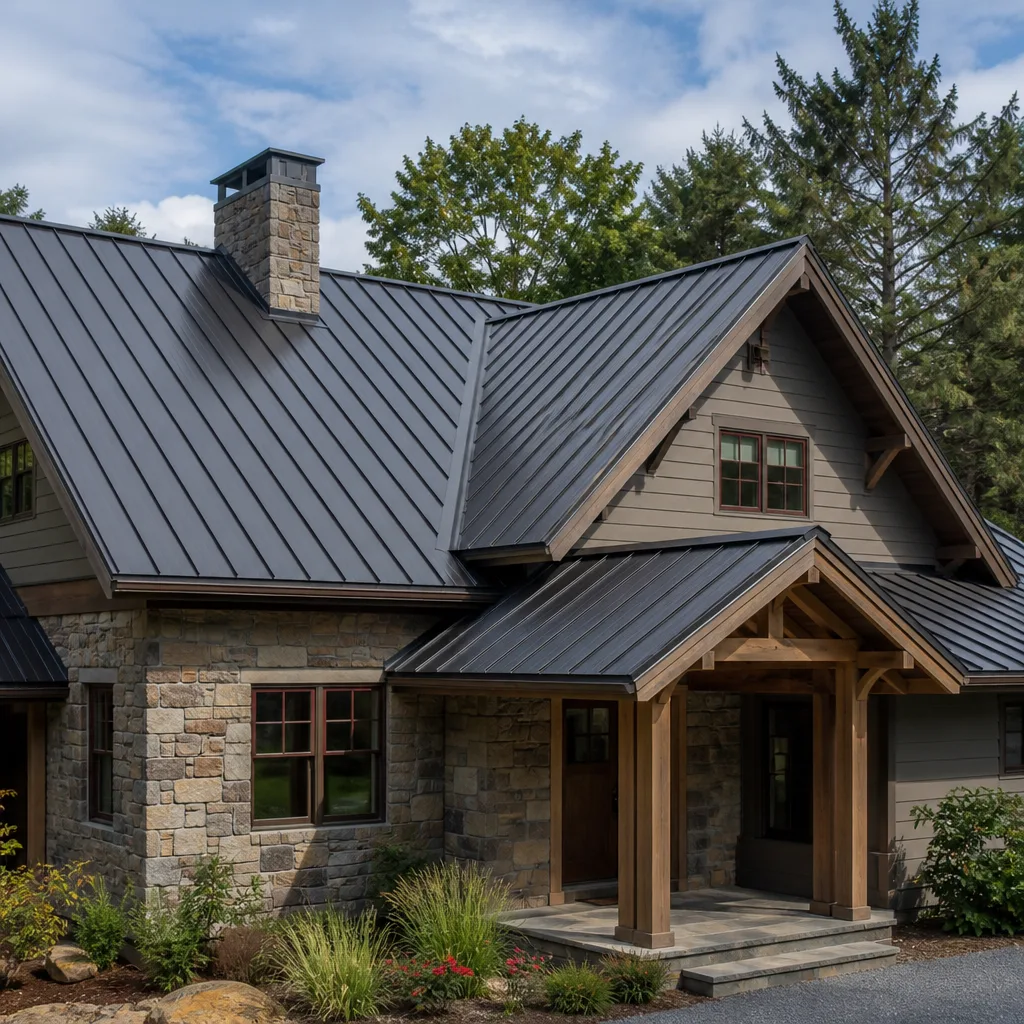
 Metal roofing
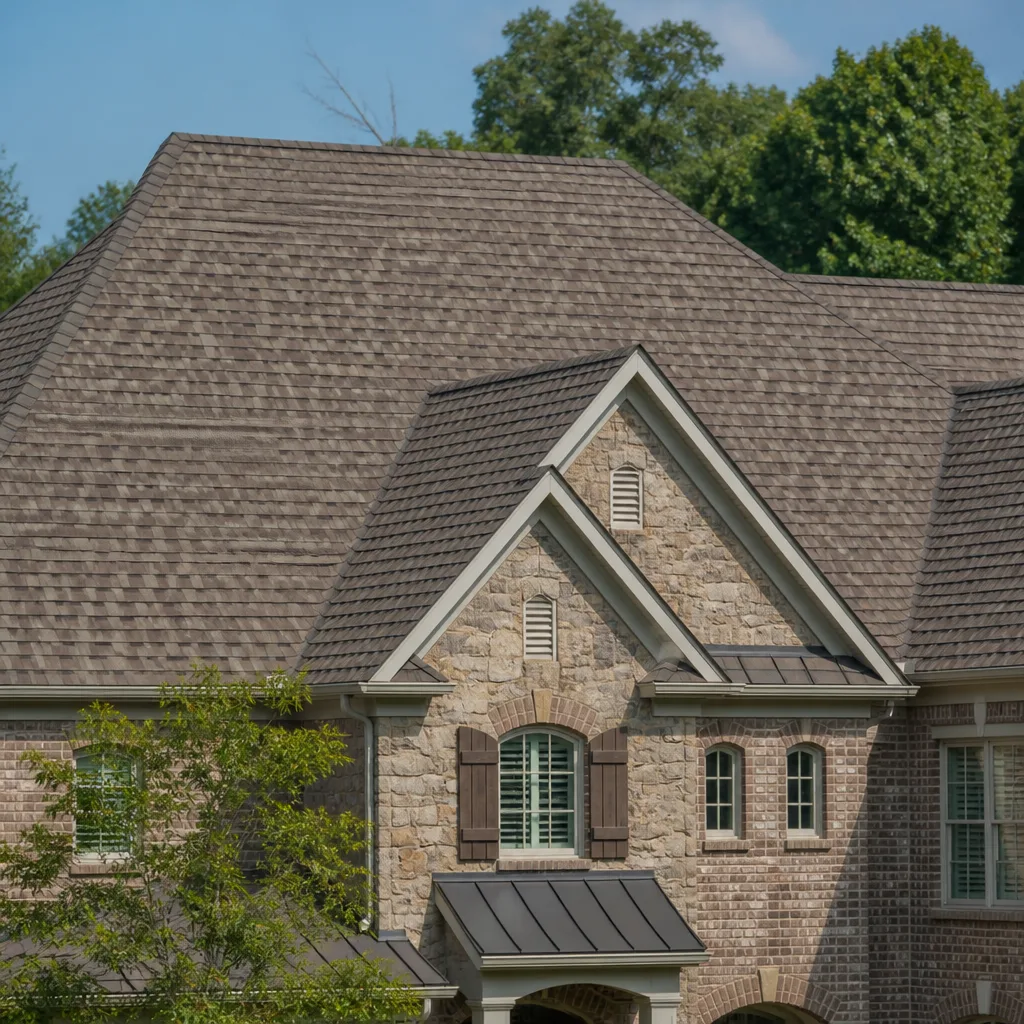 Architectural shingles
 Tile roofing
 GAF
GAF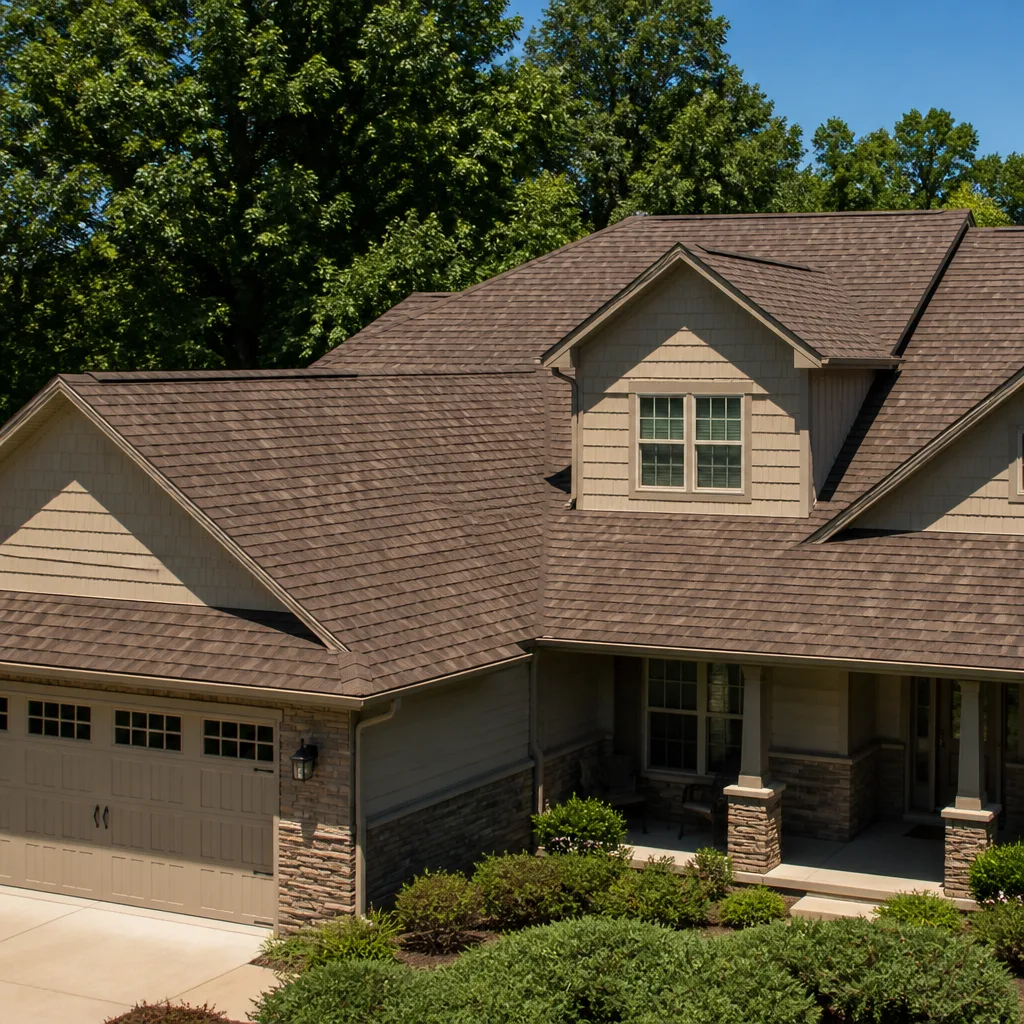 Owens Corning
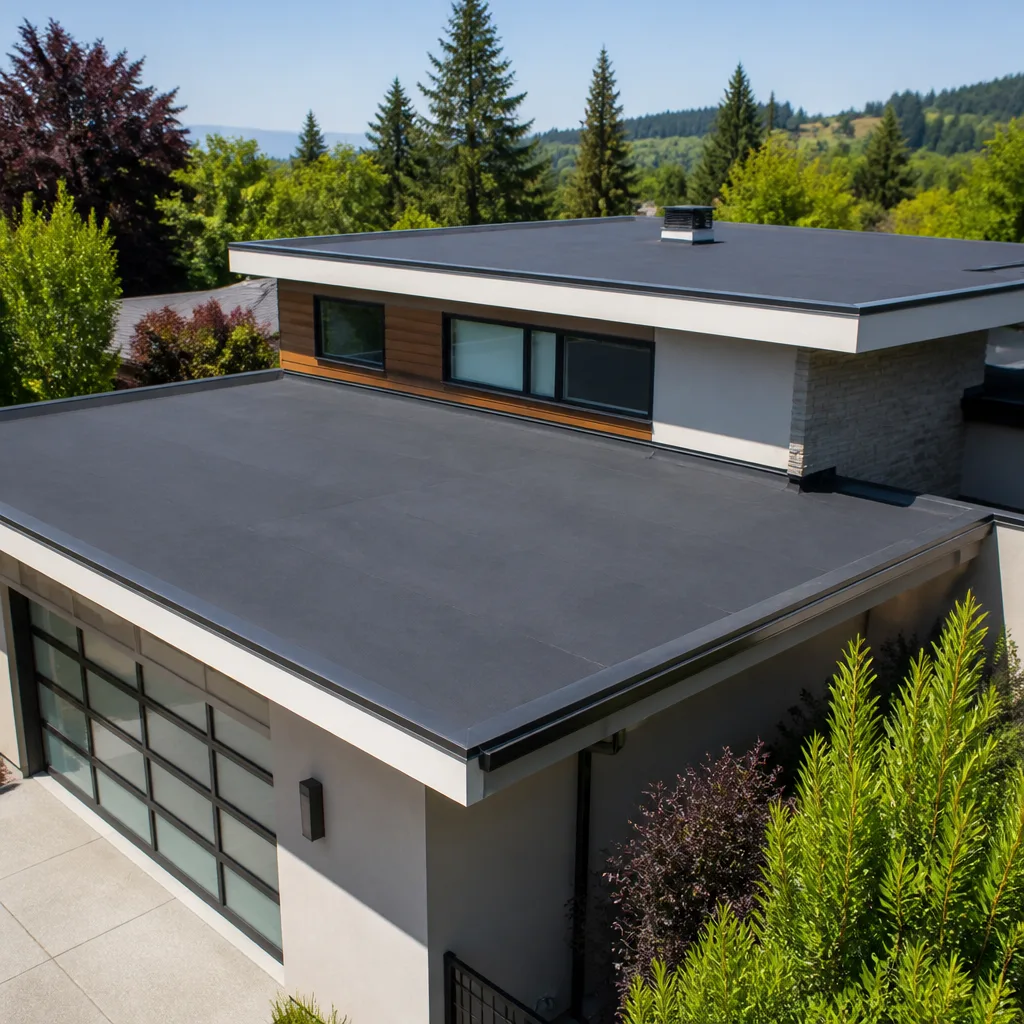 Flat & low-slope
Free roof inspection with deck photos before we talk money - GAF and Owens Corning certified installation
Atlas Flashing Replacement: The Orange County Owner’s Guide
We stock and install Atlas-compatible flashing replacement across Orange County, with most jobs running $380 to $950 installed depending on penetration count, roof pitch, and access. Most homeowners discover the problem the hard way: a water stain on the ceiling after the first real rain, or granules collecting in the gutter below a vent pipe. Flashing is the metal that seals the joints where your roof meets a wall, chimney, skylight, or vent pipe. When it fails on an Atlas roof, the leak is rarely dramatic at first. It seeps, saturates the decking, and by the time you see the stain, the repair just got more expensive. Travis Oakley has pulled apart enough Atlas roofs in Orange County to say this plainly: flashing fails before shingles do.
If you’re seeing water where it shouldn’t be, or your last roofer “patched” a flashing joint with sealant, this page will tell you exactly what’s involved, what it costs, and whether it’s worth doing yourself.
Which Atlas Models This Applies To
We work on the full Atlas roofing lineup installed across Orange County, but the flashing conversation changes depending on what’s up there.
Atlas Pinnacle and StormMaster shingles account for most residential Atlas roofs we see. Both use standard step flashing, pipe collars, and valley metal, and both are compatible with 26-gauge galvanized or pre-finished aluminum flashing. The shingle itself doesn’t dictate the flashing, but the roof’s architecture does. A steep Anaheim Hills roof with three dormers, two plumbing vents, and a chimney needs more custom bending than a simple single-plane ranch in Huntington Beach.
Atlas HP and Legend series (the heavier architectural lines) sit higher off the decking. That extra thickness means the step flashing coursing needs to follow the shingle exposure precisely. Rushed crews will flash every other course instead of every course, and that’s a leak waiting on the next winter storm. If the flashing was installed poorly, the shingle brand won’t save it.
How to identify what you have: check the permit paperwork from install, look for a leftover bundle label in the garage or attic, or call us and we’ll identify it during the estimate. We don’t charge to look.
OEM versus aftermarket: Atlas doesn’t manufacture its own flashing metal. “OEM” flashing for Atlas roofs simply means the metal profiles and gauges the roofing system was designed around. We use 26-gauge minimum, pre-finished where it’s visible, and bend pipe collars to match existing penetrations. Cheap aftermarket flashing is 28 or 30-gauge, bends by hand, and corrodes in the salt air. In coastal Orange County cities like Newport Beach and San Clemente, that thinner metal is a false economy.
Styles & brands we work with
Signs Your Atlas Flashing Replacement Is Failing
- Water stains on ceilings or walls near chimneys, skylights, or exterior walls. This is the most common first sign. The stain usually appears several feet from the actual leak, because water travels along rafters and framing before it drops. Where you see the stain is rarely where the flashing failed.
- Granules in gutters or at downspout elbows near roof penetrations. Granule loss alone doesn’t confirm a flashing failure, but concentrated loss around a vent pipe or valley often means water is getting under the shingle edge and eroding the mat from below.
- Visible rust, separation, or lifted metal at pipe boots, step flashing, or valleys. Walk the perimeter on a clear day and look at your vents and walls. If you can see daylight between the flashing and the shingle, or the metal is flaking, it’s done. Roof cement smeared over a joint is a sign someone already tried a cheap fix.
- Persistent damp smell in attic, particularly after rain. Flashing leaks are slow. They soak into decking and insulation before they ever become a visible ceiling stain. If the attic smells musty in rainy season and you can’t find the source, flashing is a prime suspect.
- Lifted shingles at a headwall or sidewall. Where an Atlas roof meets a stucco wall, step flashing should tuck under the stucco and over each shingle course. If shingles look lifted or the metal has slipped, water is already working behind the wall. This gets expensive fast because it often means cutting into stucco to reset the flashing correctly.
See the difference
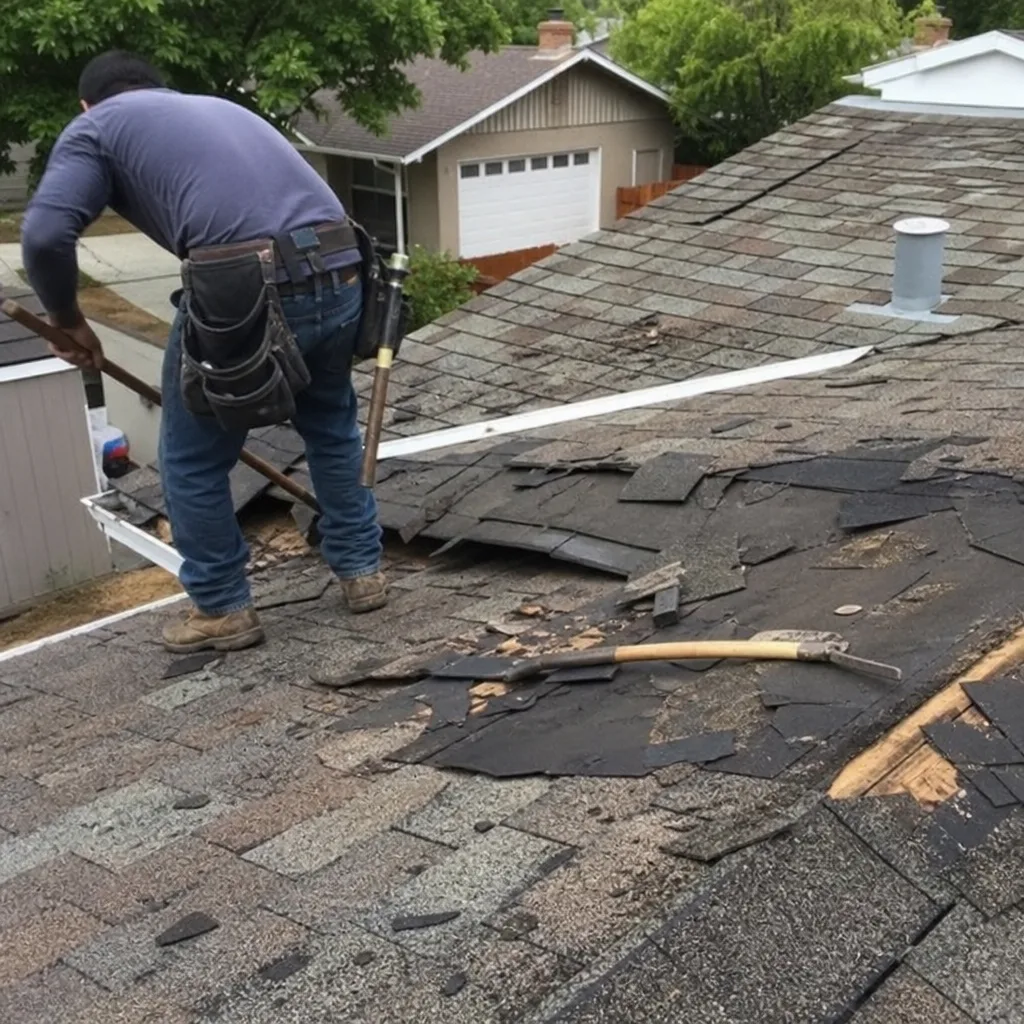 Before
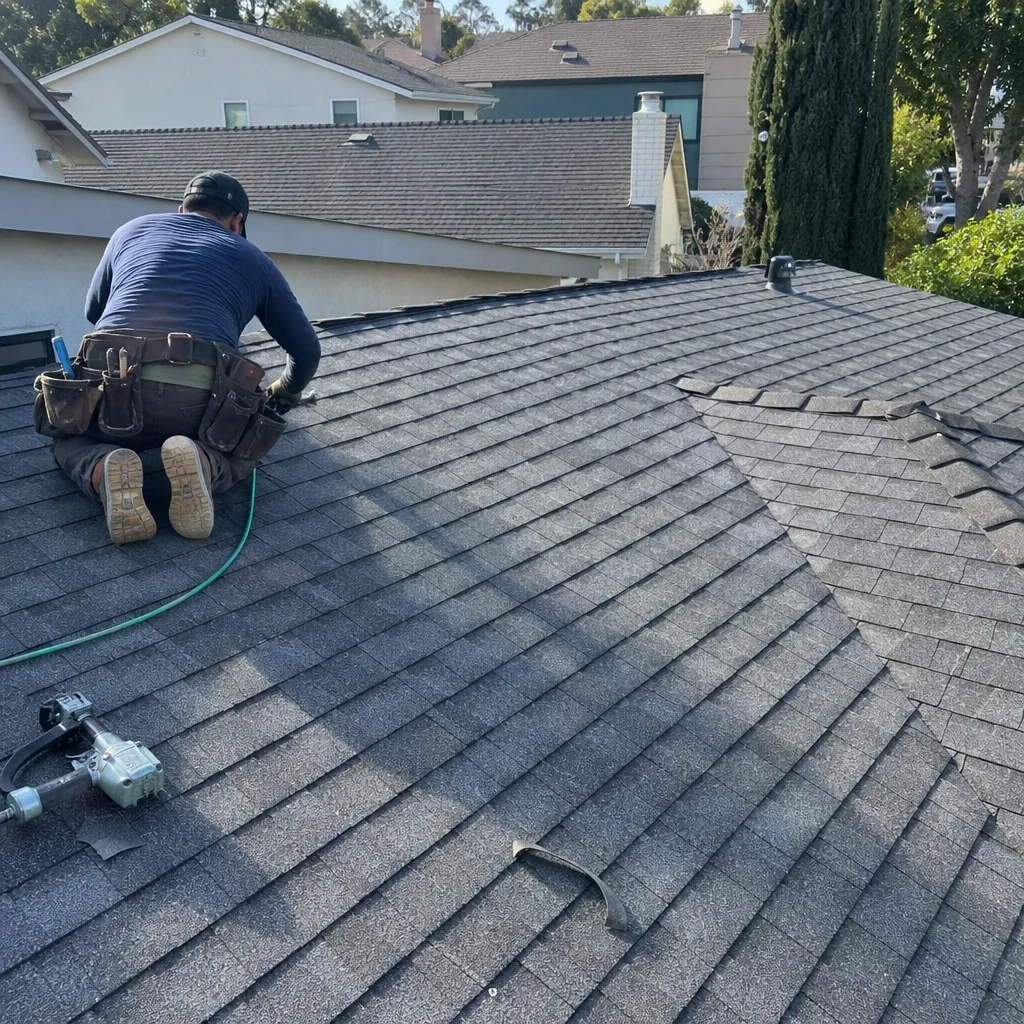 After
After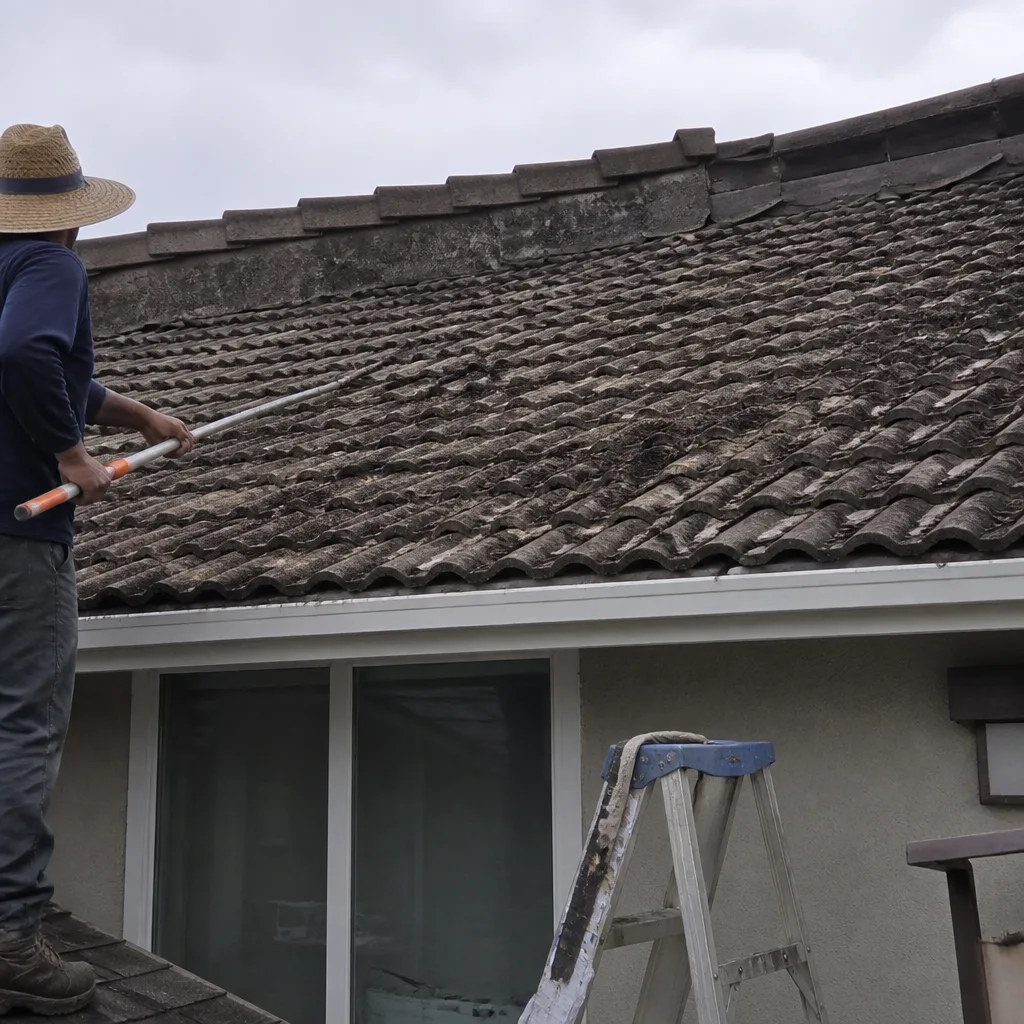 Before
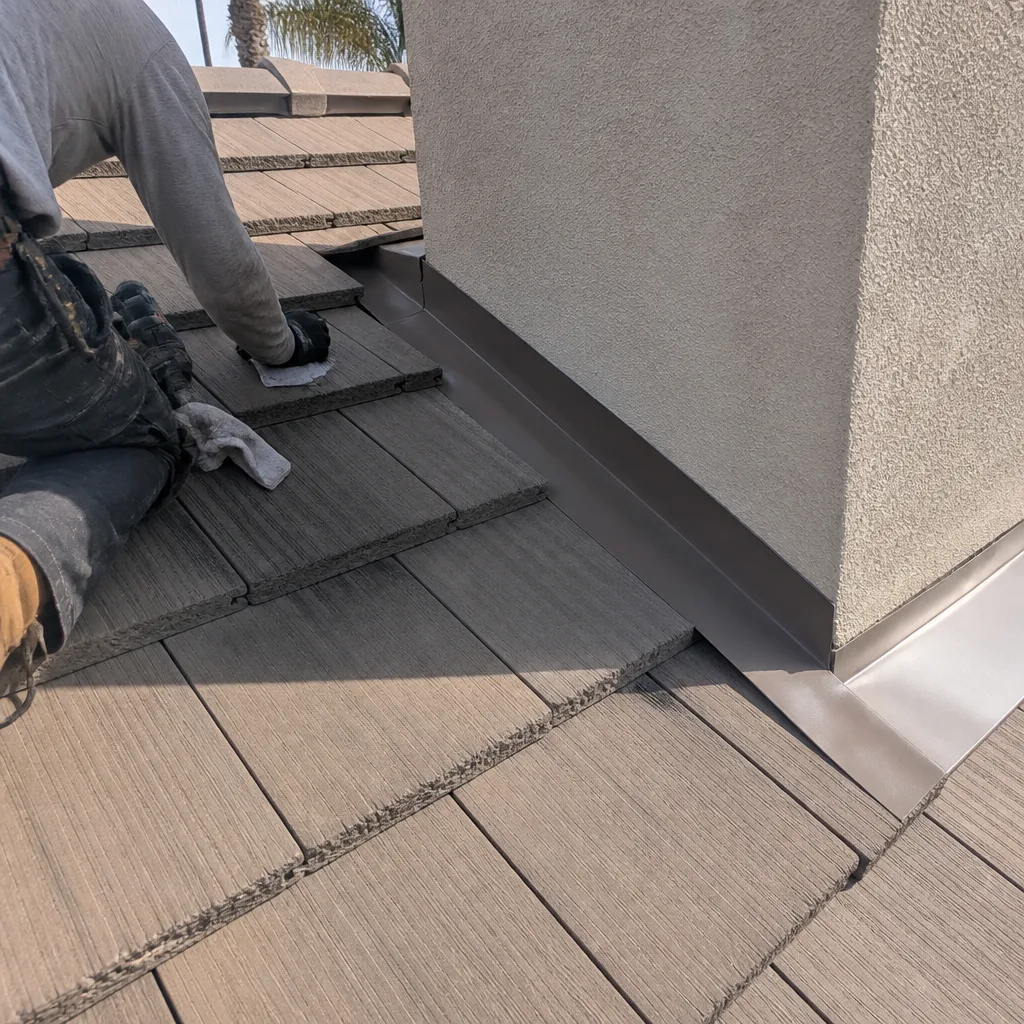 After
After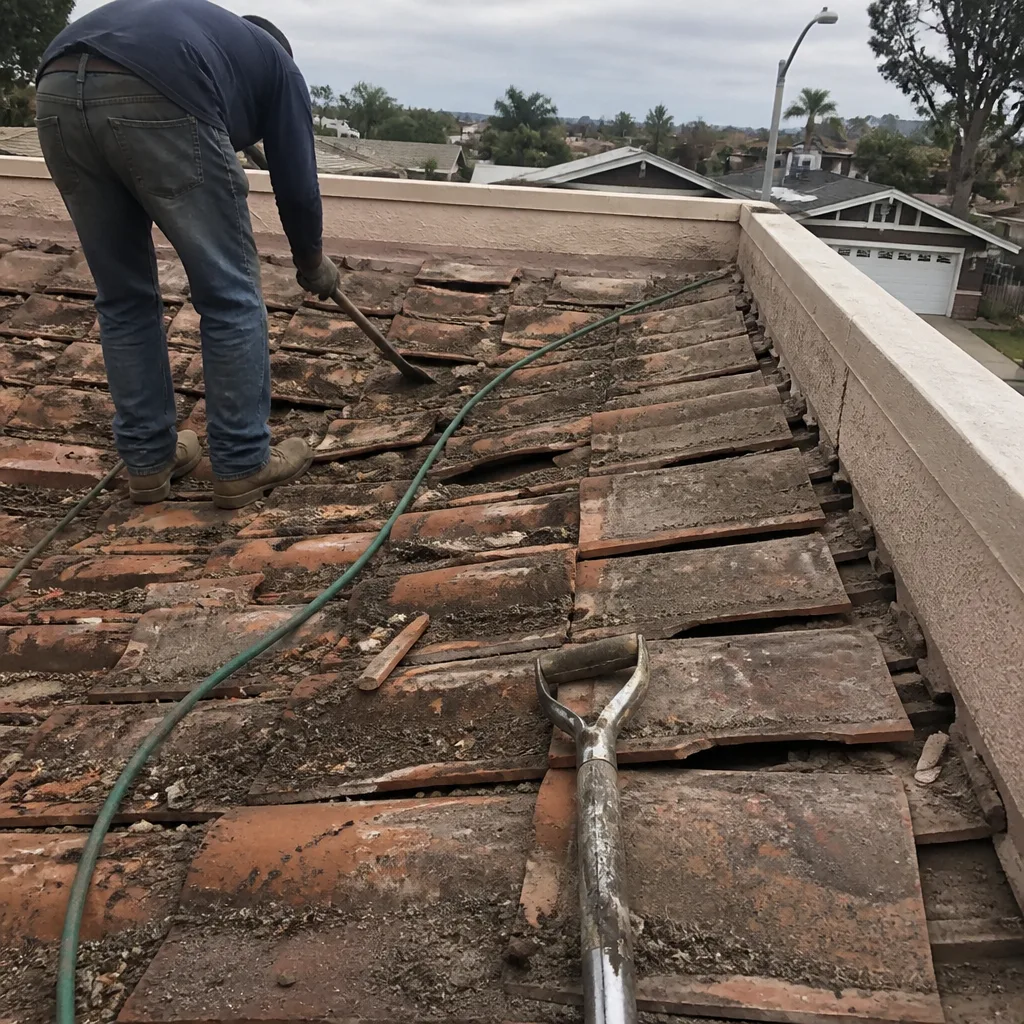 Before
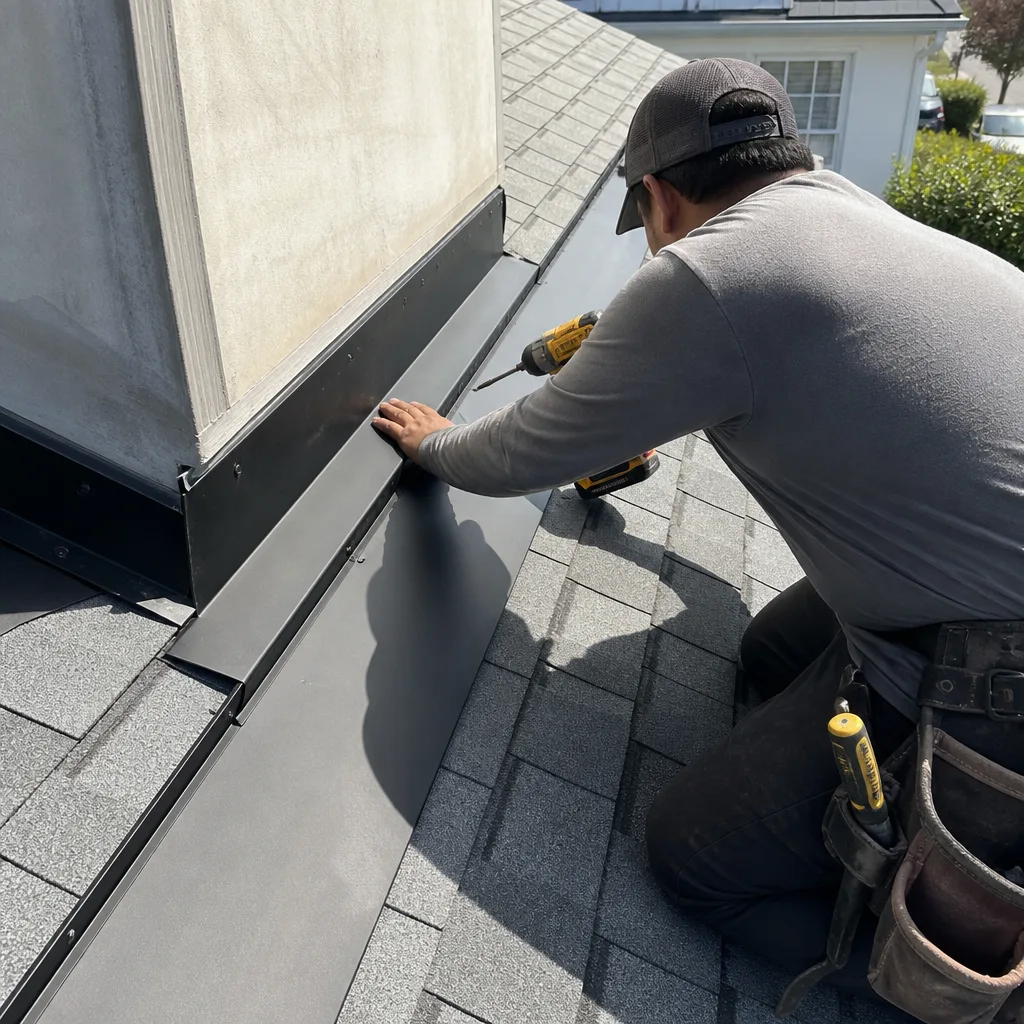 After
AfterReplacement Cost & What’s Included
Here’s what we quote in Orange County, and what the price actually covers.
| Scope | Typical Installed Range | What It Includes |
|---|---|---|
| Single pipe boot or vent flashing | $380 – $550 | Remove old collar, inspect decking around penetration, install new flashing, seal, reset shingles, haul debris |
| Step flashing repair (one wall section) | $450 – $800 | Remove siding or stucco cut as needed, replace step flashing course-by-course, re-secure wall covering, seal |
| Chimney flashing replacement | $700 – $1,400 | Remove old counterflashing, inspect masonry, install new base and step flashing, new counterflashing, seal |
| Valley flashing replacement | $600 – $1,200 | Remove shingles in valley, inspect underlayment, install new metal valley, re-shingle |
These are installed prices, not parts-only numbers. They include labor, materials, disposal, and our written one-year guarantee on the work. Every job starts with a written price before any work begins. The number on that paper is the number you pay, period.
What drives the range: roof pitch (anything over 8/12 goes slower and costs more), access (second-story, tight side yards), existing damage under the flashing, and whether stucco or siding needs to be cut and patched. We’ll show you the line items and explain each one before you commit.
DIY or Call Us?
Flashing replacement sits in a strange middle ground. It looks simple from the ground. It is not simple on the roof.
What an owner can safely check: visually inspect pipe boots and step flashing from a ladder at the eave line, look for lifted shingles or visible rust, and clear debris from valleys. That’s inspection, not repair. If you see a problem, call us. Stepping onto a roof to replace flashing means working at height on a sloped surface, prying up shingles, and resetting them without tearing the mat or breaking the seal. Get it wrong and you’ve created a bigger leak than the one you fixed. That’s a hard truth we’ve learned from repairing DIY flashing attempts around Orange County. Several of our after-the-fact repair jobs started as a $40 big-box pipe boot and a YouTube tutorial.
The honest line: single-story low-pitch roofs with a small vent collar are within reach for a skilled homeowner. Chimneys, walls, valleys, and anything on a second story are not. We’ll tell you which you have during a free inspection. Call (559) 258-5703 and we’ll give it to you straight.
A roof shouldn’t be something you think about – if it’s done right, you won’t.
FAQs
In Orange County’s climate, properly installed flashing should last 20 to 30 years, but coastal salt air in cities like Costa Mesa and Dana Point will corrode thinner metal in half that time. Pipe boot rubber collars fail faster, typically 12 to 18 years, because UV and heat cycles dry the rubber until it cracks.
Sometimes, but not often. A small separation at a single joint can be re-sealed as a stopgap, but if the metal itself is rusted, pulled loose, or separated from the shingle course, resealing just delays the inevitable and buys you more decking damage. We’ll tell you if a repair is actually viable, and if it isn’t, we won’t sell you one.
Most single-penetration flashing replacements take 2 to 4 hours. A full chimney flashing or valley replacement takes a day. We’ll give you a time window that holds, because our crew shows up when we say they will, in uniform, and the same faces from estimate to final walk-through.
Yes. We keep standard pipe boots, step flashing, valley metal, and counterflashing in 26-gauge on our trucks, so most Orange County flashing replacements finish in one visit. If your job needs a custom-bent profile, we fabricate it at the shop and reschedule within the week.
Written by Travis Oakley, Owner, Brennan Roofing Co Orange County at Brennan Roofing Co Orange County, serving Orange County and nearby areas.