
Last updated October 17, 2026
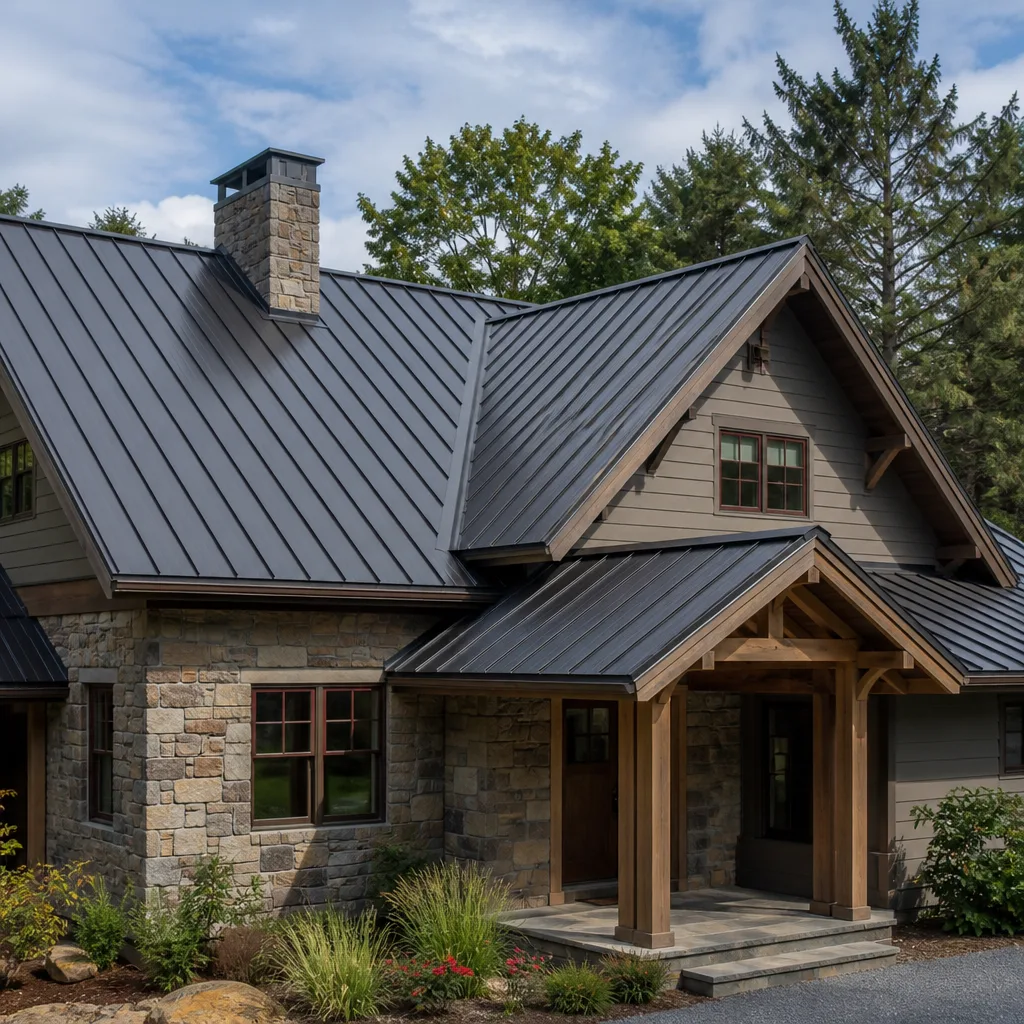 Metal roofing
 Architectural shingles
 Tile roofing
 GAF
GAF Owens Corning
 Flat & low-slope
Free roof inspection with deck photos before we talk money - GAF and Owens Corning certified installation
How to Hire a Roofing Contractor in Orange County: A Step-by-Step Guide
The California Contractors State License Board logged over 18,000 roofing-related complaints in the last five years. The pattern is almost always the same: a homeowner skipped license verification, accepted a verbal scope of work, or signed a contract with no written completion guarantee. It rarely starts with a bad roofer. It starts with a skipped step. This guide walks you through the full hiring process we use to evaluate our own work in Orange County, so you can hire with the same discipline a contractor should bring to the job. For more guides & resources, see our blog.
Styles & brands we work with
Quick Answer
To hire a roofing contractor in Orange County, verify their CSLB license and insurance first, get a written scope of work that names materials by manufacturer and product line, confirm who does the labor, and insist on a written completion guarantee before any money changes hands. Do those four things and you eliminate most of the risk. The rest of the process is choosing between competent bidders, not gambling on which one will show up.
Table of Contents
- Step 1: Verify the CSLB License (and Read Past the Green Checkmark)
- Step 2: Demand a Written Scope of Work, Not a One-Line Bid
- Step 3: Compare a Legitimate Bid Against a Low-Ball Bid
- Step 4: Ask Who Is Actually on Your Roof
- Step 5: Run the Five-Question Phone Interview Before You Invite a Bid
- Step 6: Read the Warranty and Completion Guarantee Before Signing
- Step 7: Know the Orange County Factors That Affect Scope and Price
- Common Mistakes to Avoid
- When to Call a Professional
- Frequently Asked Questions
- The Bottom Line
Key Takeaways
- The CSLB license record contains bond amount, workers’ comp status, and complaint history. Most homeowners never look past the license number.
- A complete written scope names material manufacturers and product lines, disposal method, permit responsibility, and a start/completion window. If it does not, you negotiate before signing, not after.
- Low-ball bids cut specific line items: underlayment grade, flashing detail, decking replacement, disposal. Those cuts become your costs later.
- Asking who physically performs the labor, and whether they carry workers’ comp under the contractor’s policy, is the single most revealing question in the hiring process.
- The Brennan Roofing Co Orange County home page explains how we apply the Garrison Standard to every job, including the written price and the 365-Day Done Right Promise.
Step 1: Verify the CSLB License (and Read Past the Green Checkmark)
Every roofing contractor in California must hold an active C-39 roofing license issued by the Contractors State License Board. The license number should be on the contractor’s website, business card, and any written bid. If it is not on the written bid, that is your first red flag. But verification is not just confirming the number exists.
Here is the step-by-step process:
- Go to the CSLB license lookup at cslb.ca.gov. Enter the license number. Confirm the name on the license matches the name on the contract, the license classification is C-39 (roofing), and the status is Active.
- Check the bond amount. The bond is a pool of money set aside to pay claims if the contractor fails to complete the work or violates the law. The minimum contractor license bond in California is $25,000. A higher bond is not automatically better, but a bond at exactly the minimum with a history of claims is a signal worth noting.
- Check workers’ compensation coverage. If the contractor has employees or uses subs who are not independently insured, the contractor must carry workers’ comp. If the record says “no employees” but the crew on-site is three people, someone is not covered, and that risk lands on you.
- Read the complaint history. The CSLB record lists disciplinary actions and license suspensions. A complaint alone does not mean the contractor is bad; disputes happen. A pattern of complaints about the same thing, such as abandonment or failure to complete, is a different matter.
- Confirm the license has not been suspended or revoked in the past. A contractor who let a license lapse for a year and then renewed it may have a gap in their insurance and bond history.
We tell Orange County homeowners to do this before the first phone call. It takes five minutes. The alternative is discovering after the fact that the person on your roof in Irvine or Anaheim had no legal authority to be there, and no bond to pursue if something goes wrong. For more on how we operate as a licensed Roofing Company in Orange County, see our service overview.
Step 2: Demand a Written Scope of Work, Not a One-Line Bid
A one-line bid that says “Re-roof, $14,000” is not a scope of work. It is a price tag with no definition. The written scope of work is the document that tells you what you are buying. Anything not in the scope is not in the contract, which means it is not getting done unless you pay for it later.
A complete written scope of work contains:
- Material manufacturer and product line. Not “architectural shingles.” It should read “GAF Timberline HDZ” or “CertainTeed Landmark” or “Owens Corning Duration.” Product lines differ in wind rating, impact rating, and warranty terms. If the bid does not name the product line, you cannot compare it to another bid that does.
- Underlayment specification. The type and grade. Synthetic underlayment outperforms 15-pound felt in most Orange County applications, but it costs more. The scope should say what is going on the deck, not just “underlayment.”
- Flashing detail. Which penetrations get new flashing. Chimneys, skylights, vents, and wall intersections are where roofs leak. A scope that says “new flashing as needed” is not a scope. The bidding contractor should have looked at the roof and told you what is needed.
- Decking contingency. Rotted decking cannot be seen until the old roof comes off. The scope should state the price per sheet to replace damaged decking if found, with a clear note that the homeowner approves any replacement before the work proceeds.
- Disposal method. Who hauls the old material, where it goes, and whether a dumpster or trailer is included in the price. Orange County disposal fees are real and they are part of the job cost, not a surprise add-on.
- Permit responsibility. Who pulls the permit in your city, and who is responsible for the permit cost. In Orange County, roofing permits are issued by the city or county depending on jurisdiction. A legitimate contractor itemizes this. A contractor who says “no permit needed” for a full re-roof is wrong in most Orange County cities.
- Start and completion window. Not a promise of same-day service; a realistic window. “We start the week of the 15th, weather permitting, and the job is 3 to 4 days once started.” A legitimate roofer in Orange County knows what their schedule looks like and will commit to a window.
Any item missing from that list is a negotiating point before signing. Once the contract is signed, a missing line item becomes a change order, and change orders are where prices move. At Brennan Roofing Co Orange County, we put the price on paper before any work starts, with the scope defined to the product line.
Step 3: Compare a Legitimate Bid Against a Low-Ball Bid
Orange County roofing bids can vary by $5,000 to $10,000 on the same house. The difference is rarely profit margin. It is almost always line items that one bidder included and another bidder cut. Here is a side-by-side look at where the cuts happen.
| Line Item | Legitimate Bid | Low-Ball Bid | What the Cut Costs Later |
|---|---|---|---|
| Underlayment | Synthetic, full deck coverage, manufacturer-specified | 15-pound felt, or “existing if sound” | Faster degradation, leaks at nail penetrations, voided shingle warranty |
| Flashing | New metal at every penetration, step flashing at walls, kickout at roof-wall intersections | “Reuse existing where possible” | Leaks at the exact points where roofs leak, often within 2-3 years |
| Decking | Contingency priced per sheet, homeowner approval required | Not mentioned | Change order mid-job, or rotted decking covered over and replaced years later at 3x cost |
| Disposal | Dumpster or trailer included, disposal fees itemized | “Haul away” with no mechanism specified | Debris left on-site, or a $500-$800 disposal fee added at the end |
| Permits | Pulled by contractor, cost itemized | Omitted, “not needed” | Failed inspection, unpermitted work, trouble at resale |
| Ventilation | Intake and exhaust calculated, new vents if needed | Reuse existing vents regardless of condition | Attic heat buildup, premature shingle failure, higher cooling costs in inland OC |
We have seen low-ball bids in Orange County that were $3,000 under the next bid and $9,000 under the value of the cuts once the work was itemized. The low bid is not a discount. It is a partial scope. When a homeowner accepts it, they are betting the missing items never matter. In our experience in Orange County, missing flashing and missing underlayment always matter.
Step 4: Ask Who Is Actually on Your Roof
The written bid tells you what the contractor intends to do. The crew question tells you whether the contractor controls the work. Contractors fall into two categories: those with their own workforce, and those who sub the labor out to day-labor crews.
Ask the contractor directly: “Do you use your own W-2 employees, or subcontract the labor?” There is no automatic right answer, but there is specific information you need either way.
- If the contractor uses employees: Confirm the workers’ comp coverage exists and is current. Ask whether technicians are background-checked and whether they arrive in uniform. A company that runs background checks on its people and puts them in uniforms is telling you something about its internal discipline. It is not about looks. It is about accountability: you know who is on your property, and the company knows who is on your roof.
- If the contractor uses subs: Get the subcontractor’s name, CSLB license number, and proof of their own workers’ comp. If the sub is not licensed and not covered, and someone falls off your roof in Huntington Beach or Mission Viejo, the claim can land on your homeowners insurance. That is not a theoretical risk. It is how the worst roofing stories in Orange County happen.
Uniformed, background-checked technicians dispatched on every job is one of the specific practices we follow at Brennan Roofing Co Orange County under the Garrison Standard. Our crews are not day-labor pickups. They are employees who are background-checked, in uniform, and accountable to the same standard on every job. When you let a crew onto your roof, you are letting them onto your property. Knowing who they are is not optional.
Step 5: Run the Five-Question Phone Interview Before You Invite a Bid
Most homeowners invite three contractors to bid without asking a single qualifying question. The bids come in, the numbers confuse people, and the decision gets made on price or gut feeling. Flip that order. Run this five-question script on the phone first, and only invite the contractors who answer cleanly to bid.
- “Can I have your CSLB license number?” A legitimate contractor gives it immediately. A contractor who hesitates, says they will get it later, or gives you a number that does not verify is done. You just saved yourself an hour of bid time.
- “Do you pull permits on this type of job in my city, and is the permit cost in your bid?” Some Orange County cities have specific reroof permit requirements. A contractor who says permits are never needed for a reroof is either uninformed or avoiding the permit fee. Neither is good.
- “Does your crew work for you directly, or do you subcontract the labor?” Then ask for the sub’s license and workers’ comp if the answer is subs. The answer to this question tells you more about the company than their website does.
- “What does your written warranty cover, and for how long?” Listen for specificity. “We guarantee our work” is not a warranty. “Every repair and installation is guaranteed in writing for one full year, and if it fails within that period we come back at no charge” is a warranty. Ask if it is in writing.
- “When you send the written scope, will it name the specific shingle manufacturer and product line, or just say ‘architectural shingles’?” If the answer is the latter, you now know they bid at a generic level, and you cannot compare their bid against a specific one.
These five questions take eight minutes. They eliminate contractors who cannot produce a license, cannot explain permits, cannot explain labor, cannot explain warranty, or cannot commit to material specifics. What remains is a short list of disciplined bidders. That is the list worth your time.
Step 6: Read the Warranty and Completion Guarantee Before Signing
The warranty section is where vague language hides. Most roofing contracts include two separate things: the manufacturer’s warranty on materials, and the contractor’s workmanship warranty on installation. The first comes from GAF, CertainTeed, or whichever manufacturer’s product line is installed. The second comes from the contractor, and it only exists if it is in writing.
A contractor’s verbal promise, “we stand behind our work,” means nothing in a dispute. A written workmanship warranty that states the coverage period, what triggers a return visit, and that the return visit is at no charge, means everything.
Here is what to look for in the written guarantee:
- The coverage period in months or years. “One full year” is specific. “We cover our work” is not.
- What constitutes a failure. Leaks at roof penetrations, shingle blow-offs, flashing failures. The guarantee should name what it covers, not say “any issue.”
- That the return visit is at no charge. Some warranties cover labor but charge for the visit, or charge for materials. A real guarantee covers the full repair.
- The time window for response. When you call with a warranty claim, what happens next. A live person answers the phone. A technician comes out. The fix happens or is scheduled. That is the sequence, and it should be stated.
At Brennan Roofing Co Orange County, the 365-Day Done Right Promise is specific: every repair and installation is guaranteed in writing for one full year. If something is not done right within that year, we make it right at no charge. That means a free second visit, not a discounted one. It is in writing before the job starts, the same way the price is in writing before work begins. Travis Oakley runs our Orange County operation on that standard, and it is the same standard on every job, whether it is a two-hour repair or a full replacement.
Step 7: Know the Orange County Factors That Affect Scope and Price
Orange County is not one roofing market. It is several, and the differences show up in the scope of work. A roof in San Clemente faces salt air. A roof in Anaheim Hills faces wind. A roof in Irvine faces sun exposure that bakes shingles differently than a roof in Fullerton. Here are the Orange County factors a good bid should acknowledge.
- Coastal exposure. In San Clemente, Dana Point, and Laguna Beach, salt air corrodes flashing faster than it does inland. A legitimate bid for those areas recommends corrosion-resistant flashing materials. A generic bid does not mention it. See the Roof Repair in Orange County page for more on how we handle coastal-specific repair work.
- Wind zones. Parts of Orange County sit in higher wind zones, particularly hillside areas in Anaheim Hills, Yorba Linda, and Trabuco Canyon. Shingles with higher wind ratings, installed to the manufacturer’s high-wind nail pattern, cost a little more and fail a lot less. The scope should say which wind rating applies.
- Tile-to-shingle conversions. Many Orange County homes built in the 1980s and 1990s have concrete tile roofs. When a homeowner converts from tile to shingles, the underlayment must be upgraded and often the roof deck needs attention. That is a structural scope item, not a simple shingle swap. The bid should reflect it.
- Municipal permit differences. Permitting requirements vary by city. Some Orange County cities require a reroof permit with specific inspection points. Others have streamlined processes. A contractor who works across the county knows the difference. A contractor who says “permit not needed” everywhere does not.
- Inland heat and ventilation. Inland Orange County cities like Orange, Villa Park, and Tustin see summer attic temperatures that accelerate shingle aging. Proper attic ventilation, intake and exhaust, is not an upsell. It is what keeps the shingles from cooking from underneath, and a complete scope includes it.
We work across Orange County, and the scope we write for a coastal roof in Laguna Niguel is not the same scope we write for an inland roof in Orange. That is the point of a written scope. It is the document that proves the contractor looked at your specific roof, in your specific microclimate, and bid it accordingly. For more on how we scope and price an inspection, see the Roof Inspection in Orange County page.
Common Mistakes to Avoid
- Skipping the CSLB complaint history. The license might be active. The bond might be current. But if the complaint history shows three abandonment complaints in five years, you are hiring the pattern, not the company. Read the record.
- Signing a bid that says “shingles” instead of a specific product line. “Architectural shingles” ranges from entry-level to premium. You cannot compare bids when one names CertainTeed Landmark and the other says “shingles.”
- Accepting a verbal warranty. “We guarantee our work” is a sentence, not a warranty. If it is not in writing with a coverage period and a no-charge return visit, it does not exist.
- Assuming subs are covered under the contractor’s insurance. Unlicensed, uninsured subcontractors create liability that can end up on your homeowners policy. Verify the sub’s license and workers’ comp or do not sign.
- Not asking about decking contingency. Rotted decking is discovered when the old roof comes off. If the contract has no per-sheet price and no approval requirement, you get a change order mid-job with no leverage.
- Choosing the lowest bid without comparing line items. The low bid in Orange County is usually a partial scope, not a discount. Compare the bids item by item before deciding, and know what the low bidder cut to get there.
When to Call a Professional
If you see water stains on a ceiling, lifted or missing shingles, granules collecting in gutters, or flashing pulling away at a chimney or wall intersection, do not wait. A small leak in an Orange County roof becomes a decking replacement, insulation replacement, and drywall repair within a single rainy season. The inspection itself is the fastest way to know whether you have a repair or a replacement on your hands. Brennan Roofing Co Orange County offers free estimates throughout Orange County. Call (559) 258-5703 and a live person answers, any hour, no voicemail and no automated menu.
Frequently Asked Questions
A full shingle reroof on a typical single-family Orange County home ranges from roughly $12,000 to $25,000 depending on roof size, pitch, tear-off layers, decking condition, and the shingle product line selected. Coastal homes with tile-to-shingle conversions run higher. The only way to get a real number for your specific roof is a written scope from a licensed contractor. Call (559) 258-5703 for a free estimate with the price on paper before any work starts.
In most Orange County cities, yes, a reroof requires a building permit with inspections at specific points in the project. See Roofing Permits, Codes & Inspections in CA: What You Need to Know for details. The contractor should pull the permit in their name and itemize the permit cost in the written bid. A contractor who says no permit is needed for a full reroof is either misinformed or trying to cut a cost you do not want cut.
California law limits the down payment on a home improvement contract to the lesser of 10% or $1,000. Any contractor asking for more than that before work starts is violating state law. Beyond the deposit, payments should be tied to completed milestones stated in the written contract.
A standard shingle reroof on a single-family home typically takes 2 to 5 days once the tear-off begins, depending on roof size, pitch, and decking repairs. For a complete maintenance schedule, see our Roofing Company Maintenance Checklist for Orange County Homeowners. Weather windows in Orange County are favorable most of the year, but a legitimate contractor will give you a start window and a completion window in the written scope, not a promise that ignores reality.
The manufacturer warranty covers defects in the shingle product itself, and it comes from the manufacturer, not the roofer. The contractor workmanship warranty covers how the roof was installed: flashing, underlayment, nail pattern, ventilation. Only the contractor can provide the workmanship warranty, and it is only real if it is in writing with a stated coverage period.
First, call and demand the repair in writing, referencing the written warranty in your contract. If they refuse or disappear, you can file a complaint with the CSLB, which has authority over licensed contractors, and pursue a claim against their bond. This is why the license check and the written warranty matter before the job starts. They are the only leverage you have after it goes wrong.
The Bottom Line
Hiring a roofing contractor in Orange County is not about finding the best salesperson. It is about finding a contractor who survives verification: active CSLB license with a clean record, a written scope that names materials by product line, a clear answer on who does the labor, and a written warranty with a real coverage period. Do those four checks before you compare prices, and the price comparison becomes useful instead of confusing. The bad outcomes in this industry follow skipped verification steps. The good outcomes follow a process. The process takes less than 30 minutes. Run it on every bidder, and the right contractor becomes obvious. Call (559) 258-5703 for a free estimate in Orange County, with the price in writing before any work starts.
Written by Travis Oakley, Owner at Brennan Roofing Co Orange County, serving Orange County since 2000.
See the difference
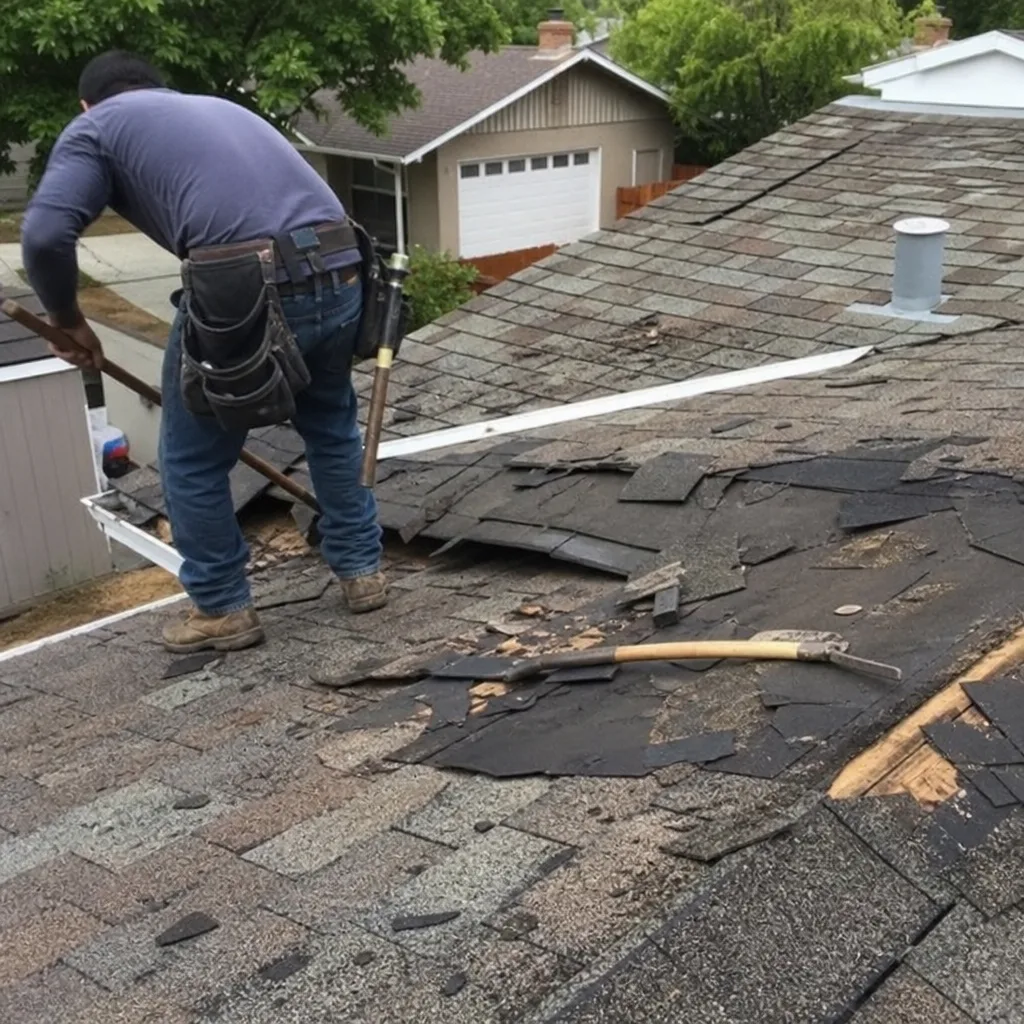 Before
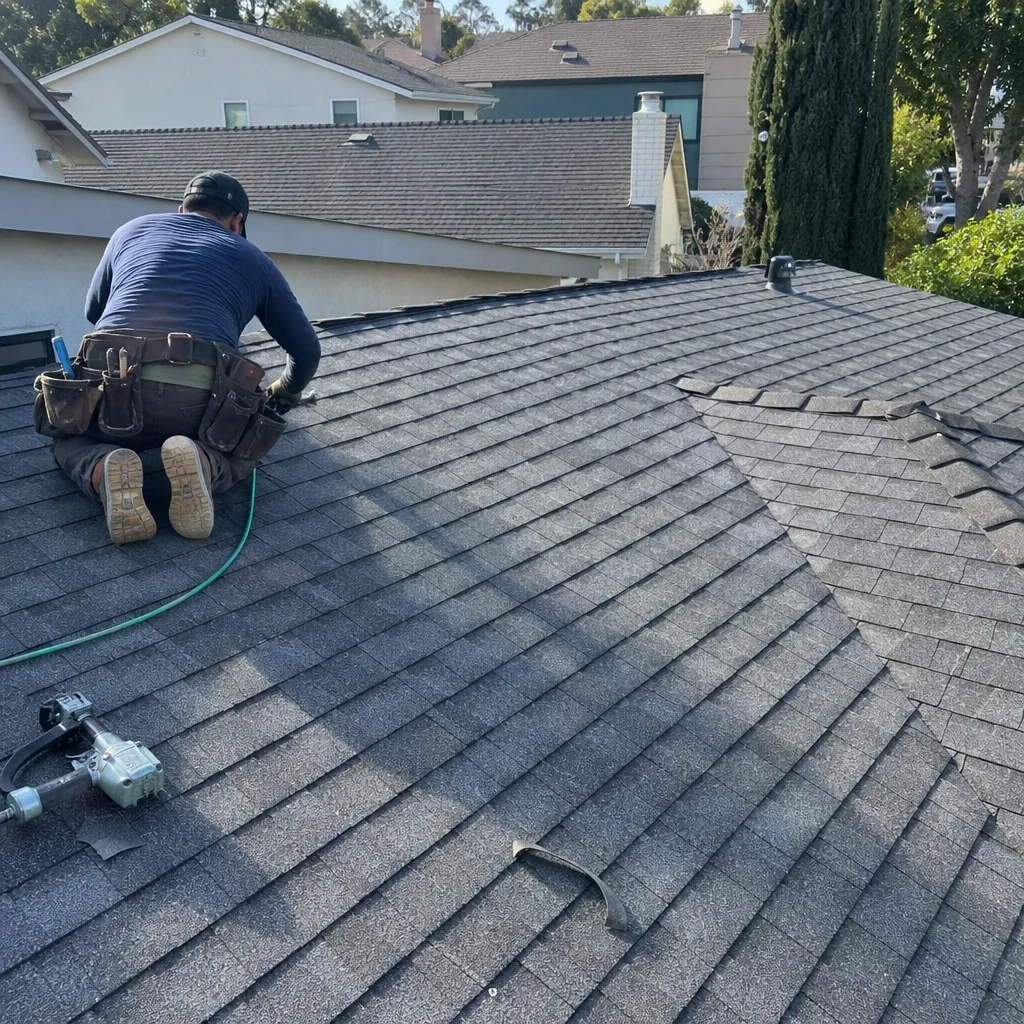 After
After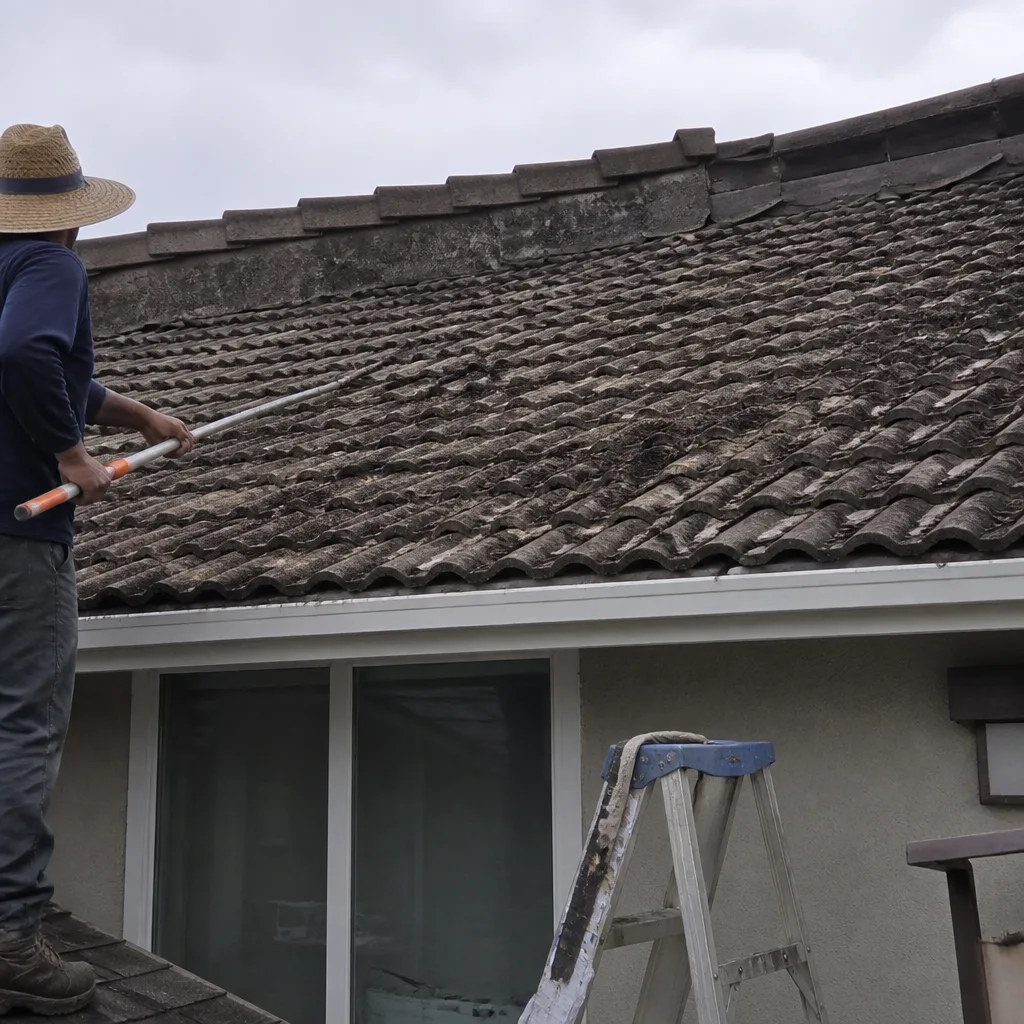 Before
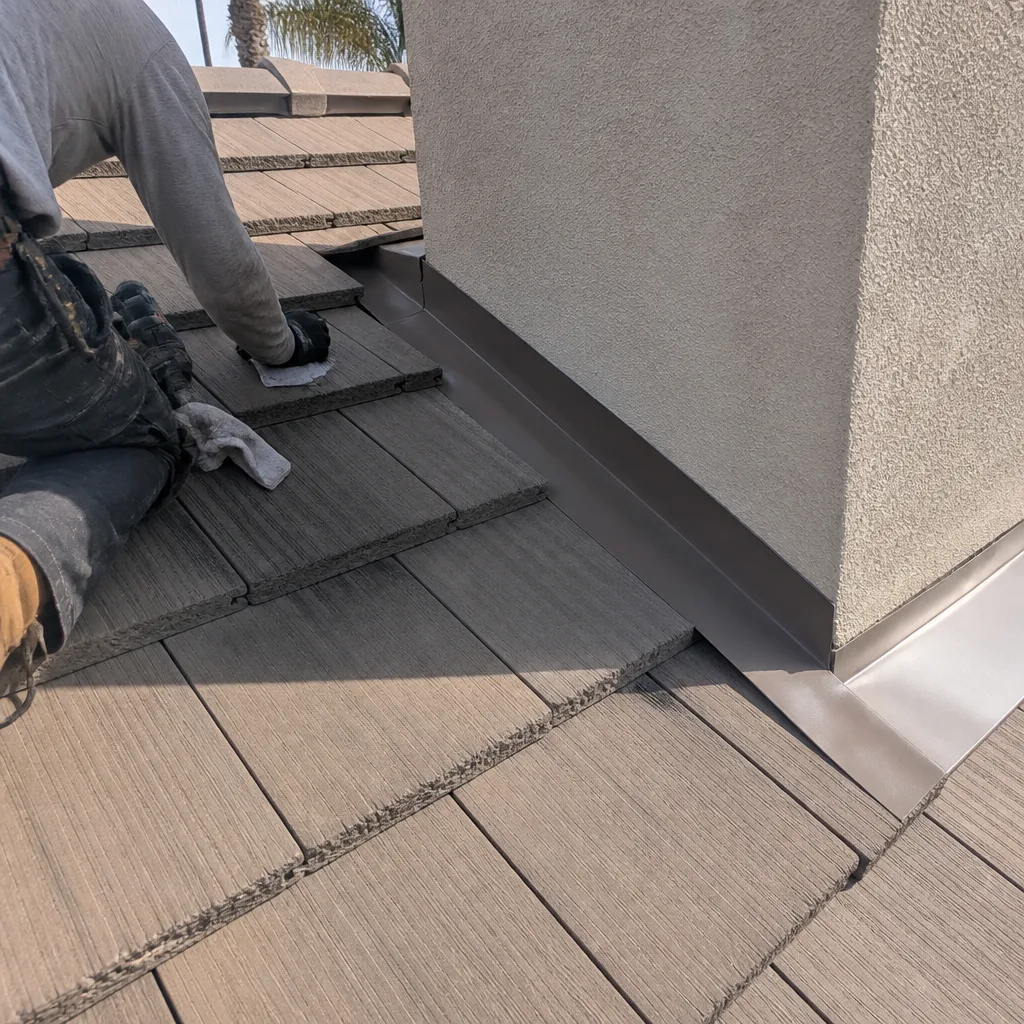 After
After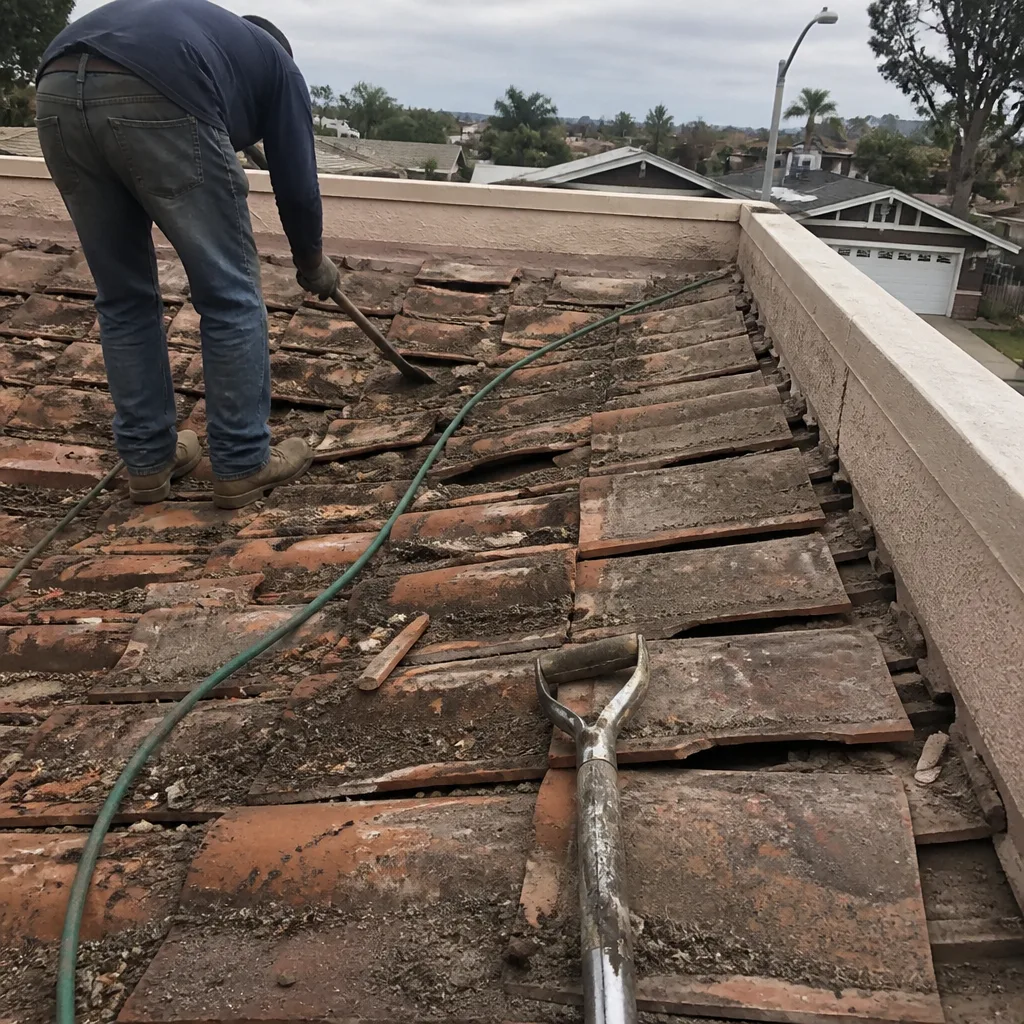 Before
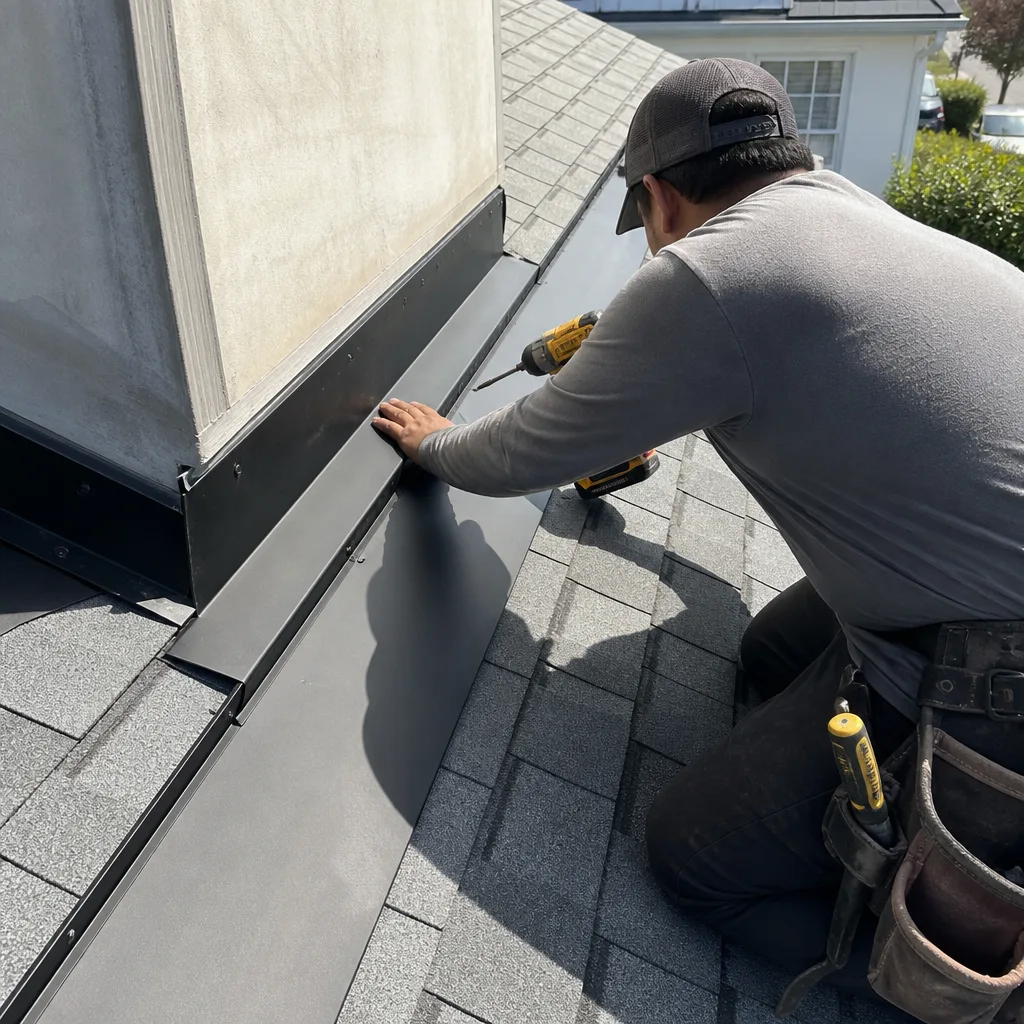 After
After