
Last updated October 17, 2026
 Metal roofing
 Architectural shingles
 Tile roofing
 GAF
GAF Owens Corning
 Flat & low-slope
Free roof inspection with deck photos before we talk money - GAF and Owens Corning certified installation
Roofing Company Maintenance Checklist for Orange County Homeowners
The number-one source of preventable roof replacement in Southern California isn’t storm damage. It’s deferred maintenance on fasteners, flashing, and penetration seals that quietly fail under UV and thermal cycling for two or three years before water ever shows up inside the house. By the time you see a ceiling stain in Orange County, the small problem you could have fixed for a few hundred dollars has often become a structural repair measured in the thousands. This guide gives you a maintenance checklist built specifically for how Orange County weather attacks a roof, not the generic list a national roofing company copied from another national website.
Styles & brands we work with
Quick Answer
A roof maintenance checklist for Orange County homeowners should cover four zones: the roof field, penetrations, flashing, and gutters, with checks timed to the seasons that cause the most damage here, meaning UV exposure in late summer and Santa Ana wind prep before October. Most homeowners can handle the visual checks and gutter clearing themselves. The rest belongs on a contractor’s schedule every 3 to 5 years, because that’s the interval where small seal failures turn into water intrusion if left alone.
Table of Contents
- Why Generic Checklists Fail in Orange County
- Roof Zone 1: The Field (Tiles, Shingles, and Membrane)
- Roof Zone 2: Penetrations (Vents, Skylights, and HVAC Curbs)
- Roof Zone 3: Flashing (Valleys, Walls, and Chimneys)
- Roof Zone 4: Gutters and Drainage
- Santa Ana Wind Season Prep: The October Checklist
- Frequency Schedule: What to Do and When
- Common Mistakes to Avoid
- When to Call a Professional
- Frequently Asked Questions
- The Bottom Line
Why Generic Checklists Fail in Orange County
Orange County doesn’t have one climate. It has three, and they alternate depending on how far you live from the coast. Coastal homes from Seal Beach to San Clemente deal with salt-laden air that accelerates corrosion on metal flashing and fasteners. Inland cities like Anaheim, Fullerton, and Orange see summer temperatures that push roof surfaces past 140 degrees, which bakes sealant until it cracks and separates. And every neighborhood from Huntington Beach to Yorba Linda gets hit by Santa Ana winds in the fall, winds that lift tile, tear shingles, and turn a loose flashing edge into a leverage point.
A generic maintenance list that says “inspect your roof twice a year” doesn’t tell you what to look for, which zone fails first, or what the failure looks like on a concrete tile roof versus an asphalt shingle roof versus a flat membrane. That specificity matters, because the same UV damage that creates a visible blister on a flat roof shows up as a subtle ridge lift on a shingle and as practically nothing visible on a concrete tile until the underlayment beneath it has already degraded. The list below is organized by roof zone, with failure timelines and inspection triggers specific to Orange County’s environment. If you’re working with a Roofing Company in Orange County, ask whether their maintenance inspection covers all four zones separately. If the answer is a generic “we walk the roof,” you’re not getting what this climate requires.
Roof Zone 1: The Field (Tiles, Shingles, and Membrane)
The field is the broad, flat expanse of roofing material that covers most of the house. It’s the part people think of when they think of a roof, and it’s where UV damage accumulates slowly, often invisibly. Here’s what to look for on each of the three most common Orange County roof types.
Concrete Tile (Common in Mission Viejo, Rancho Santa Margarita, and Most of South OC)
Concrete tile is the most common roofing material in Orange County, and it’s also the most misunderstood. The tile itself rarely fails. What fails is what’s underneath it: the underlayment, typically a felt or synthetic material that sits between the tile and the roof decking. Orange County’s UV intensity degrades this underlayment over 20 to 30 years, even though the tile above it still looks fine. From the ground, a concrete tile roof with failing underlayment looks identical to a healthy one.
Here’s what a homeowner can actually spot from a ladder or second-floor window:
- Cracked or broken tiles: These are usually impact damage, not UV damage. A cracked tile lets water hit the underlayment directly, which shortens its life. One cracked tile isn’t an emergency. Ten cracked tiles scattered across the field are a signal to schedule a repair before the next rain season.
- Slipped tiles: When a tile shifts out of alignment, the interlocking channel breaks. Water runs sideways under the field instead of down the slope. After any wind event over 40 mph, scan the roofline for gaps.
- Tile surface spalling: On older concrete tile, you’ll sometimes see the top layer flaking away in thin sheets, a process called spalling. It doesn’t cause leaks by itself, but it signals the tile is nearing the end of its service life, and it’s a good prompt to have the underlayment inspected.
Asphalt Shingle (Common in Central and North OC: Fullerton, Anaheim, Garden Grove, Orange)
Asphalt shingles fail differently. The asphalt itself breaks down under UV, losing the oils that keep it flexible. The visible sign is granule loss: the tiny mineral granules that protect the shingle from the sun wash into the gutters. When a shingle loses enough granules, the asphalt beneath it oxidizes and cracks. In Orange County, the south-facing and west-facing slopes fail first because they take the longest sun exposure.
From the ground or a ladder, look for:
- Granule accumulation in gutters: If you clean your gutters in September and find a thick, sandy sludge, that’s your shingles, not dirt. A little is normal. A quarter inch of granules in the gutter bed every year means the shingles are aging faster than normal.
- Cupping or curling shingle edges: When shingle edges curl upward, they catch wind. A curled edge on a Santa Ana day is how a single shingle tear becomes a blown-off patch.
- Bare spots or dark patches: These are areas where the granules are completely gone. The shingle is in the final stage of its life. It’s not leaking yet in most cases, but it will within a couple of years.
Flat Membrane (Common on Mid-Century Homes in Tustin, Costa Mesa, and Parts of Irvine)
Flat roofs in Orange County are usually single-ply membranes: TPO, PVC, or modified bitumen. They fail at the seams, not the field. The membrane itself holds up reasonably well to UV, but the heat-welded seams and the sealant around penetrations are the weak points. Orange County’s high UV combined with thermal movement, the membrane expands and contracts daily, works seams apart over years.
Visible signs from a ladder or by walking carefully on the roof:
- Seam lifting: Run your eyes along the seams where membrane sheets meet. If you see an edge lifting even slightly, that seam is failing. It hasn’t leaked yet, but it will.
- Blistering: Bubbles or raised areas in the membrane indicate trapped moisture beneath the surface. On a flat roof in Orange County, blisters are almost always a sign that water got under the membrane through a failed seam or penetration.
- Ponding water: After a rain, if water stands in the same spots for more than 48 hours, the membrane in those low areas is being subjected to constant hydrolysis. It will crack there first. Flat roofs on older Orange County homes often have drainage slope issues that were never corrected.
Roof Zone 2: Penetrations (Vents, Skylights, and HVAC Curbs)
Every hole in a roof for a vent pipe, a skylight, an exhaust fan, or an HVAC curb creates a penetration, and every penetration is a failure point. In our experience across Orange County, more leaks trace back to a failed penetration seal than any other single cause. The reason is thermal cycling: roof penetrations heat and cool at a different rate than the surrounding roof material. The sealant around them flexes every day, and after enough cycles, it cracks, separates, or pulls away from the pipe or curb.
Most penetration failures announce themselves gradually. The first sign is often a small water stain on the ceiling directly below the penetration, or in the attic near the vent pipe. By the time the stain is visible, the seal has been failing for months.
Here’s what to check on each type of penetration:
- Vent pipes (plumbing stack vents): Look for cracked or separated sealant around the pipe boot where it meets the roof. On concrete tile roofs, check that the boot flashing hasn’t been pulled up by a slipped tile. On shingle roofs, look for exposed nails where the boot was installed, as exposed nail heads are a direct water path.
- Skylights: Check the sealant bead around the curb and the flashing where the skylight meets the roof. Also inspect the skylight glass itself for chips or cracks. A skylight in Orange County takes direct UV year-round, and the sealant around the frame is often the first material to fail.
- HVAC curbs and exhaust fan hoods: These are larger penetrations with more flashing seams. Look for separated sealant along the curb, and on flat roofs, check for ponding water against the curb. Standing water against a curb seal will find its way through.
If you schedule any roof work, whether it’s a Roof Repair in Orange County or a full replacement, ask the contractor to photograph every penetration before and after. A written record of penetration condition is the single most useful document you can have for future maintenance decisions.
Roof Zone 3: Flashing (Valleys, Walls, and Chimneys)
Flashing is the metal material installed at every transition point on a roof: where two roof slopes meet in a valley, where the roof meets a vertical wall, around chimneys, and along dormers. Flashing does the heavy lifting because water naturally collects and channels through these transition points. When flashing fails, the leak is usually larger and more damaging than a penetration leak, because the water is concentrated into a channel.
Orange County has two specific flashing problems that a generic checklist misses. The first is salt corrosion in coastal areas: metal flashing on homes within a few miles of the coast is exposed to airborne salt, which accelerates rust on galvanized steel flashing and accelerates galvanic corrosion where flashing touches a different metal. The second is Santa Ana wind: flashings at roof-to-wall transitions and chimney cricket flashes have a leading edge, and a 60 mph gust can peel back a flashing that a 20 mph breeze never touches.
Here’s your flashing checklist by location:
- Valleys (where two roof planes meet): Look for lifted or separated metal, exposed nails, and debris accumulation. Valley flashing channels more water than any other part of the roof. A single exposed nail in a valley is a finding you should fix, not defer.
- Roof-to-wall transitions (where the roof meets a stucco or siding wall): Check the counterflashing, the piece of metal that overlaps the step flashing and is embedded in the wall. If the counterflashing has pulled away from the wall, wind-blown rain can get behind the entire flashing assembly.
- Chimneys: Inspect the flashing around all four sides of the chimney and the cricket, the small peaked structure behind the chimney that diverts water around it. Missing or lifted chimney flashing is a common finding on Orange County homes built before 1990.
- Drip edge (the metal edge along the eaves): Drip edge directs water into the gutter instead of behind it. If the drip edge has pulled away from the fascia, water runs behind the gutter and into the fascia board. On many Orange County homes, the drip edge was installed with roofing nails that have since backed out from thermal movement.
Roof Zone 4: Gutters and Drainage
Gutters aren’t part of the roof, but they’re part of the roof system, and ignored gutters cause roof damage. When gutters clog, water backs up and runs over the edge, soaking the fascia board and, on lower slopes, wicking up under the first course of shingles or tiles. In Orange County, the gutter season has two peaks: late summer, when dust and leaf litter from the dry season have accumulated, and December through February, when rain arrives and immediately reveals every clog that’s been building.
Here’s the Orange County gutter maintenance cycle:
- Clean gutters and downspouts twice a year: Once in September, before the Santa Ana season knocks more debris down, and once in late November, before the heaviest rain months. Homes with large trees overhanging the roof may need three cleanings a year.
- Check downspout discharge: Make sure downspouts extend at least three feet away from the foundation. Short downspout extensions dump water at the foundation line, which causes a separate set of problems, but they also encourage splashback onto the fascia.
- Look for granule accumulation (on shingle roofs): As covered earlier, excessive granules in the gutter signal shingle aging. Track the amount year over year. A sudden increase means your shingles have entered the accelerated wear phase.
- Inspect the gutter slope: Gutters need a slight pitch toward the downspout. Over time, hangers loosen and gutters sag, creating low spots where water pools. Standing water in a gutter accelerates rust on steel gutters and algae growth on aluminum.
Santa Ana Wind Season Prep: The October Checklist
Santa Ana winds in Orange County typically begin in September and peak in October and November. Gusts in canyons and foothill communities, places like Silverado Canyon, Modjeska Canyon, and parts of Yorba Linda and Anaheim Hills, can reach 60 to 70 mph. For a roof, sustained wind at those speeds is a stress test. The homes that survive it without damage are the ones whose maintenance was done before the wind arrived.
Here’s the pre-October checklist, and it applies to every homeowner in Orange County, not just the canyon communities:
- Clear the roof of debris: Remove leaves, branches, and any loose material from the roof surface and gutters. Debris acts as a dam during wind-driven rain, concentrating water in spots the roof wasn’t designed to handle.
- Check for loose tiles and shingles: Tap or gently probe tiles near the roofline. A loose tile that you find in September becomes a projectile in October, and the tile’s absence exposes the underlayment below.
- Inspect flashing edges for lift: Walk the perimeter and check every flashing that has an exposed edge: chimney flashing, wall counterflashing, and drip edge. If you can slide a fingertip under the edge, wind can too.
- Trim overhanging tree branches: A branch that touches the roof during a calm day will scrape it during a wind event, and a broken branch dropped from 30 feet can crack a concrete tile. In Orange County, overhanging eucalyptus and pepper trees are the usual culprits.
- Photograph the roof after the first major wind event of the season: This is the documentation step most homeowners skip. If you file a wind damage claim with your insurance company, photos taken immediately after the event are far more credible than photos taken three weeks later.
Frequency Schedule: What to Do and When
Most roof maintenance guidelines either overburden the homeowner with monthly tasks or understate the contractor interval so severely that warranties void silently. For more on what roofing actually costs in Orange County, see our breakdown. Here’s a realistic schedule for Orange County, based on what materials in this climate actually require. It’s also the schedule that keeps manufacturer warranties intact for GAF, CertainTeed, Owens Corning, IKO, and Atlas products, all of which require documented maintenance as a condition of warranty coverage.
Annually (Homeowner Tasks)
- Visual inspection from the ground and from a ladder at the eaves: look for cracked tiles, curled shingles, lifted flashing, and debris accumulation.
- Gutter cleaning: twice a year in September and late November, with a third cleaning if large trees overhang the roof.
- Penetration check: examine vent pipe boots, skylight sealant, and any other visible penetration from a safe position. Document what you see with your phone.
- Post-Santa Ana inspection: after the first major wind event each fall, check for slipped tiles, torn shingles, and lifted flashing.
Every 3-5 Years (Contractor Tasks)
- Full roof inspection by a licensed contractor, including a walk on the roof surface for flat roofs and a tile-by-tile check on sloped roofs.
- Sealant replacement on penetrations: pipe boots, skylight frames, vent collars, and HVAC curb flashings. The sealant used on these areas has a service life of roughly 3 to 7 years in Orange County’s UV environment.
- Flashing inspection and repair: valley flashings, wall counterflashings, chimney flashings, and drip edge. This is also the interval for re-securing any flashing that has lifted.
- Underlayment spot-check on tile roofs: lift a few tiles at representative locations and check the underlayment beneath. On a tile roof that’s 15 or more years old, this is the only way to know if the underlayment is still functional.
Warranty-Voiding Skipped Maintenance
The three maintenance items that most commonly void material warranties are: first, failing to keep the roof clear of debris, because trapped moisture accelerates shingle degradation and tile underlayment rot; second, failing to repair minor damage promptly, because a small crack that’s left open is evidence of neglect; and third, installing non-compatible sealant or coating products on the roof surface, which voids the warranty on many manufacturer systems. If you have a roof installed with CertainTeed, Owens Corning, or IKO materials, the warranty documentation you got at installation lists the required maintenance. The Roof Inspection in Orange County page covers what a full inspection includes if you want to know what to expect from a professional visit.
Common Mistakes to Avoid
- Checking only the roof field: Most homeowners look for missing shingles and skip the penetrations entirely. The field is where roof damage is visible. Penetrations are where it’s happening silently. A checklist that ignores pipe boots and vent collars will miss the most common leak source in Orange County homes.
- Waiting for a leak to do maintenance: By the time water shows up on a ceiling, you’re not doing maintenance anymore, you’re doing repair, and the repair bill reflects the difference. A $300 penetration seal replacement done on schedule prevents a $3,000 ceiling and insulation repair after the fact.
- Using silicone caulk on roof surfaces: The big-box store stuff doesn’t adhere long-term to roof materials under UV and thermal cycling. Roofing-grade sealant costs more and lasts years longer. The wrong product creates a false sense of security and patches that look fine while water gets behind them.
- Skipping the post-wind documentation: Insurance adjusters ask for photos, and “I didn’t take any because I didn’t think it was serious” is the most expensive sentence a homeowner says after a Santa Ana event.
- Walking on concrete tile roofs: A tile roof that isn’t walked carefully can be damaged by the person “inspecting” it. Always step on the lower third of each tile, never on the overlap, and if you’re not sure, this is a job to leave to a professional.
- Ignoring the warranty paperwork: Most Orange County homeowners can’t tell you what their shingle warranty requires, but the warranty company can, and they’ll hold it against the claim. Read the maintenance requirements once and put them in your calendar.
When to Call a Professional
Some maintenance tasks are squarely on the homeowner. Clearing gutters is one. Taking photos after a wind storm is another. But there are times when a licensed contractor is the only sensible call. If you see water staining on a ceiling or wall, you need a leak trace, not a wait-and-see approach. If you find multiple cracked or slipped tiles after a wind event, the field has been compromised and the underlayment may already be wet. If your roof is more than 15 years old and hasn’t had a professional inspection in the last five years, you’re past due. And if the maintenance involves walking on a roof with any pitch at all, particularly a tile roof, the risk of injury and of causing more damage outweighs the cost of hiring someone who does it daily. Before any work begins, make sure you understand roofing permits, codes & inspections in CA.
If you’re in Orange County and need a maintenance inspection, Brennan Roofing Co Orange County home offers free estimates. Every inspection comes with a written report, and any repair work gets a written price before work starts. Call (559) 258-5703 to schedule.
Frequently Asked Questions
A maintenance inspection in Orange County typically runs between $150 and $350 if you’re hiring it as a standalone service, and many roofing companies waive or credit the inspection fee if you proceed with repair work they recommend. Routine maintenance items like penetration seal replacement usually fall between $200 and $500 depending on the number of penetrations. The cost climb happens when maintenance is deferred and the underlying problem becomes a repair: a small flashing fix might be $400 done early and $2,500 if the flashing failure has already soaked the decking. For an exact number on your roof, call (559) 258-5703, and you’ll get a written quote before any work starts.
Annually, in October, before the Santa Ana wind season peaks and before the winter rain arrives. A homeowner visual check from the ground and eaves should happen twice a year, in spring and fall, with the fall check being the more important one. A full professional inspection, including the walk-on-the-roof assessment and penetration checks, is warranted every 3 to 5 years depending on roof age and material.
No. Insurance covers sudden and accidental damage caused by covered events like windstorms and falling trees. It doesn’t cover gradual wear, deferred maintenance, or failures caused by lack of upkeep. In fact, if an Orange County homeowner files a wind damage claim and the insurer determines the damage was worsened by neglected flashing or missing tiles, the claim can be denied or reduced on the basis that proper maintenance would have prevented the outcome.
On asphalt shingles, UV damage shows up as granule loss that accumulates in gutters, followed by cupping edges and bare dark patches. On concrete tile, UV damage is invisible on the tile itself and shows up as underlayment degradation, which you can only verify by lifting tiles or during a professional inspection. On flat membranes, UV damage appears as seam separation and surface cracking, often preceded by blistering in low spots where water ponds.
You can’t “cover” a roof in any practical sense, and tarps flutter and tear in high winds and often cause more damage than they prevent. The correct preparation is to remove loose debris, secure any lifted flashing or tiles, trim overhanging branches, and document the roof’s condition with photos. That way, if a wind event does cause damage, you have a before-and-after record for your insurance claim.
It shouldn’t, because a proper maintenance schedule doesn’t create surprise change orders. A written estimate from Brennan Roofing Co Orange County gives you the price on paper before any work begins, and that number doesn’t move at the door. If the roofer discovers additional work during the job, you’ll see a change order before that work proceeds, and you’ll approve it in writing. Call (559) 258-5703 for a written estimate based on your specific roof.
The Bottom Line
Orange County’s climate degrades roofs in specific, predictable ways: UV bakes sealant until it cracks, Santa Ana winds exploit every loose edge, and coastal salt eats metal flashing from the fastener out. A maintenance checklist that treats all roofs the same misses most of what actually fails here. The four-zone approach, field, penetrations, flashing, and gutters, paired with the October wind season prep and a realistic frequency schedule, gets at the failures that cost homeowners the most money. Do your annual checks, keep documentation, and call a professional for the 3-to-5-year work. For more guides & resources on protecting your Orange County home, explore our blog. The roof you save will be your own.
Written by Travis Oakley, Owner at Brennan Roofing Co Orange County, serving Orange County since 2000.
See the difference
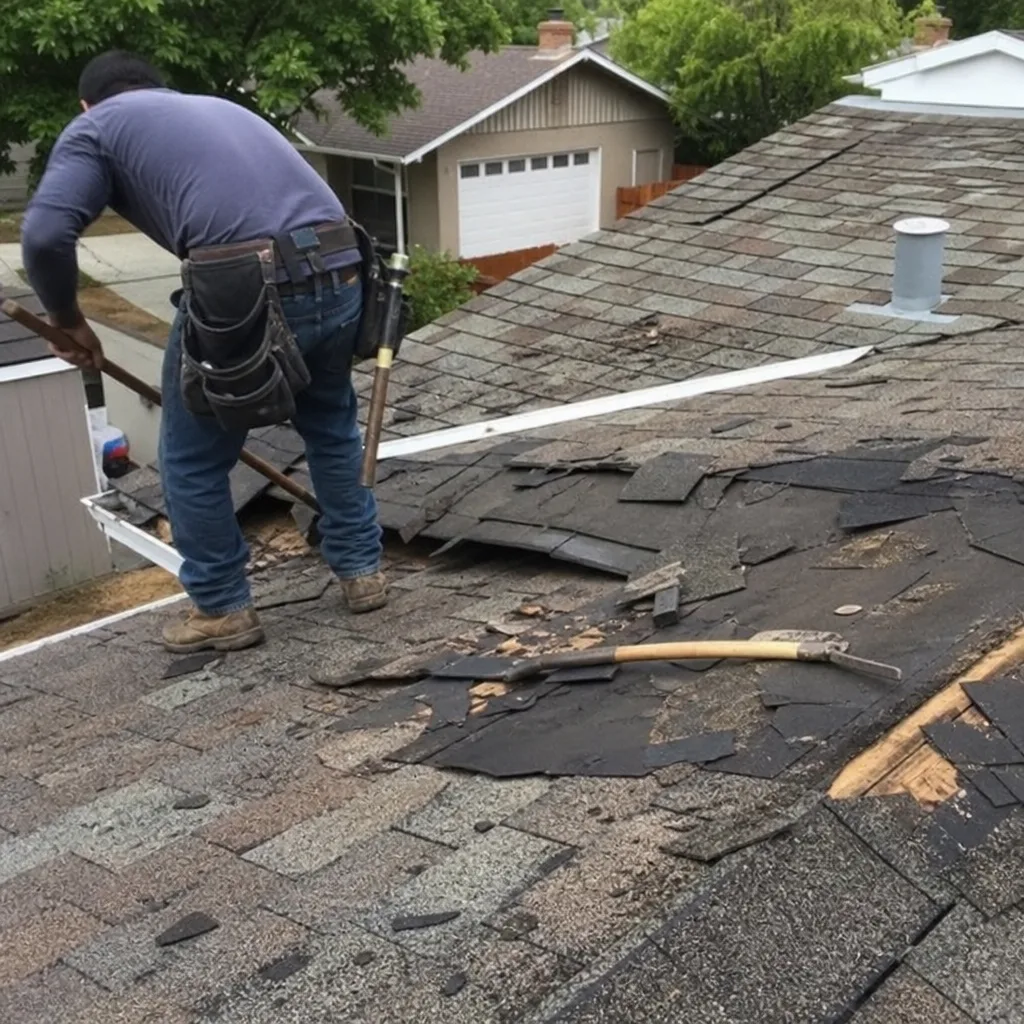 Before
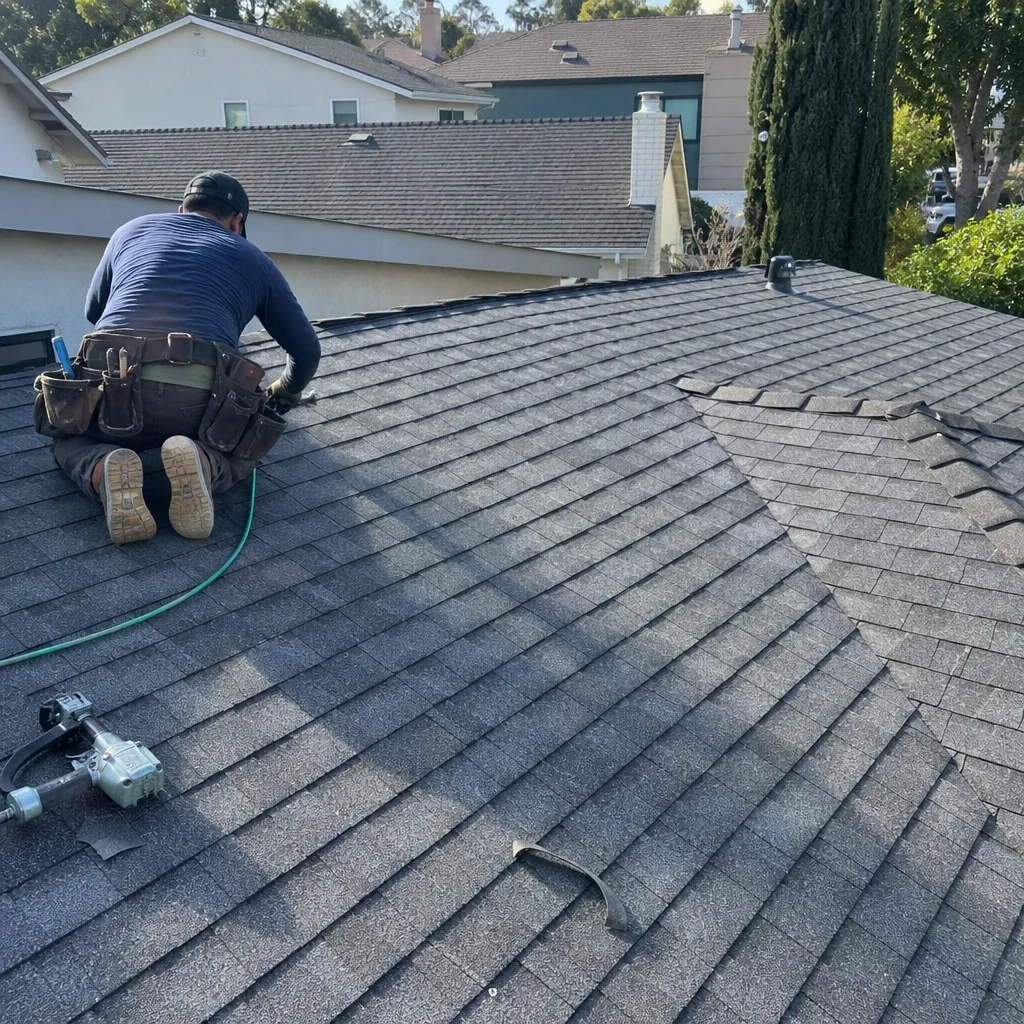 After
After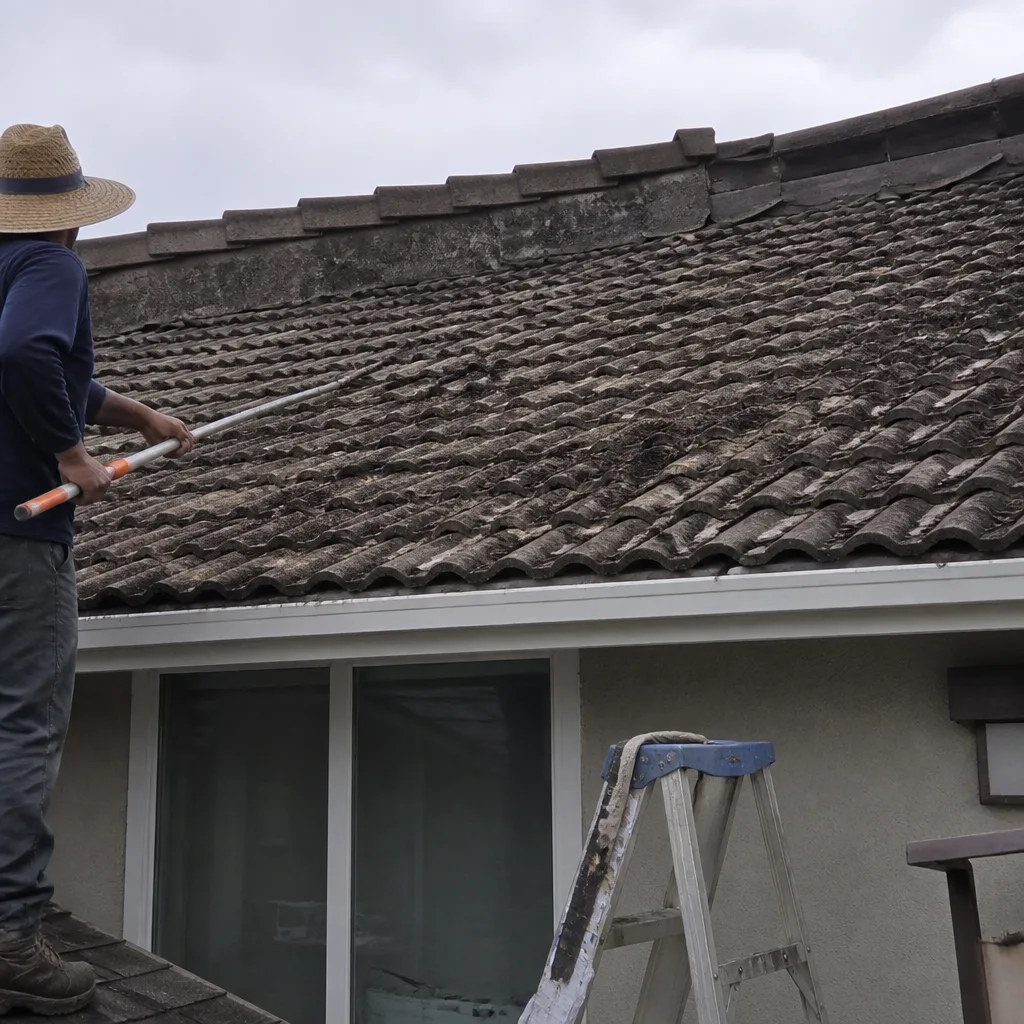 Before
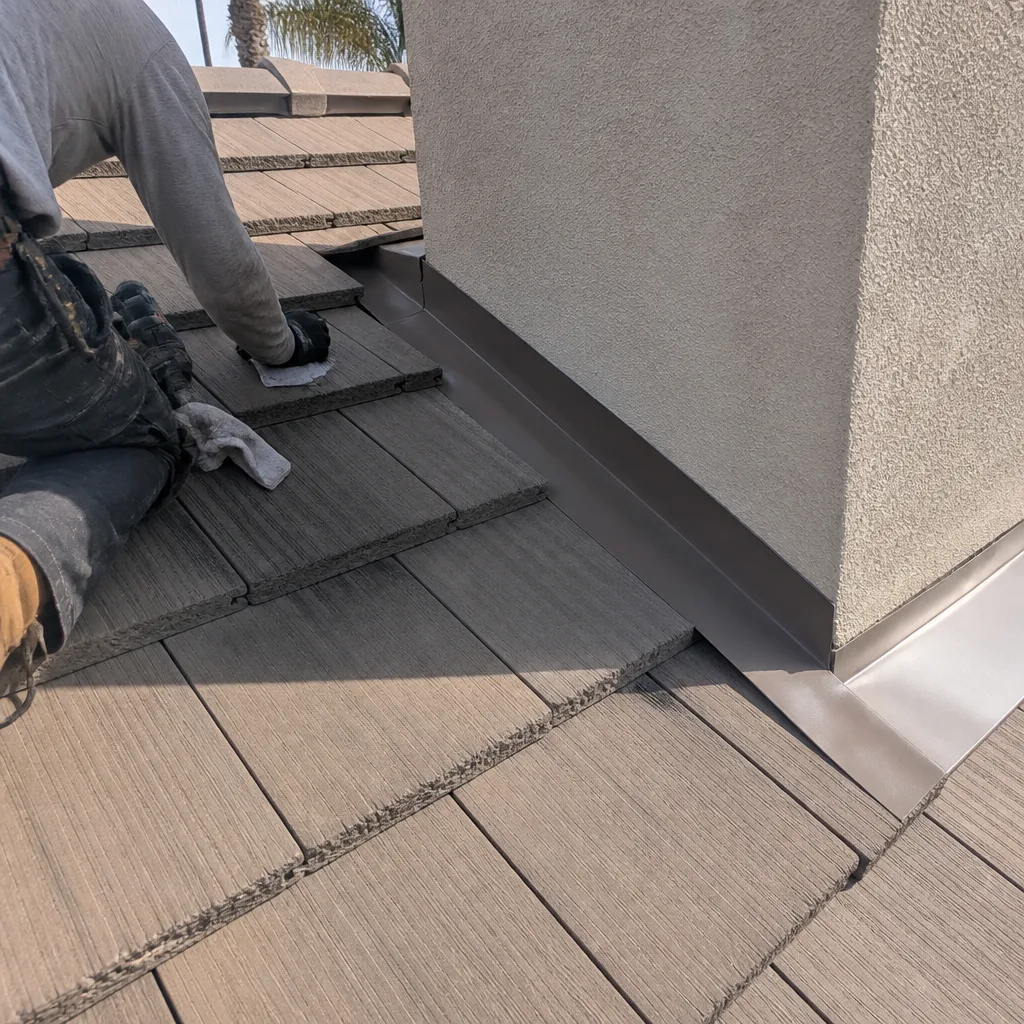 After
After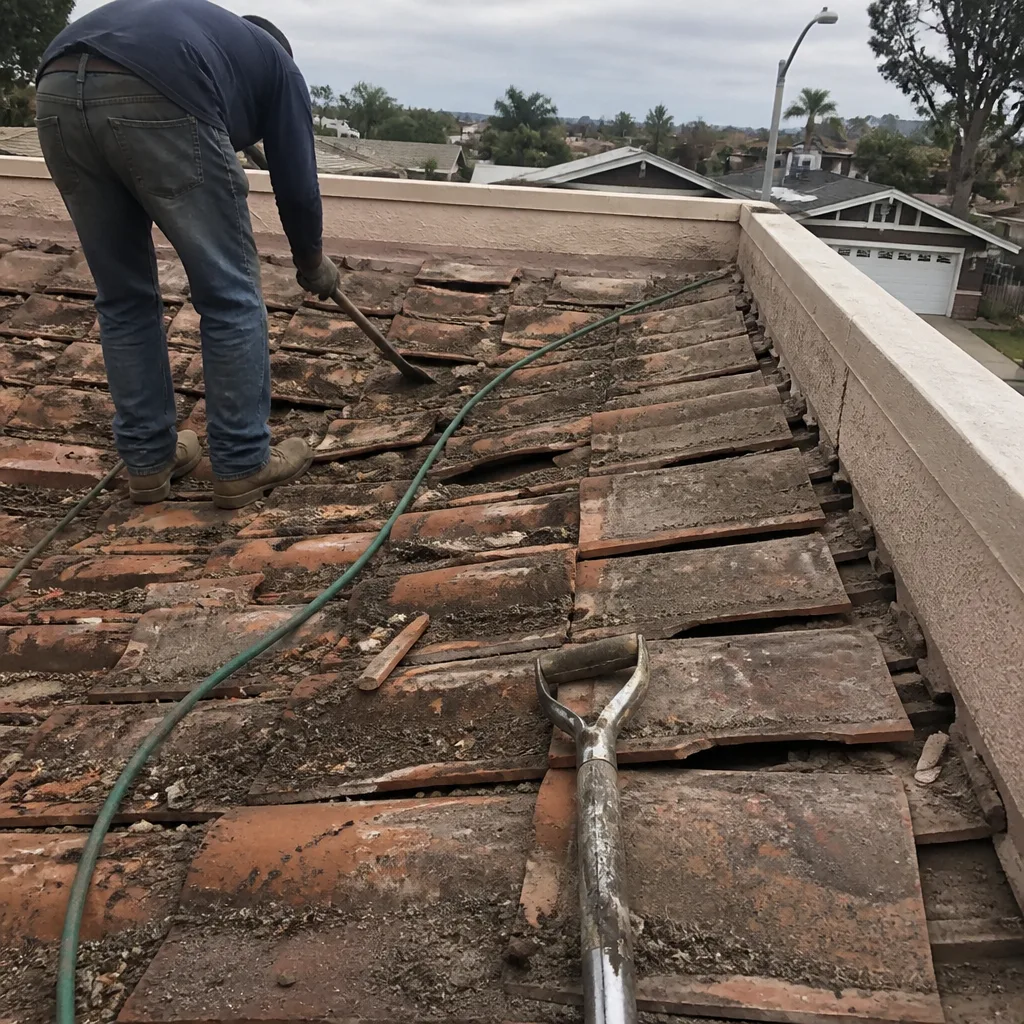 Before
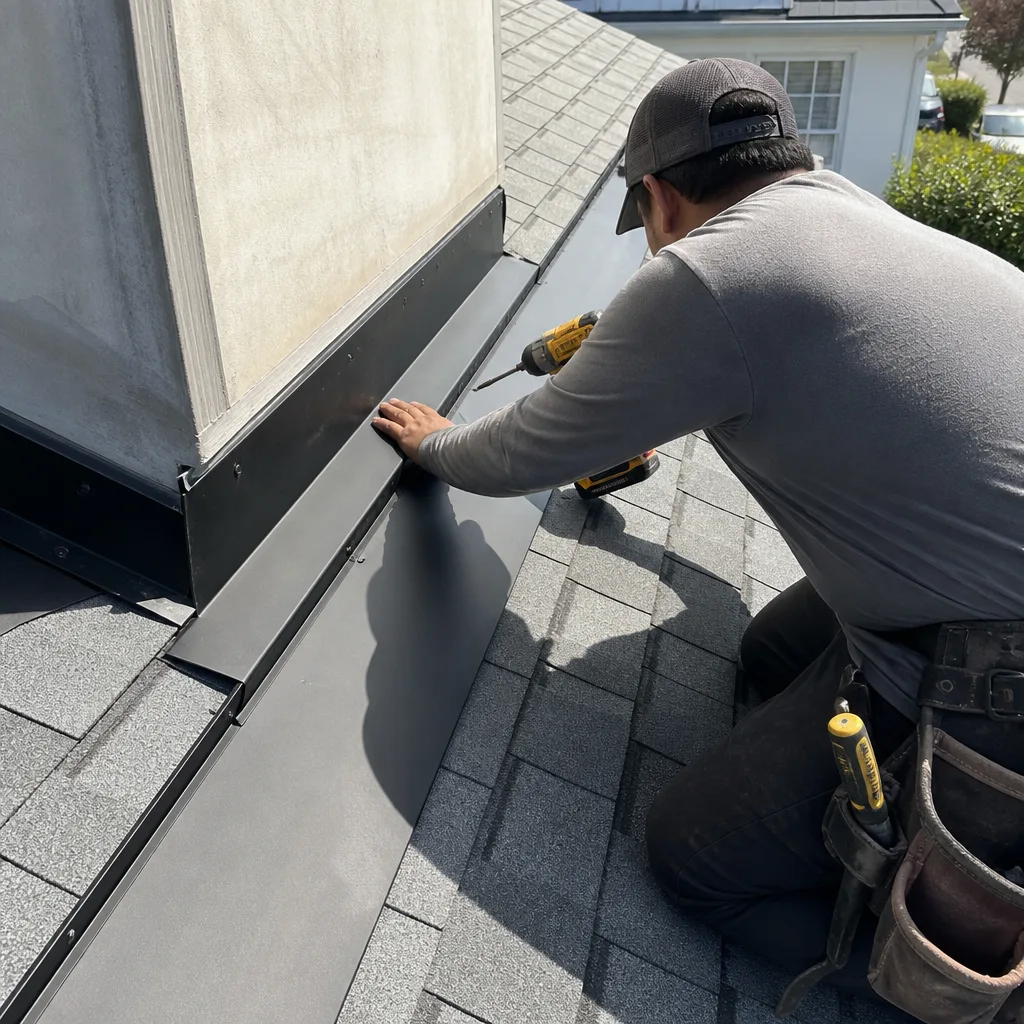 After
After