
Last updated October 17, 2026
 Metal roofing
 Architectural shingles
 Tile roofing
 GAF
GAF Owens Corning
 Flat & low-slope
Free roof inspection with deck photos before we talk money - GAF and Owens Corning certified installation
DIY vs Professional Roofing: The Orange County Homeowner’s Decision Guide
California is one of the few states with an explicit legal path for homeowners to roof their own houses. The law says you can do it. What the law doesn’t say is that you’re inheriting every liability a licensed contractor carries, and none of the protections. A homeowner in Orange County who tears off a roof in Mission Viejo and reinstalls it wrong owns that mistake completely: the failed inspection, the leaked ceiling after the first winter rain, the insurance adjuster’s denial, the voided GAF warranty that would have paid for materials. This guide walks through the actual stakes, what California permits, what it doesn’t, and where the dollars really land. For a detailed look at 2026 pricing, see our cost breakdown.
Quick Answer
For most Orange County homeowners, professional roofing is the lower-risk choice once you account for California’s permit and inspection requirements, manufacturer warranty conditions, and homeowners insurance fine print. DIY roofing makes financial sense only in a narrow slice of small repairs under the permit threshold.
Styles & brands we work with
Table of Contents
- What California Actually Allows a Homeowner to Do
- The Permit and Inspection Reality in Orange County
- How DIY Voids Manufacturer Warranties
- The Homeowners Insurance Angle Nobody Discusses
- An Honest Cost Comparison: DIY vs Professional
- The Narrow Window: Where DIY Makes Sense
- Common Mistakes to Avoid
- When to Call a Professional
- Frequently Asked Questions
What California Actually Allows a Homeowner to Do
California Business and Professions Code Section 7044 lets a homeowner act as their own contractor on their own residence. You can pull the permit, buy the materials, and perform the work. No C-39 roofing license required. The law is real and it applies in Orange County the same as anywhere else in the state.
But here’s what the statute does not do. It does not exempt you from the California Building Standards Code, Title 24. It does not exempt you from your local jurisdiction’s permit requirements. It does not exempt you from manufacturer installation specifications. And it does not exempt you from the legal duty to perform work to the standard of care a licensed contractor would meet.
What this means in practice:
- You can roof your own home without a contractor’s license. That’s the extent of the legal permission.
- You must still pull a permit if the work exceeds your city’s threshold. In most Orange County cities, a full re-roof always triggers a permit.
- You must pass the same inspections a licensed contractor would face. The inspector does not grade you on effort.
- You inherit full liability for code violations, leaks, and any damage that results from the work.
Most guides & resources frame this as “DIY is legal in California.” That’s true but misleading. Legal to attempt is not the same as legal to do incorrectly. The gap between those two things is where Orange County homeowners get burned.
The Permit and Inspection Reality in Orange County
Every city in Orange County issues its own permits. Irvine, Anaheim, Santa Ana, Huntington Beach, Fullerton, Orange, Costa Mesa: each has its own fee schedule, its own plan check process, and its own inspection workflow. What they share is the underlying code: the 2022 California Building Code, which incorporates the International Residential Code with California amendments.
For roofing, the permit threshold matters. A small repair, patch, or isolated section of shingles may not trigger a permit in some Orange County cities. A full roof replacement always does. The trigger is typically based on the square footage of the roof area being altered, and the threshold varies by jurisdiction.
Here’s the step-by-step for a homeowner pulling their own permit in Orange County (for how to hire a pro instead, see our guide):
- Determine your city’s permit threshold. Call the building department or check online. Ask specifically about roofing work square footage limits.
- Submit a permit application. You’ll need a plot plan, a roof plan showing slope and materials, and a description of the work. Some cities accept owner-builder applications; some require additional documentation.
- Pay the permit fee. Roofing permit fees in Orange County typically run from $150 to $500 depending on the city and the size of the job. Final costs get calculated at issuance.
- Schedule inspections. Most Orange County roof projects require at minimum a dry-in inspection (underlayment and flashing before shingles or tile go on) and a final inspection.
- Pass both inspections. This is where most DIY work fails. Inspectors check nailing patterns, flashing details, drip edge installation, valley construction, and attic ventilation.
We’ve seen homeowner-permitted jobs in Anaheim and Garden Grove fail dry-in inspection over fastener placement. The fix meant stripping underlayment and starting over. The permit didn’t save money; it exposed a problem a licensed crew would have caught before the inspector ever arrived.
How DIY Voids Manufacturer Warranties
Most Orange County homeowners don’t read the fine print on a shingle warranty until after something goes wrong. Here’s the uncomfortable truth: the major shingle and tile manufacturers write their warranties to exclude work that wasn’t done by a licensed contractor following their published installation specs.
GAF, the most common shingle brand in Orange County, publishes a limited warranty that includes installation requirements covering fastener type, fastener placement, underlayment, and ventilation. CertainTeed does the same. Owens Corning’s warranty documents specify that improper application voids coverage. Boral, the leading concrete and clay tile manufacturer for Orange County’s Spanish and Mediterranean style homes, writes explicit installation specifications into its warranty terms.
What this means in plain English:
- Wrong fastener length or pattern? Warranty void.
- Wrong underlayment for the tile profile? Warranty void.
- No documentation of the install? No warranty claim to file.
Here’s the structural problem with DIY and manufacturer warranties: a warranty claim requires documentation that the work met the manufacturer’s published installation spec. A homeowner who does the work themselves generally cannot produce that documentation. The warranty dies on the filing table, not because the work was bad, but because the paperwork chain doesn’t exist.
This matters more in Orange County than in most markets. Tile roofs dominate in older neighborhoods like Floral Park in Santa Ana, Old Towne Orange, and the ranch-style tracts across Fullerton and Brea. Tile work is the most specification-sensitive roofing in the market. Undefined fastener patterns, wrong underlayment, missing eave closures: each one is a warranty void condition, and each one is exactly the kind of detail a DIY job gets wrong.
The Homeowners Insurance Angle Nobody Discusses
Most people think about their roof and their insurance policy as separate things. They aren’t. In California, your homeowners insurance policy is a contract, and that contract includes language about the condition of your property and the work performed on it. Roofing work is not exempt.
Here’s the specific mechanism. A standard California homeowners policy covers sudden and accidental water damage. But if that water came through a roof that was improperly installed, the insurer can deny the claim on the grounds of faulty workmanship. That’s true whether the faulty work was done by a licensed contractor or the homeowner themselves. The difference is what happens next.
When a licensed contractor installs a roof and something fails, the homeowner has legal recourse: a contractor’s liability insurance policy, a contractor’s license bond, and a contractor’s workmanship warranty. All three can cover the cost of repairs. When a homeowner installs their own roof and it fails, the insurance adjuster denies the claim for faulty workmanship, and there’s nowhere else to turn. No liability policy. No bond. No warranty. The full cost of the water damage, the interior repair, the mold remediation, and the re-roof lands on the homeowner.
Some California insurance carriers have gone further. They write policies that require roofing work to be performed by a licensed contractor to maintain coverage on subsequent water damage claims. Read your policy. Specifically the exclusions section, specifically the language around “workmanship” and “proper installation.” If you’re not sure what it says, call your agent and ask this question directly: “If I re-roof my house myself and the roof leaks in two years, is the water damage covered?” Get the answer in writing.
For Orange County homeowners, this isn’t hypothetical. We get calls from people in Lake Forest, Tustin, and Yorba Linda whose DIY roof leaked, whose insurance denied the claim, and who are now paying cash for the re-roof and the interior repair. The insurance angle doesn’t show up on YouTube tutorials. It shows up on a claim denial letter.
An Honest Cost Comparison: DIY vs Professional
The standard DIY pitch is simple: “A roofer quoted you $18,000. You can do it yourself for $9,000 and save half.” The math is real, but it’s incomplete. It compares contractor labor rates to zero, and it ignores everything else.
Here’s an honest line-item comparison for a typical 2,200 square foot single-story home in Orange County with a 30-year architectural shingle re-roof:
| Cost Item | DIY Estimate | Professional (Typical OC Range) |
|---|---|---|
| Asphalt shingles (30-year architectural) | $4,800-$6,500 (retail, big-box or supply yard) | $3,800-$5,200 (contractor volume pricing) |
| Underlayment, flashing, drip edge, ridge vent, fasteners, sealant | $1,500-$2,200 (retail) | $1,100-$1,700 (contractor pricing) |
| Permit fees | $150-$500 | $150-$500 |
| Dumpster rental / debris disposal | $400-$700 | Included in bid |
| Safety equipment (harness, rope, toe boards, brackets) at 6:12 pitch or steeper | $400-$1,200 to buy, or $80-$200/week to rent | Included in bid |
| Tools: nail guns, compressor, shingle cutter, ladder stabilizers | $300-$900 if not already owned | Included in bid |
| Labor | $0 (your time) | $6,000-$9,000 (most of the bid difference) |
| Total | $7,550-$12,000 | $11,150-$16,900 |
The DIY savings are real, but smaller than most people expect: typically $3,000 to $5,000 on a full re-roof, not the 50% number that gets thrown around. And that number doesn’t include the value of time. A homeowner working weekends might spend three to four full weekends on a tear-off and re-roof. That’s six to eight work days. At even a modest hourly rate, the time cost closes most of the gap.
The other hidden DIY cost: mistakes. A misplaced flashing detail, an underdriven fastener, a missed nail line. Each one is a leak waiting for the first rainy season. The cost to fix a DIY mistake, after the roof is done and the furniture is wet, usually exceeds the original savings.
We believe in written prices before any work starts. That’s the Garrison Standard, and it applies whether you work with us or another licensed Orange County roofing contractor. For ongoing roof maintenance, use our checklist. A professional bid should put every line item on paper before you commit: materials, labor, permits, disposal, everything. No surprises at the door.
The Narrow Window: Where DIY Makes Sense
This guide has been mostly about why DIY roofing is a bad deal for most Orange County homeowners. But the honest answer is not “never DIY.” It’s “DIY a very specific set of small tasks, and leave everything else alone.”
Here’s the window where competent DIY work makes sense:
- Gutter maintenance and cleaning. No permit. No code issue. No structural risk if done from a safe ladder. In Orange County, gutters fill with sycamore leaves, eucalyptus debris, and the occasional Santa Ana dust load. Clearing them twice a year is good ownership.
- Small flat-section repairs under the permit threshold. A patch on a low-slope section of a small roof, a resealed vent boot, a replaced section of damaged flashing. If your city doesn’t require a permit for the square footage, and you can safely access the area without working at height on a steep pitch, this is within reach.
- Specific sealant applications. Re-caulking a roof penetration, sealing a minor gap around a pipe boot, or refreshing sealant on a small parapet cap. These are maintenance tasks, not roofing projects.
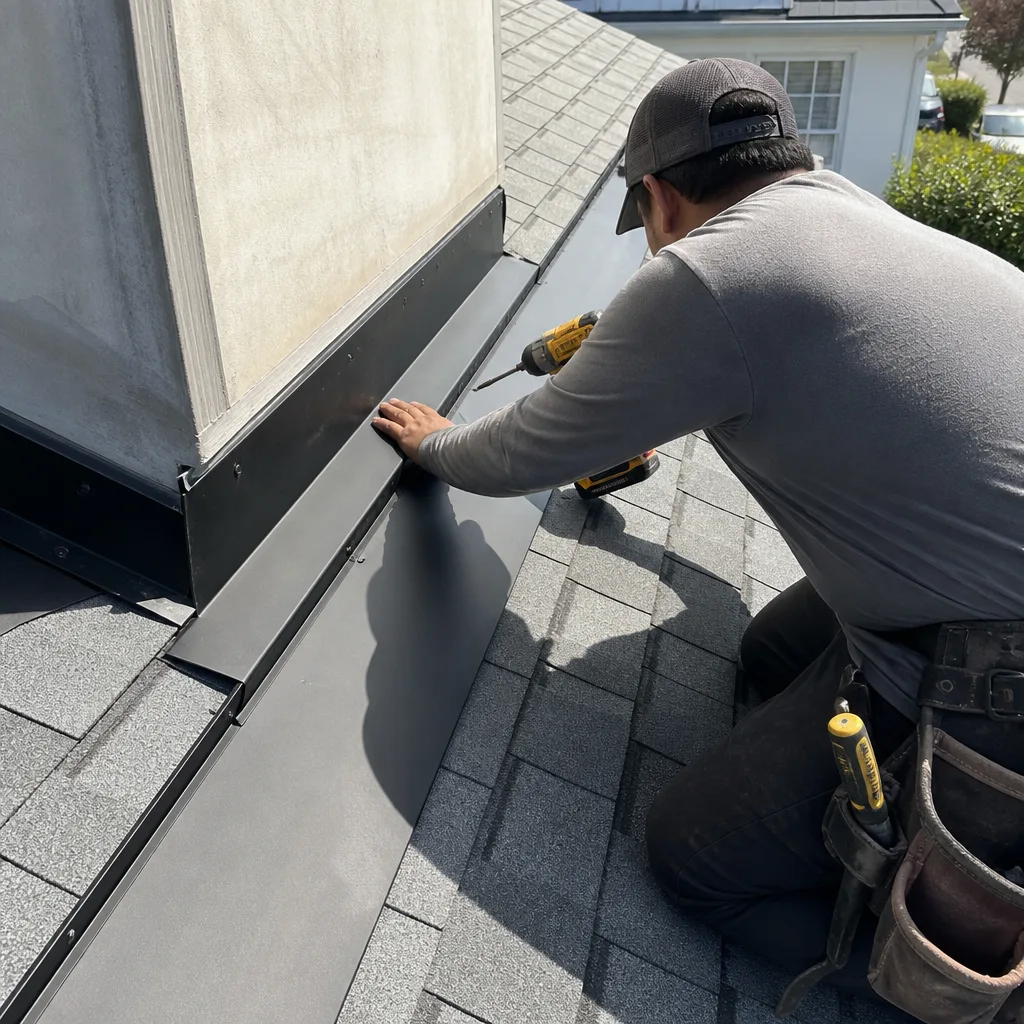
The line between “small repair” and “roofing project” is where the trouble starts. If the work involves tearing off existing roofing material, replacing underlayment, altering flashing, or working at a 6:12 pitch or steeper, that’s a roofing project. In Orange County, where tile roofs are common and tile work demands precision, the safe thing is to bring in a licensed roof repair contractor in Orange County who can assess what’s actually needed.
Common Mistakes to Avoid
- Assuming “legal to do” means “safe to do wrong.” The California owner-builder exemption lets you attempt the work. It doesn’t protect you from the consequences of doing it incorrectly. Read your city’s permit requirements before you touch the roof.
- Skipping the permit entirely. A full re-roof without a permit in Orange County is a building code violation. When you sell the house, the unpermitted work becomes your disclosure problem. When something leaks, your insurance company has another reason to deny the claim.
- Ignoring manufacturer installation specs. Residential shingle and tile roofs require specific fastener types, fastener patterns, and underlayment details. Skip the spec sheet and you’ve voided the warranty even if the roof never leaks.
- Working on a steep pitch without proper fall protection. Most Orange County homes have roofs at 5:12 to 8:12 pitch. Falls from a 7:12 roof are serious. The right harness, rope, and anchor cost less than a single emergency room visit.
- Underestimating the weather window. Tearing off a roof and leaving the decking exposed during a Santa Ana wind event or an early-season rain is a disaster. Professional crews plan around weather; DIYers often don’t have that flexibility.
- Comparing DIY cost to the cheapest bid instead of a written line-item bid. The cheapest bidder may be omitting disposal, permit fees, or safety equipment. Compare your DIY cost to a real written bid, not a verbal number.
When to Call a Professional
Call a licensed roofing contractor when the work involves a full re-roof, any tile work, any work at height on a steep pitch, any flashing replacement, or any repair where a leak has already caused interior water damage. These aren’t judgment calls for a motivated DIYer; they’re projects where the liability, the warranty risk, and the safety risk all point the same direction.
If you’re in Orange County and want a straight answer about what your roof actually needs, Brennan Roofing Co Orange County provides free estimates with a written price before any work starts. Call (559) 258-5703 and someone will answer. A live person, every time. We’ll send a background-checked, uniformed technician to give your roof an honest roof inspection in Orange County, and you’ll have a number on paper before you decide anything.
Frequently Asked Questions
Yes. California Business and Professions Code Section 7044 allows a homeowner to act as their own contractor on their own residence. However, the work must still comply with all applicable building codes, must be permitted and inspected when required, and carries the same liability as work done by a licensed contractor. For exact pricing on a professional comparison, call (559) 258-5703.
A typical 2,200 square foot single-story home in Orange County runs $11,000 to $17,000 for a full architectural shingle re-roof with permits. Tile re-roofs cost more, typically $18,000 to $30,000 depending on the tile profile and underlayment requirements. These are ballpark ranges; the only way to get an exact number is a written bid from a licensed roofing contractor.
Yes, in most cases. GAF, CertainTeed, Owens Corning, and Boral all write their warranties to require installation by a licensed professional following their published specifications. A DIY installation generally cannot produce the documentation required to file a warranty claim, which means the warranty is functionally void even if the work is done carefully.
Probably not. Most California homeowners policies exclude water damage caused by faulty workmanship, and a DIY installation is by definition unverified workmanship. Some policies require licensed contractor documentation for roofing work as a condition of continued coverage. Ask your agent in writing before you start any DIY roofing project.
Gutter cleaning, small flat-section patch repairs under the permit threshold, vent boot resealing, and minor sealant applications. If the work involves tear-off, underlayment replacement, flashing alteration, tile work, or steep-pitch access, that’s a licensed contractor’s job.
Yes. Every city in Orange County requires a permit for a full roof replacement. Small repairs may fall under the permit threshold depending on the city and the square footage involved. Call your local building department to confirm the specific threshold for your city.
The Bottom Line
California gives Orange County homeowners the legal right to roof their own homes. What it doesn’t give them is a pass on building codes, manufacturer warranty conditions, insurance policy language, or the financial consequences of getting the work wrong. The real decision isn’t just about saving a few thousand dollars in labor. It’s about whether that savings holds up after the first inspection, the first winter rain, or the first insurance claim. For small maintenance tasks, DIY is reasonable. For full re-roofs, tile work, steep-pitch projects, and anything involving a leak that’s already inside the house, the math favors a licensed contractor. Get a written price, understand the warranty, and make the decision with your eyes open.
Written by Travis Oakley, Owner at Brennan Roofing Co Orange County, serving Orange County since 2000.
See the difference
 Before
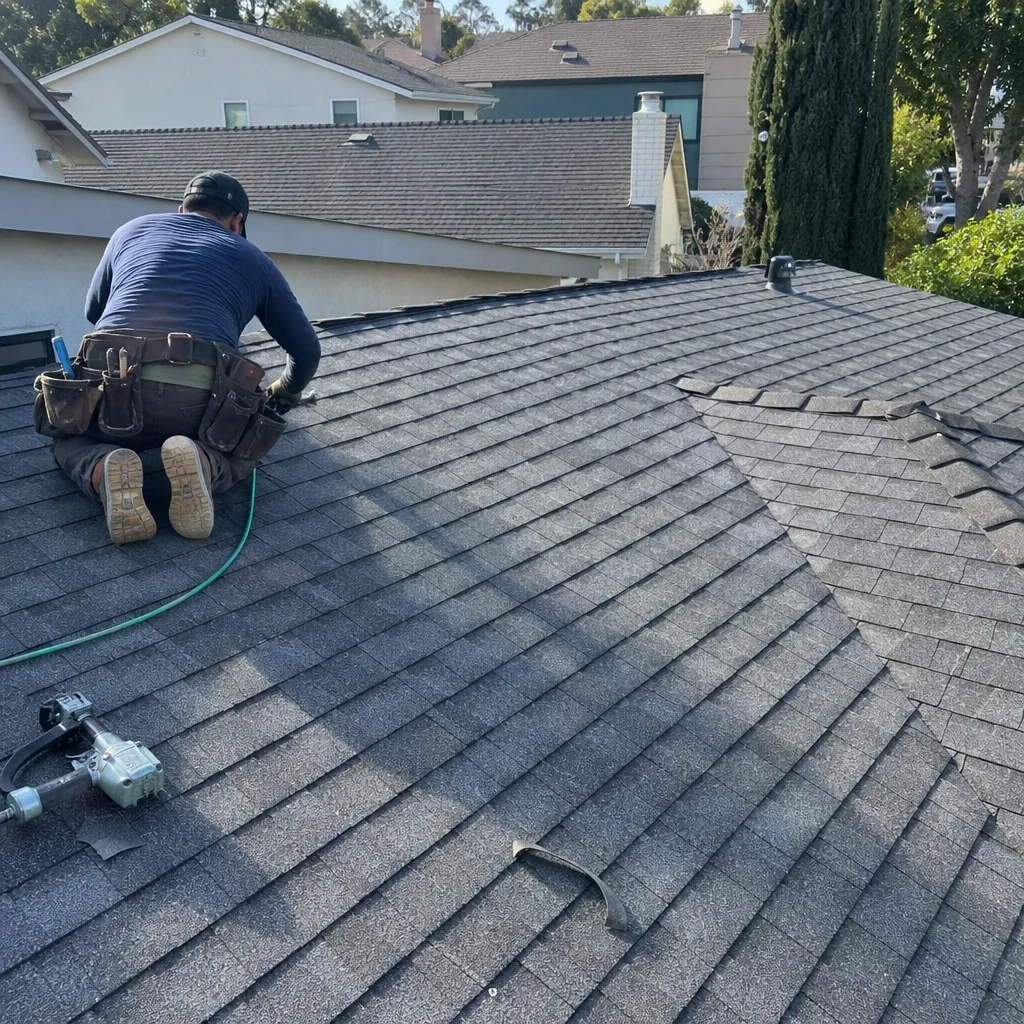 After
After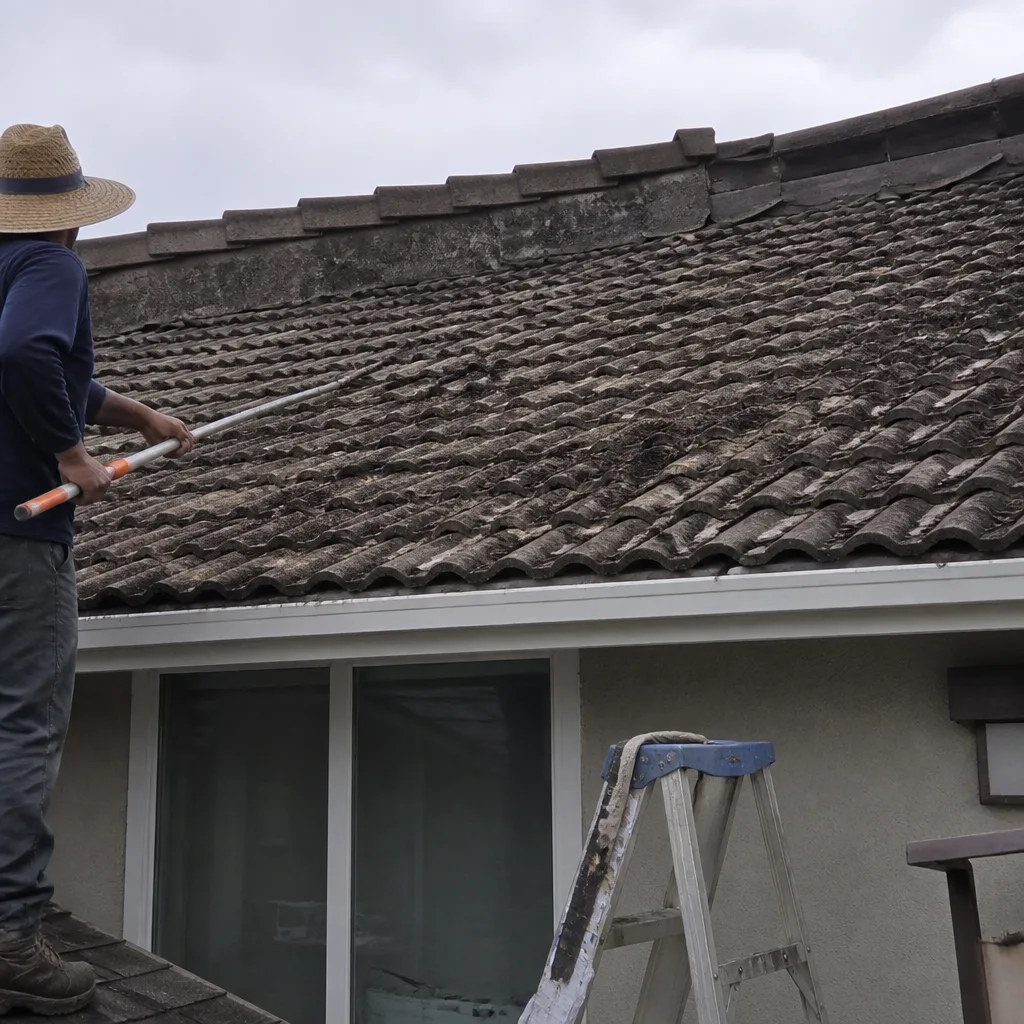 Before
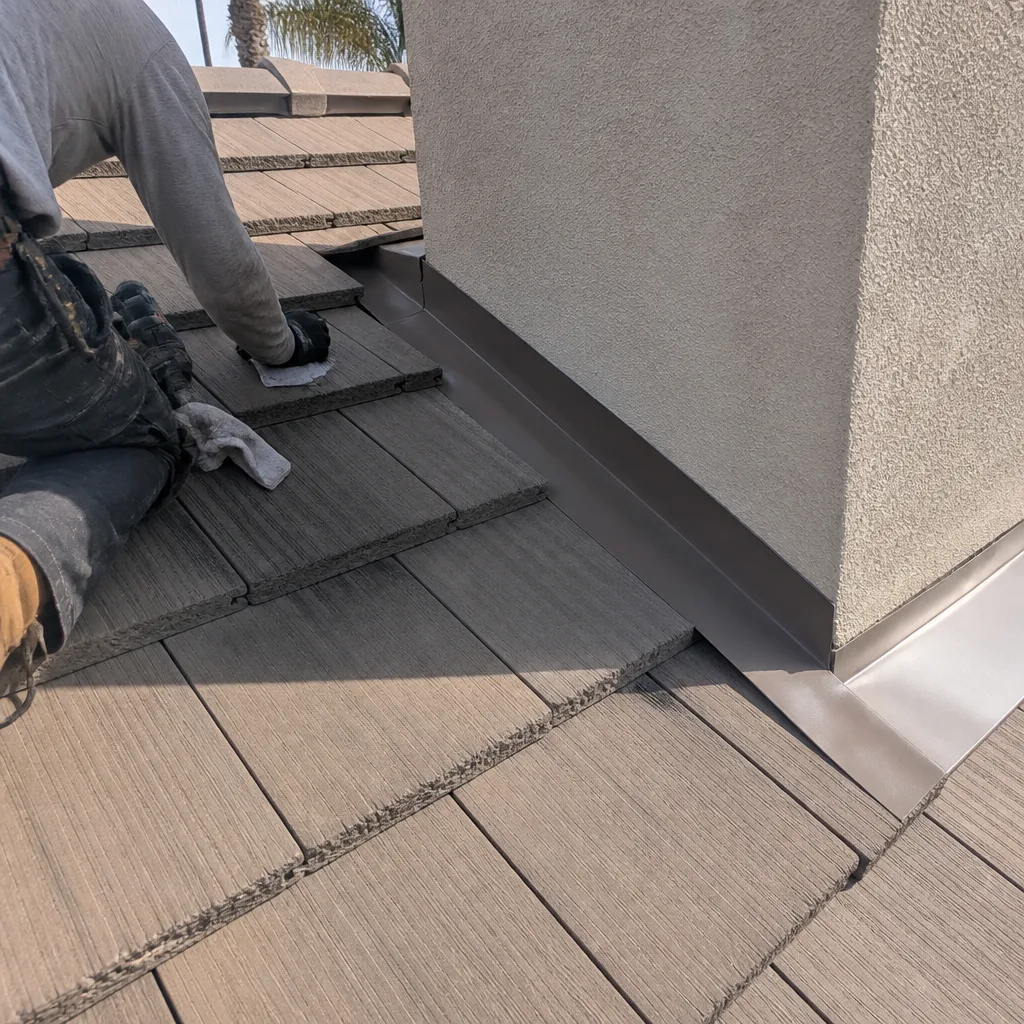 After
After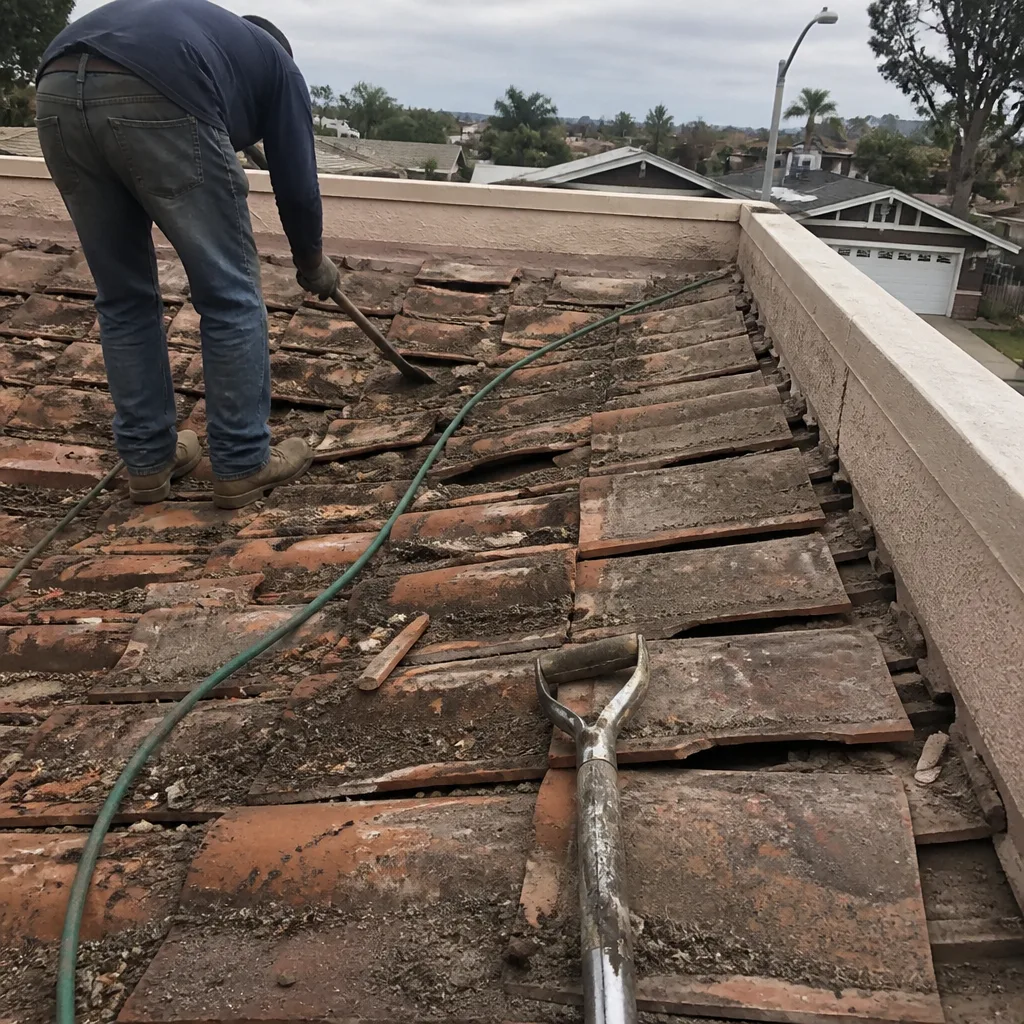 Before
 After
After