
Last updated October 17, 2026
 Metal roofing
 Architectural shingles
 Tile roofing
 GAF
GAF Owens Corning
 Flat & low-slope
Free roof inspection with deck photos before we talk money - GAF and Owens Corning certified installation
Roofing Warning Signs: A Orange County Homeowner’s Reference Guide
By the time you see a water stain on your ceiling, water has usually been moving through your roof system for 12 to 24 months. The stain isn’t the warning sign. It’s the end of the warning period. The actual signs happen outside, at the flashing and penetrations, long before anything shows up inside. This guide is written for Orange County homeowners who want to catch roof problems in the window when repairs cost hundreds of dollars instead of tens of thousands, and you can find more guides & resources on our blog. We’ll walk through the warning signs by location, explain what each one means, and give you a clear triage system so you know when to watch, when to schedule an inspection, and when to pick up the phone today.
Quick Answer
Roofing warning signs in Orange County fall into five locations: the attic, the exterior field, penetrations and flashing, gutters, and interior ceilings. The earliest and most actionable signs are attic-side moisture marks, granule loss on the high side of shingles, efflorescence on concrete tile, and debris rings around ponding water on flat sections. If you see any of these, schedule a Roof Inspection in Orange County within the month. If you see interior staining or daylight through the decking, call today.
Styles & brands we work with
Table of Contents
- Attic Warning Signs: The First Place to Look
- Exterior Field Warning Signs: Shingle and Tile Signals
- Flashing and Penetration Warning Signs: Where Most Leaks Start
- Gutter Warning Signs: What the Troughs Tell You
- Flat and Low-Slope Warning Signs: A Different Animal
- Interior Warning Signs: When the Water Has Already Won
- Decision Matrix: Monitor, Schedule, or Call Today
- What a Legitimate Inspection Report Documents
Attic Warning Signs: The First Place to Look
Most Orange County homeowners never go into their attic. That’s a mistake, because the attic is where roof failures announce themselves months before they show up anywhere else. The underside of the roof decking, the insulation, and the framing all hold evidence that the exterior of the roof hides. When we inspect a roof in Orange County, the attic walk is usually the most revealing part of the visit. Here’s what to look for.
Dark Stains on the Underside of the Decking
Dark streaks, gray patches, or black spotting on the plywood or OSB decking means water has been getting through the roof surface and soaking the wood. This is not a stain that washes off. It’s the wood itself discoloring from repeated moisture exposure. If the stain feels soft when pressed with a screwdriver handle, the decking has begun to rot and will need replacement when the roof is redone. A stain that’s dry and firm means the leak was intermittent, often tied to specific weather conditions. Either way, something above that spot is letting water through.
Moisture Beads or Damp Insulation
In Orange County’s marine layer zones, like San Clemente or Dana Point, morning fog pushes humid air into attic spaces through venting. But standing moisture beads on the underside of decking or damp fiberglass batts that never dry out are a different problem. They mean active water intrusion, not just condensation. Condensation from the marine layer dries by mid-morning. Water from a roof leak stays. If you check your attic at noon on a dry day and the insulation is still damp, you have a leak.
Daylight Through the Decking
Turn off the attic light and let your eyes adjust. If you can see daylight coming through any gap, seam, or hole in the decking, water can get through that same opening. This is one of the few signs that’s truly urgent. Daylight through the decking means the roof’s water-shedding layer has been compromised at that point. Call a Roof Repair in Orange County contractor the same day. The opening will only get larger.
Rust on Exposed Nail Points
Walk the attic carefully and look at the nails poking through the decking. Rusted nails or rust streaks running down from nail points mean the nails have been exposed to moisture for months. This often indicates the roof covering above has lost its seal and water is traveling along the fastener. In coastal Orange County cities like Huntington Beach and Newport Beach, salt air accelerates this rusting. A few rusted nails might mean a small repair. A field of rusted nails means the roof covering is failing broadly.
Exterior Field Warning Signs: Shingle and Tile Signals
The exterior field is what most homeowners think of when they think “roof warning signs.” It’s the large visible surface of shingles, tiles, or membrane that covers the roof plane. In Orange County, this surface takes a beating from UV exposure that most other regions don’t experience. The sun here is relentless, and the roof’s response to that sun tells you a lot about its remaining service life.
Granule Loss on the High Side of Field Shingles
Asphalt shingles shed granules as they age. That’s normal. What’s not normal is a pattern where granules are gone on the high side of each shingle, leaving a yellow or gray line running horizontally across the roof. In Orange County, the south and west-facing slopes take direct afternoon sun, and the UV exposure degrades the asphalt at the shingle’s edge first. When you see those eroded granule lines, the shingles are in the final phase of their service life. They haven’t failed yet, but they’ve lost most of their UV protection and will begin cracking and curling within a season or two.
Efflorescence on Concrete Tile
Orange County has a lot of concrete tile roofs, especially in planned communities across Irvine, Mission Viejo, and Rancho Santa Margarita. Concrete tile is porous. Over time, water migrates through the tile body and evaporates, leaving behind white mineral deposits called efflorescence. A light white haze on the underside of tiles is common and not necessarily a problem. But thick chalky white streaks running down the tile surface, or efflorescence that appears suddenly in a concentrated area, means moisture is moving through the tile in a way it wasn’t before. The tile’s water-resistance is failing. This is the earliest outward sign that concrete tile is nearing replacement.
Hairline Fractures Visible Only at Certain Angles
Concrete tile fractures rarely show up as dramatic cracks. They show up as fine lines, often only visible when the sun hits the tile at a low angle in the morning or late afternoon. Get on a ladder and view the roof surface from the side, not straight on. Look for thin dark lines running through tiles, particularly on the south-facing slope. These hairline fractures allow water to seep into the tile body, where freeze-thaw cycles (rare in Orange County but possible in canyon areas like Silverado and Trabuco) or simple thermal expansion widen the crack until the tile fails entirely. One fractured tile is a repair. A dozen fractured tiles on the same slope is a systemic problem.
Curling Shingle Corners and Missing Tabs
Curling is the asphalt shingle’s way of saying the asphalt has dried out. The corner lifts, the seal strip under the shingle loses adhesion, and wind gets under the tab. In Orange County’s Santa Ana wind events, which can gust 50 to 70 mph through canyon passes, a single lifted shingle tab becomes a flap that tears off half a row. After a Santa Ana event, walk the perimeter of your house and look for shingle tabs in the yard. They’re dark and rectangular and mean the roof’s wind resistance has been compromised.
Flashing and Penetration Warning Signs: Where Most Leaks Start
The overwhelming majority of roof leaks in Orange County start at flashings and penetrations, not in the field of the roof. Flashing is the metal material that transitions the roof surface around chimneys, skylights, vents, pipes, and wall intersections. Penetrations are anything that pokes through the roof: plumbing vents, attic vents, HVAC boots, solar mounts. These are the joints where water either turns away or gets in. Here’s what failing flashing looks like before it leaks.
Lifted or Separated Flashing at Wall Intersections
Where a roof slope meets a vertical wall, there should be a visible strip of metal flashing tucked under the wall’s siding and lapped over the shingles or tiles. In Orange County, stucco walls are the norm, and the flashing is often embedded in the stucco. Look for a gap between the stucco and the roof surface. Look for flashing that has pulled away from the wall by even a quarter inch. That gap catches wind-driven rain and directs it under the roof covering. If you see paint cracking along a line just above the roofline, it often means the flashing underneath is flexing from thermal movement and has separated.
Cracked or Shrunken Sealant Around Pipe Boots
Plumbing vents, which are the small pipes poking through the roof, are typically sealed with a rubber boot that slides over the pipe and a metal collar that flashes onto the roof. That rubber boot is the weak link. In Orange County’s UV environment, rubber boots dry out and split within 8 to 12 years. The split is usually on the south side, where the sun hits hardest. If you can see a visible crack in the rubber, water will eventually find it. This is a ten-minute repair for a roofer and a hundred-dollar problem today. It’s a thousand-dollar problem if you wait for the ceiling stain.
Rust Streaks Below Metal Flashing
Galvanized steel flashing eventually rusts. The rust shows up first as an orange-brown streak below the flashing runs, visible on the shingles or tiles. In coastal Orange County, where salt spray speeds up corrosion, rusted flashing appears years earlier than it would inland. Rust means the protective zinc layer is gone and the steel is converting to iron oxide, which swells, cracks, and eventually opens pinholes. A rust streak is a warning sign that the flashing is in its final stage. Replace it before the pinhole becomes a leak.
Missing or Damaged Drip Edge
Drip edge is the metal strip that runs along the roof’s perimeter, at the eave. It directs water off the roof and into the gutter instead of letting it wick back under the shingles. In Orange County, many older roofs were installed without drip edge at all, or with a minimal profile that leaves the decking edge exposed. Look at the eave from ground level. If you can see the edge of the plywood decking, or if the lowest shingle row sags slightly, the drip edge is missing or compromised. This causes the decking edge to rot from the bottom up, a decay pattern we see regularly on 25-year-old roofs in Anaheim and Garden Grove.
Gutter Warning Signs: What the Troughs Tell You
Gutters are a diagnostic tool as much as a drainage feature. They collect what the roof sheds, which means they hold a record of what’s happening on the surface above. Orange County homeowners who clean their gutters twice a year have a built-in roof inspection opportunity they rarely use, as covered in our Seasonal Roofing Care for Orange County: Year-Round Homeowner’s Guide. Here’s what to look for in the troughs.
Accumulated Granules in the Gutter
Pull a handful of debris out of the gutter. If it’s mostly leaves and twigs, that’s normal. If it’s mostly dark, fine, sandy material, that’s shingle granules. A small amount of granule accumulation in the first year after a new roof is normal as the shingles shed their protective surfacing excess. But consistent granule buildup year after year, especially in the same section of gutter, means the shingles above are degrading steadily. You can match the granule washout to the slope above to identify which roof plane is failing first.
Sand or Sediment Deposits at Downspout Outlets
Concrete tile roofs shed fine sediment as the tiles slowly erode. If you have concrete tile and you find a small sandbar of sediment at the base of a downspout, the tiles above are losing material. This is a normal aging pattern, but the rate matters. A light dusting after ten years is expected. A visible pile of sediment every season means the tile surface is breaking down and the roof should be evaluated for remaining service life.
Debris Patterns That Show Water Overflow
Look at the outside face of the gutter. Streaks of dirt or organic staining on the gutter’s outer edge, below the lip, mean water has been running over the side instead of through the downspout. This usually means the gutter is clogged, undersized, or pitched incorrectly. It also means water is falling directly onto the fascia board and the foundation at that point. In Orange County, foundation soil movement from improper drainage is a common and expensive problem, and the gutter overflow is the early warning that prevents it.
Flat and Low-Slope Warning Signs: A Different Animal
Most Orange County homes have at least one flat or low-slope roof section: over a garage, an addition, a patio cover, or a mid-century modern main roof. These sections fail differently than pitched roofs and show different warning signs. They’re also more likely to fail in this climate because ponding water sits on the membrane under the sun’s UV, accelerating degradation. Here’s what to watch for on flat sections.
Ponding Water Rings
Flat roofs are never truly flat. They’re built with a slight slope, called a taper, to move water toward drains or scuppers. When the membrane or the underlying insulation begins to sag, water collects in low spots. After a rain, look at your flat roof from a second-story window or a ladder. If you see standing water that remains 48 hours or more after the rain stops, that’s ponding. The warning sign that’s easy to miss is the ring. Ponding water leaves a visible mineral ring on the membrane when the water eventually evaporates. A fresh pond leaves a single ring. Multiple concentric rings mean water has been ponding, evaporating, and ponding again in the same spot for a long time. That membrane has been sitting in water under UV for months or years, and it’s degrading faster than the rest of the roof.
Membrane Bubbling or Blistering
Single-ply membranes like TPO and PVC, and older built-up roofs, develop bubbles when water vapors or trapped air expand under the surface and push the membrane up. A blister looks like a small rounded bump in the roof surface, often a few inches across. In Orange County’s heat, especially inland in cities like Yorba Linda and Orange, membrane bubbles expand during the day and contract at night, which stresses the material at the bubble’s edge until it splits. A small blister is a warning sign you can monitor. A burst blister, or a cluster of blisters across a wide area, means the membrane has begun to fail structurally.
Parapet Wall Separation
Many flat roofs in Orange County terminate at a parapet wall, where the membrane runs up the wall and is capped with metal. Look at the intersection where the roof membrane meets the vertical wall. If you see a gap, a lifted edge, or cracking along the membrane’s transition, moisture is entering the wall cavity and the roof deck below. Parapet failures are often dismissed because the leak shows up inside a wall rather than on a ceiling. By the time it appears as wall staining, the framing behind the stucco has been wet for a long time.
Interior Warning Signs: When the Water Has Already Won
Interior signs are the ones homeowners notice first, because they’re visible from the living room. But they’re also the last warning signs in the sequence. By the time water shows up inside the house, the roof system has already been compromised for months or years. The value of interior signs isn’t in catching problems early. It’s in telling you where the problem is and how urgent the response needs to be.
Ceiling Stains
A brown or yellow ceiling stain is the classic interior warning sign. The stain is usually smaller than the actual wet area above it, because water spreads across the drywall before it becomes visible. The location of the stain matters. A stain in the center of the ceiling, directly below the attic, usually points to a roof penetration directly above. A stain near the ceiling’s edge, where it meets an exterior wall, often means water is traveling along a rafter or down the inside of a wall from a flashing failure at the roofline. Stain color tells you about the leak’s persistence. A dark stain with a crisp edge is likely from a single recent event. A stain with a fading halo of lighter rings around it has been cycling through wet and dry periods for months or years.
Sagging Drywall or Bubbling Paint
When the drywall on the ceiling begins to sag or the paint bubbles in a contained area, water has saturated the gypsum core. A sagging ceiling is a sign that the leak has been active for a long time, and that the drywall itself has lost its structural integrity. In Orange County homes built in the 1960s and 1970s, where ceilings are often textured, the texture can hide bubbling paint, so check for subtle waffling or an uneven reflection when light hits the ceiling at an angle.
Musty Odor in the Attic or Upper Rooms
A persistent musty smell in the attic or in rooms directly below the roof is often the first sign of a slow, hidden leak that hasn’t yet produced a visible stain. The odor comes from mold and mildew growing on damp framing, insulation, or drywall inside the roof assembly. In Orange County’s dry climate, attic mold is less common than in humid regions, but it does occur in enclosed roof cavities with inadequate ventilation, particularly after a slow leak that’s been active through a rainy winter. If the musty smell is strongest in the morning and fades during the day, that’s a sign of moisture condensation, not necessarily a roof leak. If it’s constant, inspect for water intrusion.
Decision Matrix: Monitor, Schedule, or Call Today
Not every warning sign requires immediate action, and responding to every minor signal with a full roof replacement quote is how homeowners get talked into work they don’t need. Here’s a straightforward triage system that tells you what to do based on what you see. This is the same framework we use when we walk a roof and explain findings to a homeowner.
Monitor It: Check Again Next Season
- Light granule accumulation in gutters on a roof under 10 years old. This is normal surficial shedding.
- Small amount of efflorescence on concrete tiles that’s been present for years and hasn’t changed.
- Minor rust staining on flashing that’s still structurally sound and dry inside.
- A single small blister on a flat membrane that hasn’t changed size across two inspections.
- Hairline tile fractures on one or two tiles with no evidence of moisture beneath.
Schedule an Inspection This Month
- Eroded granule lines on the high side of field shingles.
- Cracked rubber pipe boots on any penetration.
- Lifted flashing at a wall intersection with a visible gap.
- Ponding water rings showing repeated ponding events on a flat section.
- Dark attic decking stains that are dry to the touch but visible.
- Consistent sediment buildup in gutters below concrete tile.
Call Today
- Daylight through the decking from inside the attic.
- Active moisture in the attic during a dry day.
- Ceiling stains or sagging drywall anywhere in the house.
- Burst membrane blisters on a flat roof.
- Multiple missing shingle tabs after a Santa Ana wind event.
- Musty odor in the attic with a visible stain on any living space ceiling below.
For the “call today” category, call a Roofing Company in Orange County with a live person who answers the phone. At Brennan Roofing Co Orange County, someone answers our phones 24/7. No voicemail, no callback queue. If you have water moving through your roof right now, you should be talking to a person, not a machine.
What a Legitimate Inspection Report Documents
Homeowners who schedule a roof inspection often don’t know what they should expect to receive at the end of it. There’s a meaningful difference between an inspection that produces information and an inspection that produces a sales proposal. Understanding that difference protects you from being worked.
A legitimate inspection report will document, in writing and with photographs, the condition of each roof system component: the decking, the underlayment, the flashing at each penetration, the field surface, the gutters, the ventilation. It will note the roof’s approximate age, the manufacturer of the materials, and the remaining service life range. It will specify which warning signs are present, where they are located, and what the recommended next step is for each finding. Some findings will carry a recommendation to “monitor,” some to “repair within 12 months,” and some to “replace now.” The report is useful to you even if you never hire the inspector to do any work, because it gives you a written baseline you can compare against future inspections.
A sales-focused inspection, by contrast, tends to be shorter, produces fewer photographs, and ends with a verbal summary that leans heavily on the roof’s age and a quote for replacement. If you don’t have written documentation of specific findings, you didn’t get an inspection. You got a sales visit. At Brennan Roofing Co Orange County home, our inspection reports are written documents that describe what we found, where we found it, and what we recommend. You get that report whether or not you hire us for any work.
Materials Matter: How Warning Signs Vary by Roof Covering
The warning signs above apply differently depending on what’s on your roof. Orange County’s housing stock includes everything from 1950s asphalt shingle ranches in Fullerton to clay tile haciendas in San Juan Capistrano to modern TPO flat roofs in Irvine’s newer communities. Knowing your material and how it ages helps you read what your roof is telling you.
Asphalt shingles, typically from manufacturers like CertainTeed or Owens Corning, fail progressively. The granules erode first, then the asphalt dries and cracks, then the shingle curls and lifts, then the tabs blow off. This progression takes years, and each stage has a visible signature. The granule line is the earliest stage, and catching it gives you years of lead time to plan a replacement on your schedule instead of on an emergency basis.
Concrete tile, by contrast, fails quietly. The tile body doesn’t curl or lift. It develops efflorescence and hairline fractures, often visible only from specific angles. The underlayment beneath the tile is what actually sheds water, and that underlayment degrades on its own schedule, invisibly, beneath the tile. In Orange County, a 40-year-old concrete tile roof might look serviceable from the street while the underlayment underneath is fully spent. That’s why tile roof inspections need to include checking the underlayment’s condition from underneath or at the eave edge, not just looking at the tile from a ladder.
Flat membrane roofs, like those installed with products from IKO or Atlas, have the shortest window between warning sign and active leak. A small blister can become a split within a single summer heat cycle. Ponding water degrades a membrane faster in this climate than in almost any other major U.S. metro because of the combination of intense UV, dry heat, and occasional heavy rain events. Flat sections warrant the most frequent inspection schedule, even though they’re often the least visible part of the roof.
See the difference
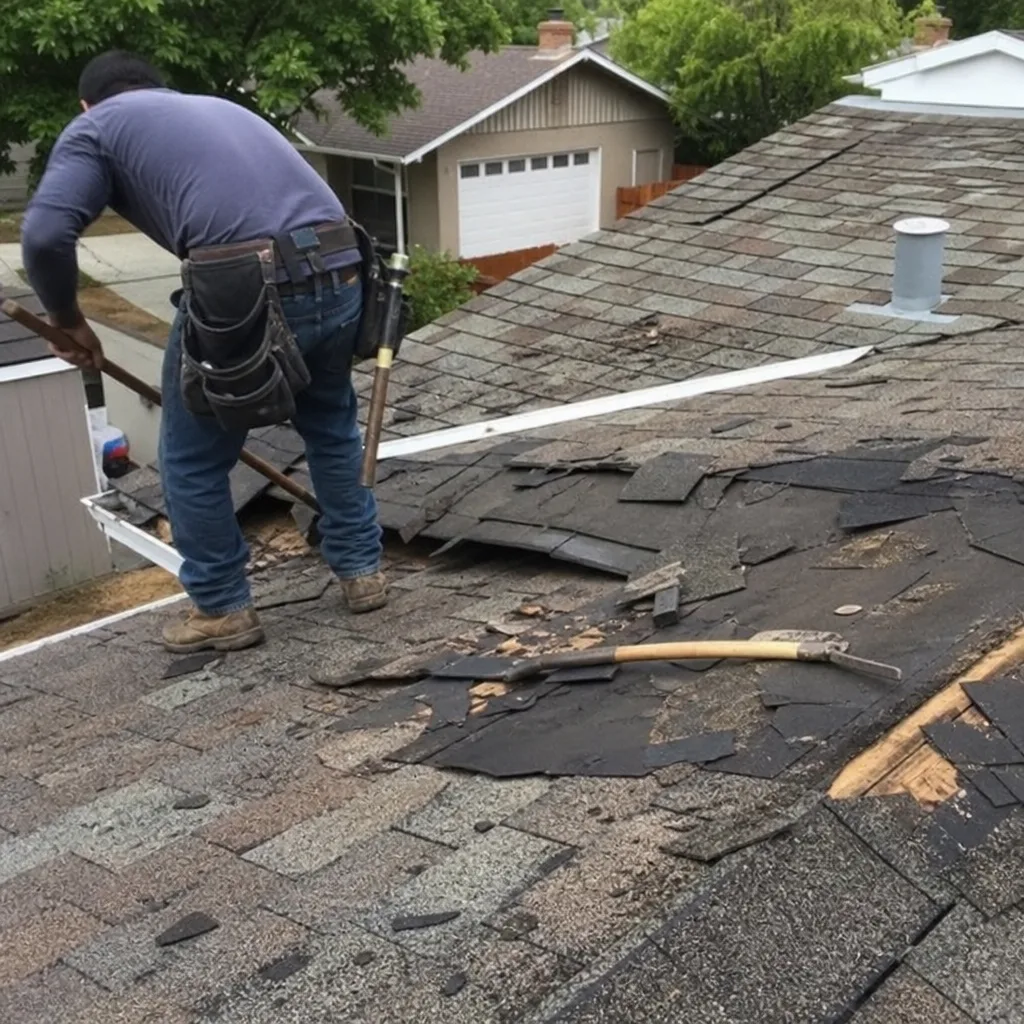 Before
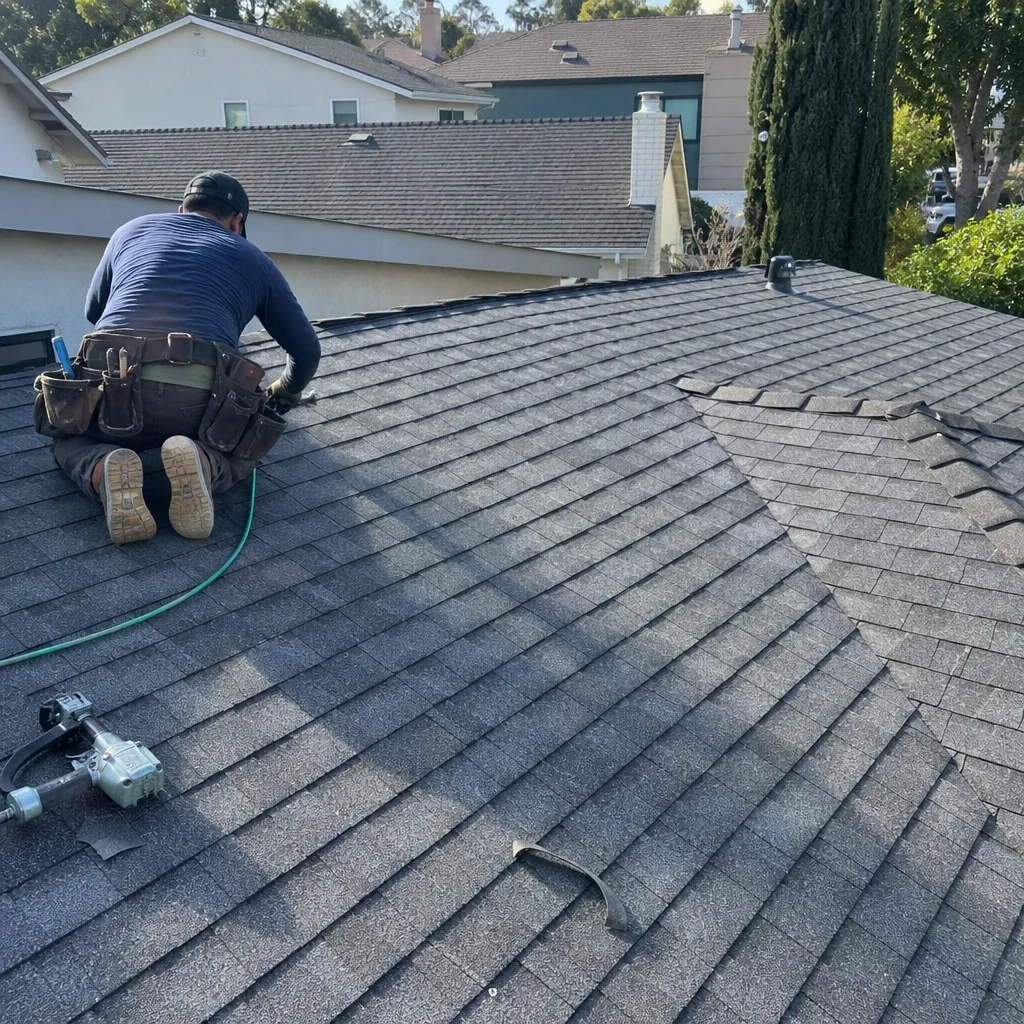 After
After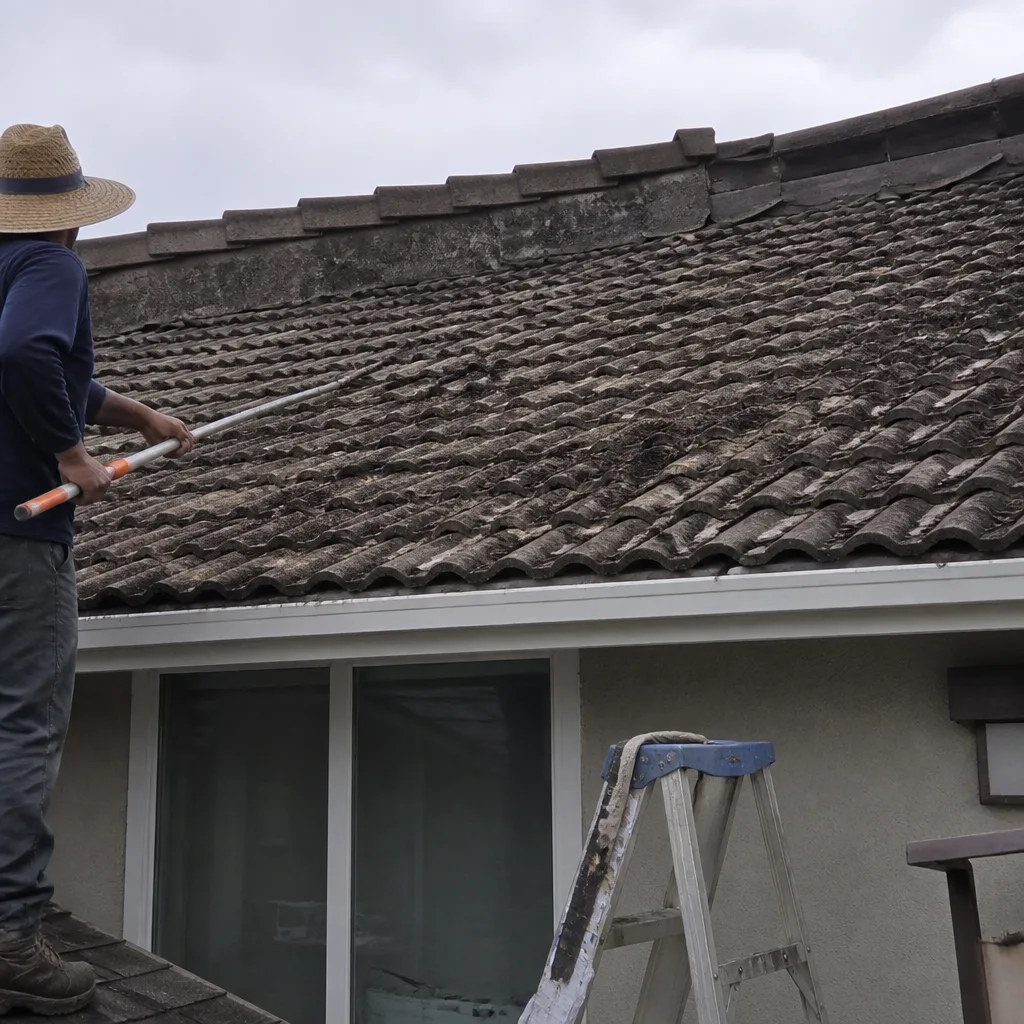 Before
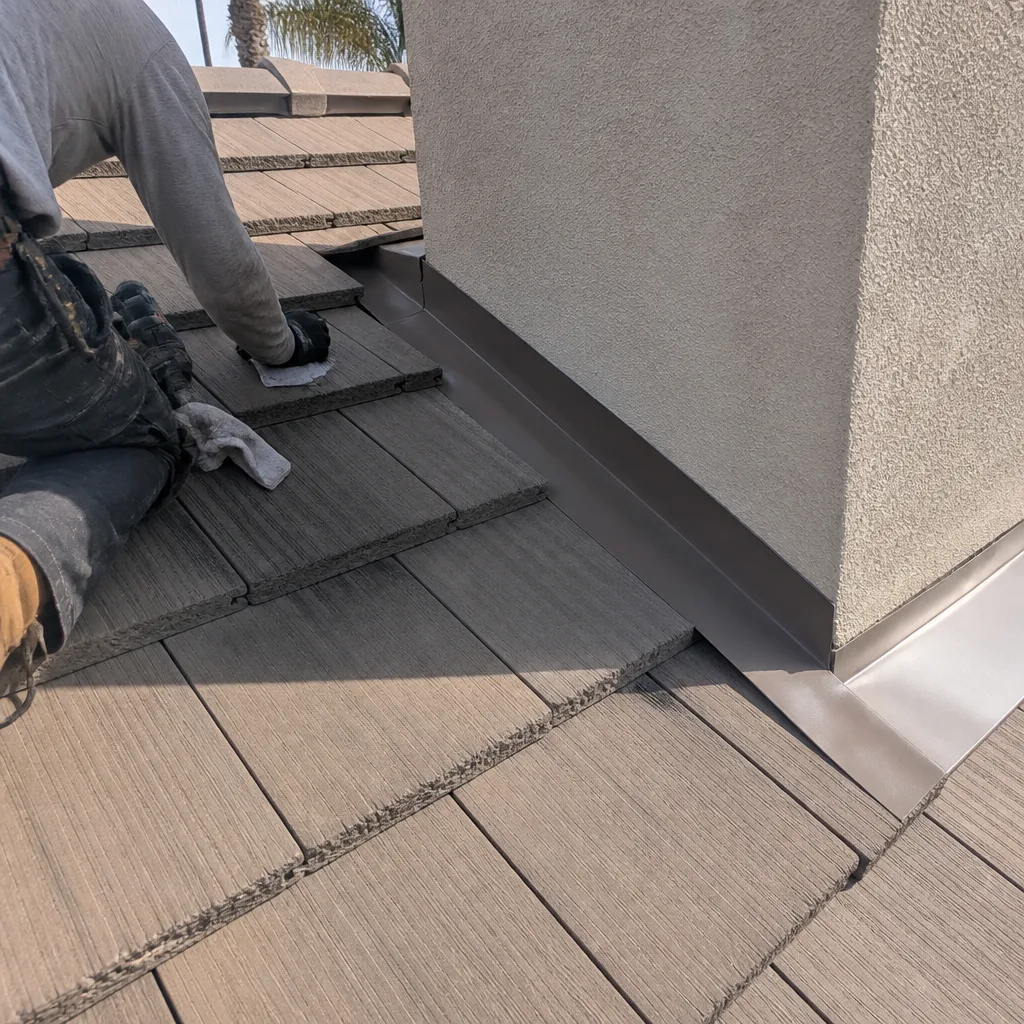 After
After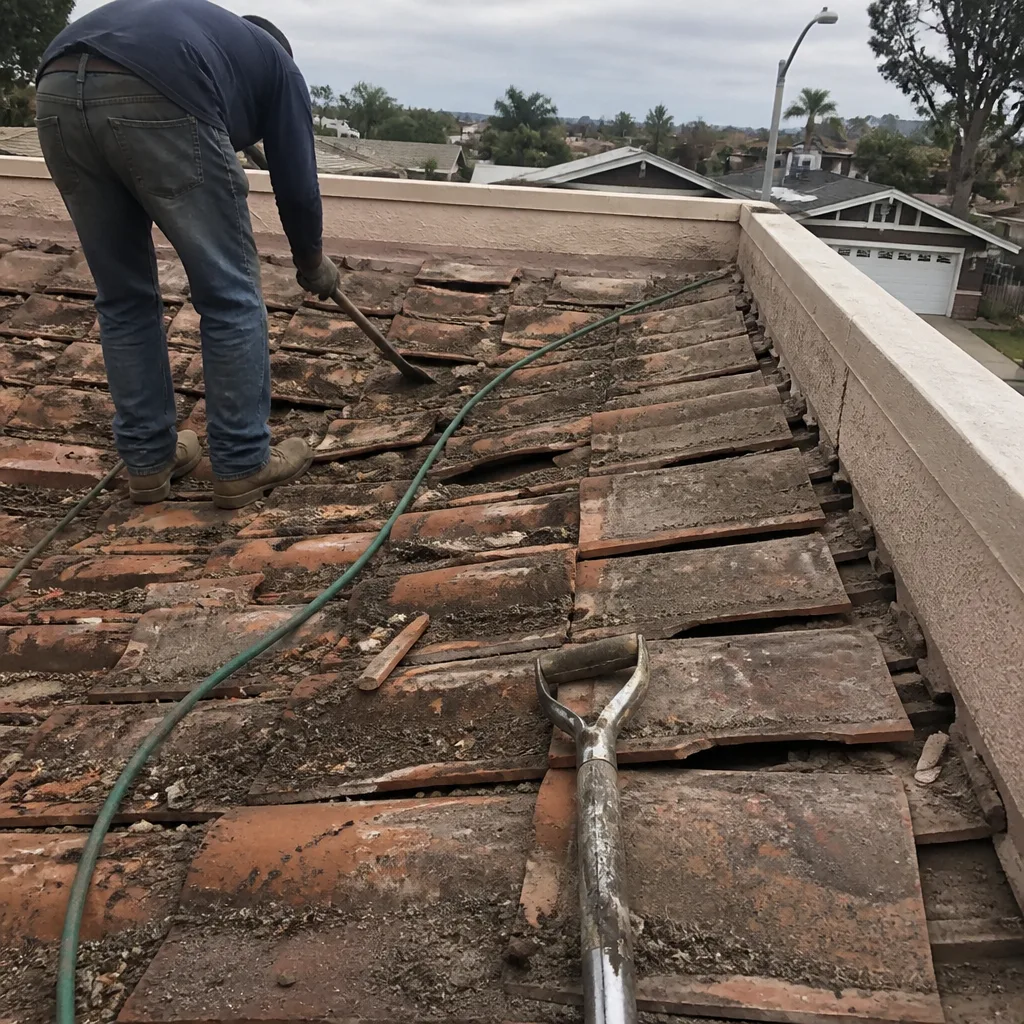 Before
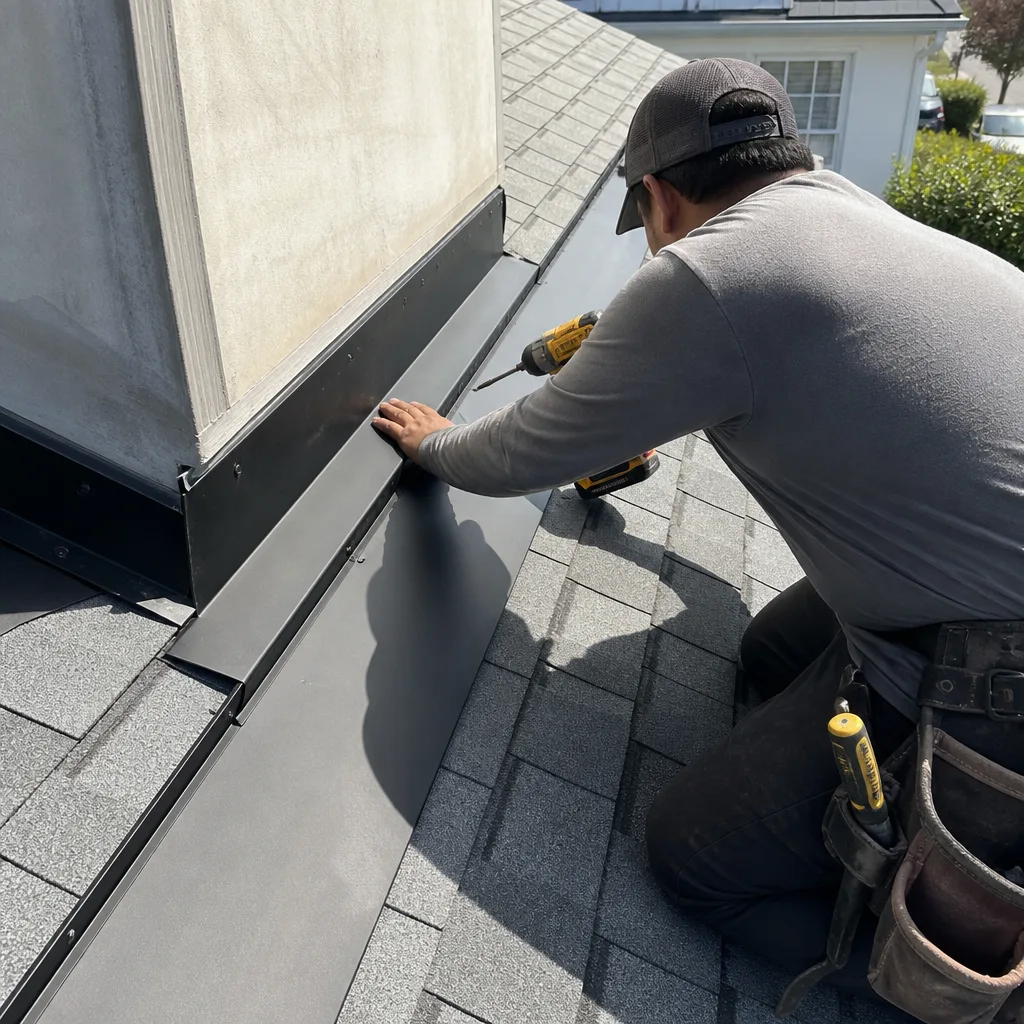 After
AfterCommon Mistakes to Avoid
- Ignoring the attic because it’s inconvenient to access. The attic holds the earliest warning signs, and skipping it means you’re blind to problems until they show up on your ceiling. A ten-minute attic walk with a flashlight costs nothing and catches most leaks years before they would otherwise be found.
- Caulking over failing flashing instead of replacing it. Sealant applied over lifted flashing or cracked boots is a temporary bandage that hides the problem rather than fixing it. It fails in a season or two and the leak returns worse than before, because the underlying flashing has continued to deteriorate beneath the caulk.
- Assuming concrete tile means you never have to think about the roof. The tile is just one layer. The underlayment beneath it is doing the waterproofing work, and it has its own life span that’s usually shorter than the tile’s. A tile roof with spent underlayment leaks just like a shingle roof with missing shingles.
- Delaying action after a Santa Ana wind event. Santa Ana winds in Orange County regularly lift shingles, and the damage compounds with every subsequent wind event. A single missing tab becomes a torn-off row within a month. Walk the perimeter after every serious wind event, not just the ones where you notice damage.
- Treating a small ceiling stain as a one-time anomaly. A small stain that dries out and doesn’t reappear for months doesn’t mean the leak went away. It means the leak is slow or intermittent, and water will be back. Small stains are the cheapest leaks to fix, because they usually point to a single penetration that’s still localized.
- Paying for a roof inspection and accepting a verbal summary. A legitimate inspection produces a written report you can hold, file, and reference. If you don’t get documentation, you paid for a sales call.
- Choosing the lowest bid on roof work in Orange County. The cheapest roofers in this market often cut corners on underlayment, flashing details, or labor quality. Those cuts show up years later as premature warning signs on a roof that should have lasted 25 years and didn’t.
When to Call a Professional
Call a roofer when you see any warning sign in the “call today” category, and schedule an inspection when you have signs in the “this month” category that you can’t confidently assess yourself. If you’ve been in your home more than 15 years without a professional inspection, schedule one regardless of what you can see from the ground. Many of the most expensive problems in Orange County roofs are invisible from street level and only reveal themselves in the attic or at close range. Brennan Roofing Co Orange County offers free estimates throughout Orange County, and our inspection findings are documented in writing. Call (559) 258-5703 to schedule.
Frequently Asked Questions
A minor repair, like replacing a cracked pipe boot or sealing a single lifted flashing, typically runs $250 to $500 in Orange County. A more involved repair, like replacing a section of damaged decking or rebuilding a parapet transition, typically runs $800 to $2,500 depending on access and materials. Prices vary by slope, story height, and roofing material. Call (559) 258-5703 for a written estimate before any work starts.
Concrete tile often outlasts its underlayment, so the question is less about the tile itself and more about what’s beneath it. Warning signs that the roof system is due include widespread efflorescence, multiple hairline fractures concentrated on one slope, and any evidence of moisture in the attic below. A professional inspection that checks the underlayment condition from the eave edge or the attic is the only way to know for certain.
Yes. A small leak at a single penetration doesn’t stay small on its own, because water follows the path it’s already carved and the opening grows with each weather cycle. Wood rot, mold, and decking damage accumulate in the roof cavity even when the ceiling stain dries out between storms. Repairing a small leak early typically costs a few hundred dollars. Waiting costs thousands.
Most minor repairs, like replacing a flashing or a few shingles, don’t require a permit in Orange County municipalities. Full roof replacements and structural repairs typically do, and the permitting is handled through the city or county building department depending on where you live. A reputable roofer will tell you when a permit is required and will handle it as part of the job.
For most homes, every two to three years is appropriate, with the inspection scheduled in the fall before the rainy season. Homes with flat roof sections warrant annual inspection, as do coastal homes where salt air accelerates flashing corrosion. After any severe Santa Ana wind event, a quick visual check from the ground is worth doing regardless of the inspection schedule.
Brennan Roofing Co Orange County backs every repair and installation with a written guarantee for one full year. If a repair or installation fails within that period, we return and make it right at no charge. This is the 365-Day Done Right Promise, and it’s in writing before any work starts, along with the full price. Call (559) 258-5703 for details.
The Bottom Line
Roofing warning signs in Orange County follow a clear sequence: attic evidence first, exterior surface changes second, interior damage last. The homeowners who save money are the ones who look in the attic before the ceiling shows anything, who read the granule lines and efflorescence as the early chapters of a story that ends in a leak, and who act on what they see with a clear triage system instead of panic or procrastination. The cheapest roof work you’ll ever pay for is the repair you schedule before the water gets inside. Walk your attic, read your gutters, watch your flat sections, and when you need someone to take a look, we’re here. Written price before any work starts, background-checked technicians in uniform, and a live person on the phone whenever you call. That’s the standard we work under.
Written by Travis Oakley, Owner at Brennan Roofing Co Orange County, serving Orange County since 2000.